SC permits green crackers in Delhi-NCR for Diwali, full ban returns Nov 9
Synopsis
The Supreme Court has threaded a narrow needle — allowing CSIR-NEERI-certified green crackers in Delhi-NCR for just two Diwali nights, with bursting confined to specific hours, mandatory QR codes on every box, and a full ban snapping back on 9 November. The order is the court's most granular attempt yet to balance festive rights against Delhi's near-perennial air quality emergency.
Key Takeaways
The Supreme Court permitted sale of CSIR-NEERI-approved green crackers in Delhi-NCR from 2 to 6 November 2026 .
Bursting is restricted to 6–7 am and 8–10 pm on 7 and 8 November only; a complete ban resumes from 9 November .
A 300-metre No-Cracker Zone has been mandated around hospitals, schools, old-age homes, and silence zones.
Cancelled trader licences temporarily restored from 4–6 November ; immediately cancelled again on any violation.
Each cracker box must carry a product-specific QR code ; online sales and ladi/garland firecrackers are banned.
Compliance affidavits due by 14 December ; next hearing on 16 December with contempt action threatened for defaults.
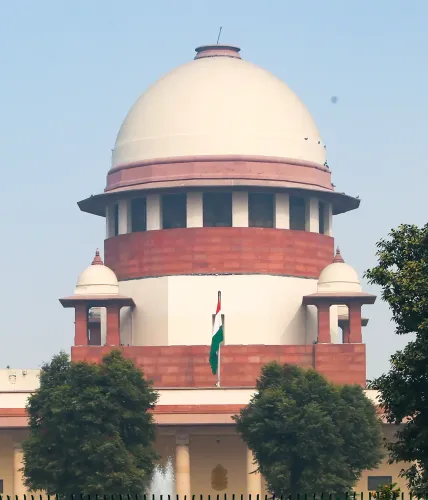
The Supreme Court of India on 2 November 2026 permitted the sale and use of certified green crackers in Delhi-NCR for a limited window ahead of and during Diwali, while ordering a complete restoration of the firecrackers ban from 9 November. The ruling, delivered by a bench of Justice M.M. Sundresh and Justice Prasanna B. Varale, sets out detailed safeguards governing manufacture, storage, sale, and bursting of approved crackers.
What the Court Has Allowed
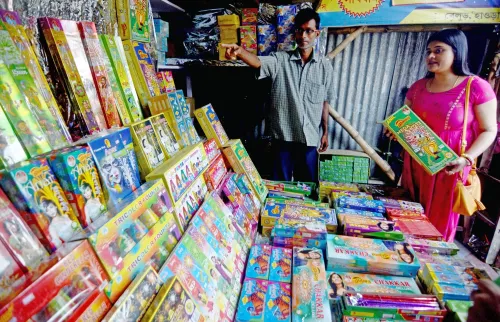
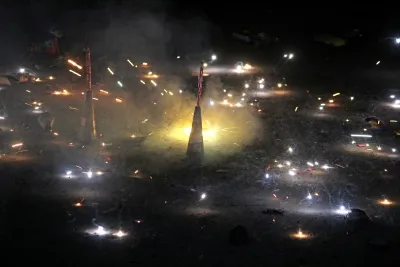
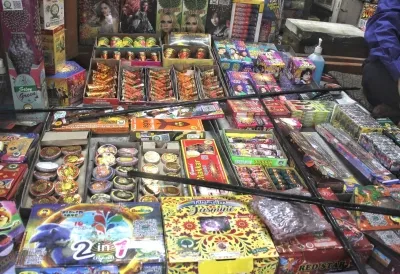
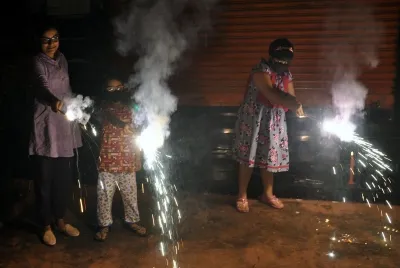
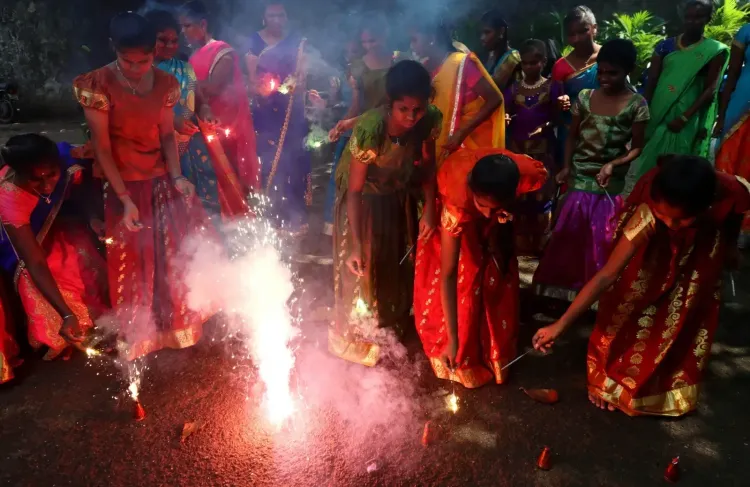
The bench permitted the sale of CSIR-NEERI-approved green crackers from 2 November to 6 November, subject to stringent conditions designed to prevent conventional firecrackers from being passed off as compliant products. Bursting of firecrackers has been restricted to two daily windows — 6 am to 7 am and 8 pm to 10 pm — on 7 and 8 November only.
Only manufacturers holding valid certifications from both CSIR-NEERI and the Petroleum and Explosives Safety Organisation (PESO) will be authorised to produce approved green crackers during this period. The manufacture and sale of firecrackers joined in series — commonly known as 'ladis' or garlands — has been expressly prohibited, as has any cracker containing barium or lacking CSIR-NEERI approval.
No-Cracker Zones and Sale Restrictions
The apex court directed that no firecrackers may be burst within a 300-metre radius of hospitals, nursing homes, primary and district health centres, old-age homes, educational institutions, and notified silence zones. These areas are to be formally declared 'No-Cracker Zones' and must be adequately marked and publicised by local authorities.
The District Collectors or Commissioners, in consultation with District Superintendents of Police, have been directed to identify designated sale locations across the National Capital Region (NCR). Sales at any other location — including through online platforms — are prohibited. Authorities have also been directed to check vehicles entering Delhi-NCR to intercept illegal or conventional crackers.
Relief for Traders, With Conditions
In a significant interim relief, the bench directed that licences of traders whose permits had been cancelled be temporarily restored from 4 to 6 November to facilitate the sale of approved green crackers sourced exclusively from CSIR-NEERI-certified manufacturers. Those licences will be immediately cancelled again upon any detected violation. All firecracker manufacturers and traders in Delhi-NCR must also furnish a substantial monetary security deposit, liable to immediate forfeiture in the event of non-compliance.
Each product box must carry a product-specific QR code issued for the particular product and batch, displaying the manufacturer's details, NEERI registration, PESO or District Magistrate licence, formulation, and test certificate. Police patrolling teams are required to familiarise themselves with approved products and their QR codes, and to conduct random checks and immediate confiscation of non-compliant crackers.
Environmental Monitoring and Post-Diwali Action
The Central Pollution Control Board (CPCB), in coordination with State Pollution Control Boards and their regional offices, has been directed to prepare daily air quality reports covering the pre-Diwali period (2–6 November), Diwali days (7–8 November), and the post-Diwali period (9–30 November). Authorities must undertake post-festival clean-up measures, including proper disposal of solid waste and deployment of water sprinklers in heavily polluted areas.
State authorities, including the Delhi government, have been asked to publicise their Winter Action Plan 2026, Air Pollution Mitigation Plan 2026, and the Commission for Air Quality Management (CAQM) Annual Action Plan through leading newspapers and news channels. The Delhi Metro Rail Corporation (DMRC) has been directed to use its audio systems to disseminate public awareness messages.
Compliance Deadline and Further Hearing
All state machineries in Delhi-NCR must file affidavits detailing implementation steps — covering security deposits, designated sale locations, enforcement actions, and prosecutions initiated — by 14 December. The bench warned that failure to comply will attract strict contempt action against responsible officials. The matter has been listed for further compliance review on 16 December. This comes amid years of judicial scrutiny over Delhi's chronic winter air quality crisis, and the ruling represents the court's latest attempt to balance cultural observance with public health imperatives.
Point of View
Monetary security deposits, and contempt warnings are all admissions that verbal directives have not been enough. Yet the core tension remains unresolved: enforcement of a nuanced, product-specific regime across an NCR of over 30 million people in a 72-hour window stretches the state's capacity to the limit. The conditional licence restoration for traders is pragmatic but also a reminder that the regulatory pipeline for genuine green crackers has never been robust enough to replace the conventional market. Whether this order curbs pollution meaningfully or merely shifts liability to officials who will file affidavits by 14 December is the question Delhi's lungs are waiting on.
NationPress
2 Nov 2026
Frequently Asked Questions
Which firecrackers are permitted in Delhi-NCR for Diwali 2026?
Only CSIR-NEERI-certified green crackers sold by licensed traders are permitted in Delhi-NCR for Diwali 2026. Conventional firecrackers, crackers containing barium, and ladi or garland-style joined crackers are banned.
What are the permitted timings for bursting firecrackers in Delhi-NCR?
Firecrackers may be burst only between 6 am–7 am and 8 pm–10 pm on 7 and 8 November 2026. Outside these windows, and from 9 November onwards, a complete ban applies.
What is the No-Cracker Zone rule ordered by the Supreme Court?
No firecrackers may be burst within a 300-metre radius of hospitals, nursing homes, health centres, old-age homes, educational institutions, and notified silence zones. These areas must be formally declared, marked, and publicised as No-Cracker Zones.
How will authorities ensure only approved green crackers are sold?
Every approved green cracker box must carry a product-specific QR code showing manufacturer details, NEERI registration, PESO licence, and test certificates. Police patrolling teams will conduct random QR-code checks, confiscate illegal crackers, and initiate prosecutions against violators. Sales are restricted to designated physical locations; online sales are prohibited.
What happens if authorities fail to comply with the Supreme Court's directions?
State machineries in Delhi-NCR must file compliance affidavits by 14 December 2026. The Supreme Court has warned that failure to do so will attract strict contempt action against responsible officials, with a follow-up hearing scheduled for 16 December.