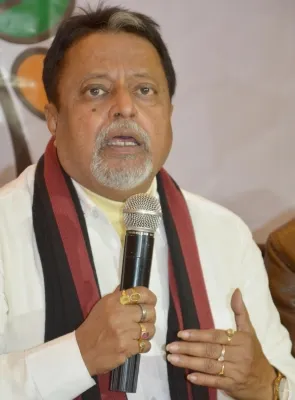
Did the SC Really Halt the Calcutta HC's Order Canceling Mukul Roy's Membership from West Bengal Assembly?
Synopsis
In a significant legal battle, the Supreme Court has put a hold on the Calcutta High Court's ruling that disqualified Mukul Roy from the West Bengal Assembly. This pivotal case raises questions about the application of the anti-defection law and the authenticity of digital evidence in political disputes.
Key Takeaways
The Supreme Court has stayed the Calcutta HC's ruling disqualifying Mukul Roy.
Roy's political journey includes switching parties between Trinamool Congress and BJP.
The reliability of digital evidence is a focal point in this case.
The Assembly Speaker upheld Roy's membership despite challenges.
This ruling has significant implications for the anti-defection law in India.
New Delhi, Jan 16 (NationPress) The Supreme Court has temporarily suspended the recent ruling by the Calcutta High Court that disqualified prominent politician Mukul Roy from the West Bengal Assembly due to the anti-defection law.
A bench led by Chief Justice of India (CJI) Surya Kant and Justice Joymalya Bagchi issued a notice to the involved parties, including Suvendu Adhikari, the Leader of Opposition in the Assembly, and BJP MLA Ambika Roy. This notice comes in response to a petition filed by Roy’s son, Subhranshu Roy, contesting the earlier verdict and requesting a response within four weeks.
Meanwhile, the apex court has mandated that the contested judgment will remain on hold.
During the proceedings, the CJI-led Bench raised concerns regarding the Calcutta High Court’s assertion that strict adherence to Section 65B of the Evidence Act was unnecessary in matters related to the Tenth Schedule of the Constitution.
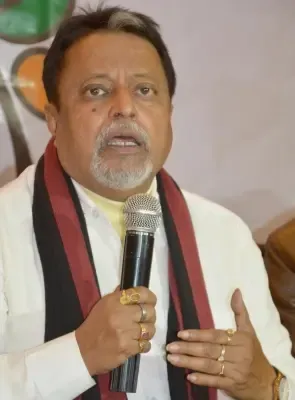
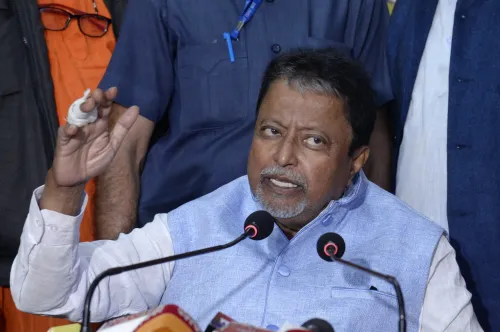
In discussing the electronic evidence against Roy, which included footage of him participating in a Trinamool Congress press conference, the Supreme Court pointed out that digital evidence must be appropriately authenticated. They emphasized that in today’s technological era, including the rise of Artificial Intelligence, the credibility of electronic evidence cannot be assumed.
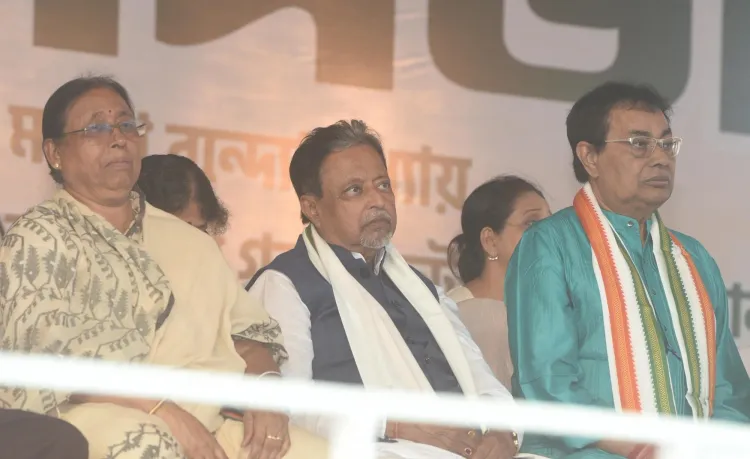
Roy, who previously served as the Trinamool General Secretary, switched to the Bharatiya Janata Party (BJP) prior to the 2021 West Bengal elections. He was successful as a BJP candidate in the Krishnanagar (Uttar) Assembly constituency located in Nadia district. However, shortly after the election results were announced and the party secured a third consecutive term with a significant majority, he rejoined the Trinamool Congress without resigning from the Assembly, officially retaining his position as a BJP legislator.
The Assembly Speaker, Biman Bandopadhyay, dismissed the BJP's request to revoke Roy's Assembly membership, stating that since Roy was officially a BJP candidate, his membership could not be annulled.
Additionally, Roy was appointed as the Chairman of the Public Accounts Committee (PAC) of the House, a role typically awarded to a member from the principal Opposition party.
Subsequently, the BJP sought intervention from the Calcutta High Court to annul Roy's membership as a legislator from the Krishnanagar (Uttar) Assembly constituency.
Following an extensive hearing, the Calcutta High Court, in an order dated November 13, 2025, revoked Roy's membership from the Assembly. A bench consisting of Justices Debangsu Basak and Md. Shabbar Rashidi also overturned the Speaker's ruling that had previously declined to cancel Roy's Assembly membership.
Point of View
This case emphasizes the intricate balance between legal frameworks and political maneuvering. The Supreme Court’s decision to stay the Calcutta HC's ruling not only upholds the integrity of the legislative process but also reflects the ongoing tension between political affiliations and legal accountability in Indian politics. It is a reminder that legal principles must guide political discourse.
NationPress
23 Sept 2026
Frequently Asked Questions
What was the Supreme Court's decision regarding Mukul Roy?
The Supreme Court stayed the Calcutta High Court's ruling that disqualified Mukul Roy from the West Bengal Assembly under the anti-defection law.
Why was Mukul Roy's membership challenged?
His membership was challenged due to allegations of anti-defection, following his shift between political parties.
What evidence was presented against Mukul Roy?
The evidence included electronic footage showing him attending a press conference for the Trinamool Congress.
What role did Mukul Roy hold in the Assembly?
He was appointed as the Chairman of the Public Accounts Committee (PAC) of the Assembly.
What was the reaction of the Assembly Speaker regarding Roy's membership?
The Assembly Speaker rejected the BJP's plea for cancelling Roy's membership, stating he was officially a BJP candidate.