Supreme Court Responds to PIL Demanding Ban on Pre-Election Freebies
Synopsis
The Supreme Court has taken significant action in response to a PIL aimed at banning irrational freebies offered by political parties before elections, addressing concerns about electoral integrity and potential corruption.
Key Takeaways
The Supreme Court has issued a notice regarding a PIL against pre-election freebies.
It seeks to classify such freebies as bribery and corrupt practices.
The petition emphasizes the need for accountability in electoral promises.
Financial implications of such schemes are deemed unsustainable.
The case could redefine electoral integrity in India.
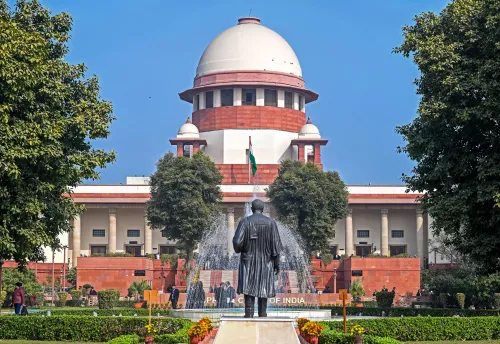
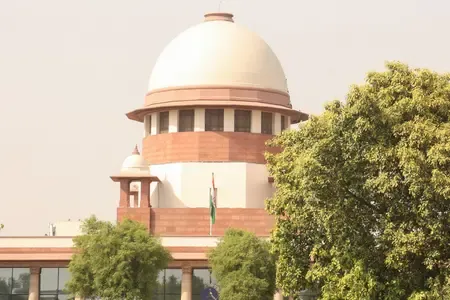
New Delhi, April 20 (NationPress) The Supreme Court has issued a notice to the Centre, the Election Commission of India (ECI), and the Comptroller and Auditor General (CAG) regarding a Public Interest Litigation (PIL) aimed at prohibiting the declaration of “irrational freebies” by political parties prior to elections.
A Bench led by Chief Justice of India (CJI) Justice Surya Kant and Justice Joymalya Bagchi indicated that this plea will be combined with other pending petitions addressing similar concerns.
The petition, submitted by advocate Narendra Goswami, requests a ruling that the promise or distribution of freebies funded by the public as electoral incentives constitutes “bribery” and a “corrupt practice” as defined under Section 123(1) of the Representation of the People Act, 1951.
“This is not just a simple petition; it is a clarion call…to protect the essence of the Indian Republic from being compromised, election after election,” the plea asserts, warning that the nation risks being transformed into an “auction house” where votes are traded for material benefits.
The petition highlights that the escalating trend of electoral promises such as cash payments, consumer products, and various material benefits represents a “systemic, sophisticated, and State-sanctioned bribe” that threatens the integrity of the constitutional framework.
It argues that these practices foster a “one-to-one transactional relationship” between voters and political entities, creating opportunities for quid pro quo arrangements and undermining the principles of free and fair elections.
Furthermore, the petitioner cites financial data to contend that such schemes are economically unfeasible, alleging that governments are increasingly borrowing to cover the costs of these freebies, thus burdening future generations.
The PIL also requests that the ECI require political parties to disclose the fiscal implications of their commitments through a “Fiscal Impact Statement”, with the threat of action, including de-recognition, against those that breach these requirements.
Additionally, the petition urges the Supreme Court to reassess and overturn its 2013 judgment in the case of S. Subramaniam Balaji vs. State of Tamil Nadu, arguing that the previous ruling incorrectly categorized electoral promises as mere policy choices without recognizing their potential quid pro quo nature.
Moreover, the petition seeks directives for the CAG to conduct a performance audit of freebie schemes to determine whether they fulfill the “public purpose” criterion established under Article 282 of the Constitution.
Importantly, the wider issue of electoral freebies is currently under examination before the Supreme Court in a pending case filed by advocate Ashwini Kumar Upadhyay.
In its 2013 ruling in the Subramanian Balaji case, the Supreme Court determined that the distribution of free color television sets by the DMK government following the Tamil Nadu Assembly elections could not be classified as a “corrupt practice” under the Representation of the People Act.
Point of View
Reflecting a broader concern for the health of democracy in the nation.
NationPress
16 Sept 2026
Frequently Asked Questions
What is the main objective of the PIL filed in the Supreme Court?
The PIL aims to impose a ban on the announcement of irrational freebies by political parties before elections, arguing that such practices amount to bribery and corrupt electoral practices.
Who filed the Public Interest Litigation?
The PIL was filed by advocate Narendra Goswami.
What does the petition suggest regarding electoral promises?
The petition suggests that promises of freebies from public funds create a transactional relationship between voters and political parties, undermining free and fair elections.
What is the significance of the 2013 judgment referenced in the PIL?
The 2013 judgment in the Subramanian Balaji case concluded that distributing freebies could not be classified as a corrupt practice, a ruling the PIL seeks to overturn.
What actions does the PIL propose the Election Commission should take?
The PIL proposes that the ECI require political parties to disclose the fiscal implications of their promises and take action against those violating these norms.