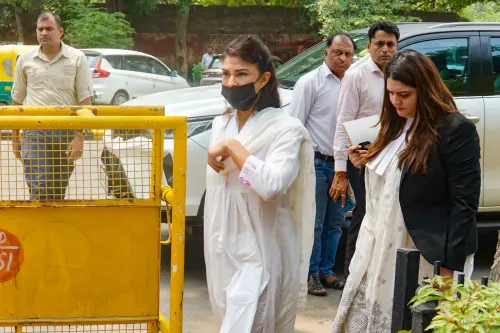
SC judge recuses from Jacqueline Fernandez's ₹200 crore money laundering plea
Synopsis
A Supreme Court bench was forced to reconstitute itself after Justice Prashant Kumar Mishra disclosed that his son had appeared for the government in a connected matter — adding another procedural delay to Jacqueline Fernandez's bid to escape PMLA charges in the ₹200 crore Sukesh Chandrashekhar case. The next hearing is set for 25 June.
Key Takeaways
Justice Prashant Kumar Mishra recused himself on 11 June from hearing Jacqueline Fernandez 's plea in the ₹200 crore money laundering case.
The recusal was triggered by his son's prior appearance on behalf of the government in a connected matter.
The case is now listed before a fresh bench on 25 June .
Fernandez pleaded not guilty before the Patiala House Court on 3 June and opted to contest charges under the PMLA on merits.
The ED has alleged she received luxury gifts worth approximately ₹7 crore from alleged conman Sukesh Chandrashekhar .
The underlying fraud involves alleged cheating of nearly ₹200 crore from the wives of former Ranbaxy promoters Shivinder Singh and Malvinder Singh .
Supreme Court judge Justice Prashant Kumar Mishra on Thursday, 11 June recused himself from hearing Bollywood actor Jacqueline Fernandez's plea challenging a Delhi court order framing charges against her in the ₹200 crore money laundering case linked to alleged conman Sukesh Chandrashekhar. The recusal came moments after the bench assembled to hear the matter, citing a direct conflict of interest.
Why Justice Mishra Stepped Back
A bench comprising Justice P.K. Mishra and Justice Atul S. Chandurkar was convened to hear the plea when Justice Mishra disclosed the conflict. 'In one of the connected matters, my son had appeared on behalf of the government. The case must therefore be placed before a different Bench,' he observed, directing the registry to list the matter before a bench of which he is not a member.
The matter has now been scheduled for hearing on 25 June.
What Jacqueline's Plea Argues
In her Special Leave Petition (SLP) filed before the Supreme Court, Fernandez has challenged a Delhi High Court order that refused to quash the Enforcement Directorate's (ED) prosecution complaint. She has also contested the trial court's decision to frame charges against her under the Prevention of Money Laundering Act (PMLA).
Earlier this month, on 3 June, Fernandez appeared before the Patiala House Court, pleaded not guilty, and opted to contest the charges on merits. The trial court simultaneously framed money laundering charges against Chandrashekhar, his wife Leena Maria Paul, and 14 others, all of whom also pleaded not guilty and sought trial. That matter is listed before the trial court for further proceedings on 16 July.
The Approver Application and ED's Stand
The recusal comes weeks after Fernandez withdrew her application seeking to become an approver in the case — a move that would have required her to fully cooperate with the prosecution in exchange for potential leniency. The ED had opposed the plea, contending that her conduct during the investigation was 'not satisfactory' and that she had failed to make a 'full and true disclosure' in statements recorded under Section 50 of the PMLA.
The agency has alleged that Fernandez remained in regular contact with Chandrashekhar even after allegedly becoming aware of his criminal background, and did not fully cooperate with the investigation into the alleged proceeds of crime.
The Underlying Allegations
According to the ED, Chandrashekhar arranged luxury gifts, valuables, and other benefits for Fernandez using proceeds of crime generated through alleged money-laundering activities. The agency has accused her of receiving luxury gifts worth approximately ₹7 crore from Chandrashekhar. Fernandez has consistently maintained that she had no knowledge of his alleged criminal activities or the source of funds used for those gifts.
The underlying money laundering case stems from allegations that Chandrashekhar cheated the wives of former Ranbaxy promoters Shivinder Singh and Malvinder Singh of nearly ₹200 crore.
With the matter now headed to a fresh bench, the next hearing on 25 June will determine the pace at which Fernandez's Supreme Court challenge proceeds.
Point of View
The trial court track is moving independently of the Supreme Court challenge, meaning Fernandez faces pressure on two fronts simultaneously. The real question is whether the fresh Supreme Court bench will hear her SLP on priority or let the trial proceed in parallel — a distinction that could define the case's timeline by years.
NationPress
26 Oct 2026
Frequently Asked Questions
Why did Justice Prashant Kumar Mishra recuse himself from Jacqueline Fernandez's case?
Justice Mishra recused himself because his son had appeared on behalf of the government in a connected matter, creating a conflict of interest. He directed the registry to list the case before a bench of which he is not a member.
What is the ₹200 crore money laundering case against Jacqueline Fernandez?
The case involves allegations that alleged conman Sukesh Chandrashekhar cheated the wives of former Ranbaxy promoters Shivinder Singh and Malvinder Singh of nearly ₹200 crore. The ED has accused Fernandez of receiving luxury gifts worth approximately ₹7 crore from Chandrashekhar using proceeds of that alleged crime.
What is Jacqueline Fernandez's current legal position in the case?
Fernandez has pleaded not guilty before the Patiala House Court and opted to contest the PMLA charges on merits. She has also filed a Special Leave Petition in the Supreme Court challenging the Delhi High Court's refusal to quash the ED's prosecution complaint.
When is the next hearing in the Supreme Court?
The Supreme Court matter is now listed before a fresh bench on 25 June. The trial court proceedings are separately scheduled for 16 July.
Why did Jacqueline Fernandez withdraw her approver application?
Fernandez withdrew her application seeking approver status, though the specific reasons were not publicly detailed. The ED had opposed the application, stating her conduct during the investigation was 'not satisfactory' and that she had not made a 'full and true disclosure' under Section 50 of the PMLA.