SC issues notice on child labour in orchestras, spas and dance bars
Synopsis
The Supreme Court has flagged a critical gap in India's child labour law: orchestras, dance bars, spas and massage parlours are not classified as hazardous occupations under CALPRA — a loophole that, according to a new PIL, has enabled the trafficking and sexual exploitation of over 200 minors in just over a year.
Key Takeaways
The Supreme Court on 25 May issued notice to the Centre , NCPCR and NHRC on a PIL seeking a ban on child employment in orchestras, dance bars, spas and massage parlours.
The bench of CJI Surya Kant , Justice Joymalya Bagchi and Justice Vipul Pancholi called the matter 'very serious' .
The petition challenges a 'legislative omission' under CALPRA, 1986 , which does not classify these establishments as hazardous occupations.
212 minors were rescued from orchestras and 12 from spas and massage parlours between March 2025 and May 2026 across Bihar, West Bengal, Rajasthan and Delhi.
Rescued children, aged 10–18 years , were allegedly trafficked from multiple states and Nepal.
The Patna High Court had previously issued notice to the Bihar government on a similar plea.
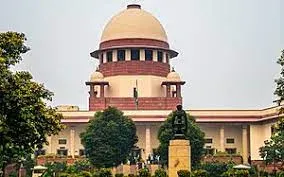
The Supreme Court on Monday, 25 May issued notice to the Centre, the National Commission for Protection of Child Rights (NCPCR) and the National Human Rights Commission (NHRC) on a public interest litigation seeking a ban on the employment of children — particularly minor girls — in orchestras, dance bars, massage parlours, spas and similar establishments. The bench termed the matter 'very serious'.
What the Court Said
A bench comprising Chief Justice of India (CJI) Surya Kant and Justices Joymalya Bagchi and Vipul Pancholi issued notice to the Union Government, the Ministry of Labour and Employment, the Ministry of Law and Justice, the NCPCR and the NHRC. The PIL was filed by an NGO working to combat child trafficking, sexual exploitation and child marriage across India.
The Legislative Gap at the Heart of the Petition
The petition challenges what it calls a 'legislative omission' under the Child and Adolescent Labour (Prohibition and Regulation) Act, 1986 (CALPRA). Under the law's Schedule, Part A lists hazardous occupations where child labour is prohibited — but orchestras, dance bars, dance troupes, nautanki performances, massage parlours, spas and salons are not included in that list.
According to the petition, this exclusion has created an 'enforcement vacuum', which organised trafficking networks and exploitative establishments have allegedly exploited under the guise of entertainment and wellness services. The PIL seeks a direction to the Centre to add all such occupations to the prohibited hazardous list for children below 18 years.
Scale of Exploitation: Rescue Data
The petition cited rescue operations conducted between March 2025 and May 2026 across Bihar, West Bengal, Rajasthan and Delhi, during which 212 minors were rescued from orchestras and 12 minors from massage parlours and spas. The rescued children were aged between 10 and 18 years and were allegedly trafficked from states including West Bengal, Jharkhand, Uttar Pradesh, Assam and Chhattisgarh, as well as from Nepal.
The plea alleged that minors — especially girls from impoverished and marginalised communities — are lured through false promises of employment, marriage or financial upliftment before being trafficked across districts and states and subjected to abuse, forced labour and sexual exploitation.
What the PIL Demands
Beyond the classification of these occupations as hazardous, the petition also sought directions for the formulation of a Standard Operating Procedure (SOP) for the rescue and rehabilitation of children found in such establishments. It alleged that children are compelled to perform sexually explicit acts for commercial gain, exposing them to grave physical, psychological and sexual harm.
Patna High Court Had Already Flagged the Issue
This is not the first judicial intervention on the matter. The Patna High Court had earlier taken cognisance of a similar plea and issued notice to the Bihar government seeking a complete prohibition on the employment of minors in orchestra and dance groups. The Supreme Court's notice now elevates the issue to the national level, signalling that a uniform legislative response may be warranted. The matter is expected to be heard further after responses are received from the notified authorities.
Point of View
But without a robust SOP for rescue and rehabilitation — and accountability for enforcement failures at the state level — reclassifying occupations as hazardous risks becoming another paper reform.
NationPress
19 Sept 2026
Frequently Asked Questions
Why did the Supreme Court issue notice on child employment in orchestras and spas?
The Supreme Court issued notice because orchestras, dance bars, spas and massage parlours are not classified as hazardous occupations under the Child and Adolescent Labour (Prohibition and Regulation) Act, 1986, creating an alleged enforcement gap that trafficking networks have exploited. A PIL filed by an NGO brought the issue before the court, which termed it 'very serious'.
How many minors have been rescued from these establishments?
According to the petition, 212 minors were rescued from orchestras and 12 from massage parlours and spas between March 2025 and May 2026 across Bihar, West Bengal, Rajasthan and Delhi. The rescued children were aged between 10 and 18 years.
What change in law does the PIL seek?
The PIL seeks a direction to the Centre to include orchestras, dance bars, dance troupes, nautanki performances, massage parlours, spas and salons in the list of prohibited hazardous occupations under Part A of the Schedule to CALPRA for all children below 18 years. It also seeks a Standard Operating Procedure for the rescue and rehabilitation of children found in such establishments.
Which states were the rescued children trafficked from?
The rescued children were allegedly trafficked from West Bengal, Jharkhand, Uttar Pradesh, Assam and Chhattisgarh, as well as from Nepal, according to the petition.
Has any other court addressed this issue before?
Yes. The Patna High Court had earlier taken cognisance of a similar plea and issued notice to the Bihar government seeking a complete ban on the employment of minors in orchestra and dance groups. The Supreme Court's intervention now raises the matter to the national level.