Supreme Court Responds to PIL for Election Spending Limits on Political Parties
Synopsis
The Supreme Court of India has issued a notice regarding a PIL that seeks to impose limits on political party spending during elections, highlighting the need for electoral fairness and integrity.
Key Takeaways
Supreme Court issued a notice on election spending limits.
PIL seeks to cap political party expenditures .
Current laws impose limits on candidates only.
Unregulated spending undermines electoral fairness.
Comparative reference to UK’s spending regulations.
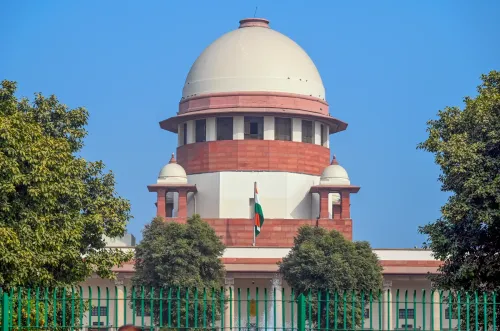
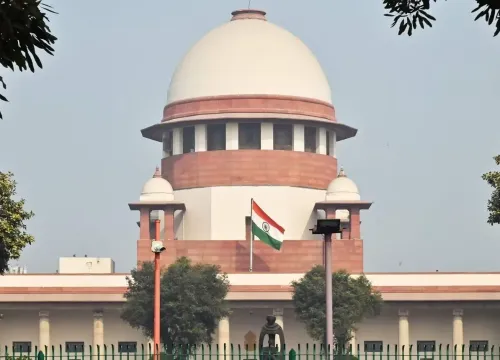
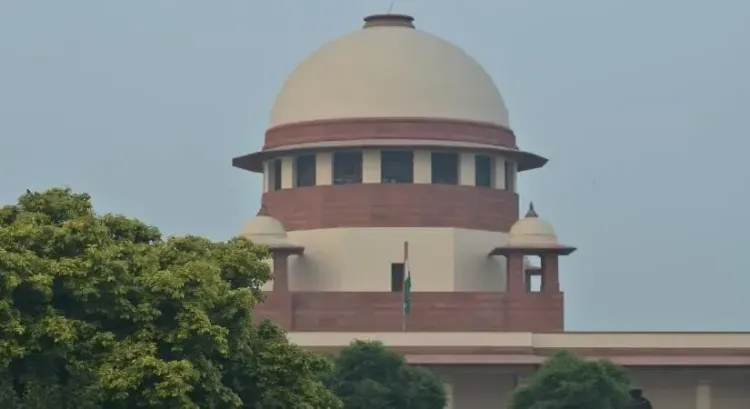
New Delhi, Feb 26 (NationPress) The Supreme Court has taken a significant step by issuing a notice to the Centre and the Election Commission of India (ECI) regarding a public interest litigation (PIL) that calls for a limit on election expenses incurred by political parties.
A bench led by Chief Justice of India (CJI) Surya Kant, along with Justices Joymalya Bagchi and Vipul M. Pancholi, has requested responses from both the Union government and the electoral body, with the case scheduled for a hearing in six weeks.
The petition asserts that while Section 77(1) of the Representation of the People Act, 1951 imposes strict spending limits on individual candidates, there is currently no equivalent cap on the expenditures of political parties.
Filed by advocate Prashant Bhushan on behalf of the non-governmental organization Common Cause, the petition claims that this legal loophole permits parties to utilize unlimited financial resources during electoral campaigns, effectively nullifying the spending limits imposed on candidates.
The Supreme Court's Constitution Bench previously recognized this discrepancy in the case of Association for Democratic Reforms & Anr. v. Union of India & Ors., which pointed out the detrimental effects of unregulated party spending on electoral fairness and democratic engagement.
The petition emphasizes that free and fair elections are the foundation of India’s constitutional democracy, and that unrestricted party spending has eroded the equality of political opportunity, distorting the representative nature of parliamentary democracy.
It also cites recommendations from various expert bodies, including the Law Commission’s 170th Report and consultations by the ECI in 2015, advocating for regulations or limits on political party expenditures.
Furthermore, the petition argues that unrestricted financial spending has led to an increasing trend towards the “presidentialisation” of Indian elections, where campaigns focus on a singular leader through extensive financial investments, which contradicts the parliamentary framework established by the Constitution.
As a point of comparison, the PIL mentions the United Kingdom’s Political Parties, Elections and Referendums Act 2000, which enforces statutory limits on campaign expenditures by political parties and imposes penalties for violations.
In conclusion, the petition contends that the escalating power of money in politics has severely compromised electoral fairness, equality of political opportunity, and the representative nature of parliamentary democracy, seeking judicial directions to create a level playing field in elections.
Point of View
I believe that this PIL addressing the regulation of political party expenditures is crucial for ensuring electoral integrity in India. The balance between financial influence and democratic representation is at stake, and the Supreme Court's engagement in this matter is a significant step toward safeguarding our electoral processes.
NationPress
20 Sept 2026
Frequently Asked Questions
What is the Supreme Court's recent notice about?
The Supreme Court issued a notice regarding a PIL that seeks to impose a ceiling on election expenditure by political parties.
Why is this PIL important?
It aims to address the lack of spending limits for political parties, which could undermine electoral fairness and democratic participation.
What does the PIL reference about existing laws?
It points out that while there are strict expenditure ceilings for individual candidates, there are no such limits for political parties.
How does this relate to electoral integrity?
Unregulated party spending can distort the electoral process and diminish equality in political opportunities, threatening the essence of democracy.