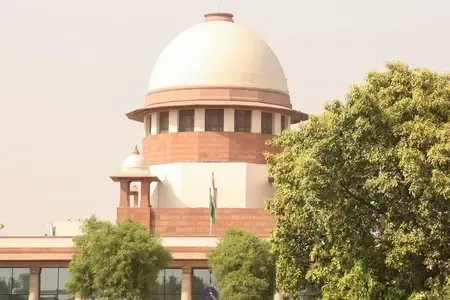
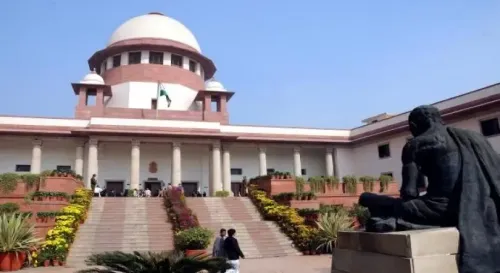
Supreme Court orders demolition of illegal constructions at Lucknow court premises
Synopsis
The Supreme Court shut down every escape route for Lucknow's encroaching lawyers — rejecting mediation, rejecting alternate allotment, and rejecting the plea itself. Justice Vikram Nath, who served at the court, cited firsthand knowledge of the obstruction. With over 100 chambers already razed and 72 more in the crosshairs, this is a rare moment of the judiciary holding its own premises — and its own profession — to account.
Key Takeaways
The Supreme Court on 25 August dismissed the Central Bar Association, Lucknow's plea challenging demolition proceedings against illegal constructions in the court premises.
A bench of Justice Vikram Nath and Justice Sandeep Mehta ordered lawyers to vacate unauthorised structures peacefully.
The court rejected both an alternate-allotment request and a mediation proposal, saying: 'Mediation with lawyers!
Dismissed.' The Allahabad High Court had earlier recorded that more than 100 illegal chambers were demolished, but only 14 of the 72 initially identified encroachments were removed due to advocate resistance.
Demolitions are to be carried out on a Sunday to avoid disrupting judicial work, with the Lucknow Commissioner of Police , District Magistrate , and Municipal Commissioner directed to provide support.
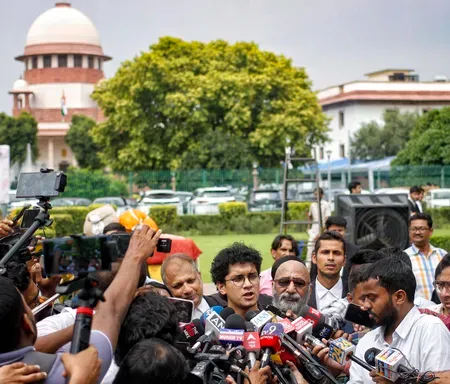
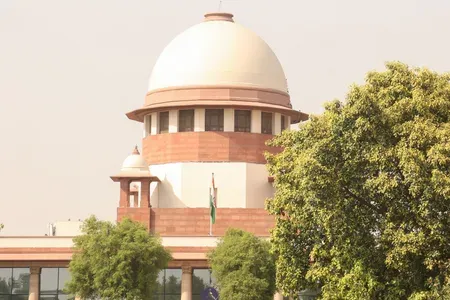
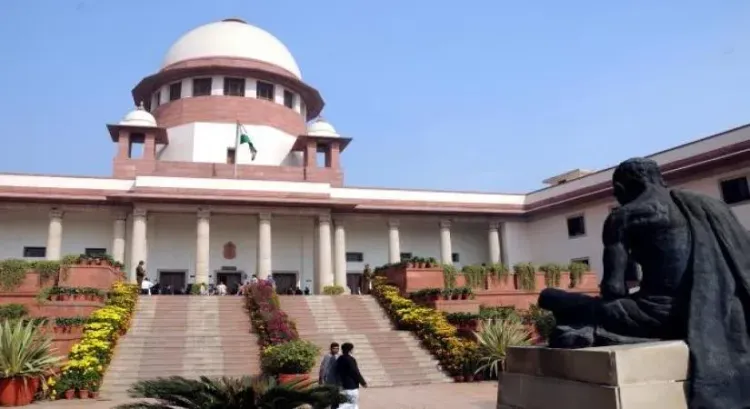
The Supreme Court on Tuesday, 25 August dismissed a plea by the Central Bar Association, Lucknow, challenging action against unauthorised constructions and encroachments by lawyers on public pathways and utility land within the Lucknow court premises. The bench directed lawyers occupying illegal structures to vacate them peacefully and made clear that all demolitions must proceed.
What the Court Ruled
A bench of Justice Vikram Nath and Justice Sandeep Mehta dismissed the plea outright, rejecting any suggestion that lawyers could claim a right to occupy unauthorised structures on the basis of their positions in the bar association.
'You occupy the main road, you occupy the open space inside the court premises, raise unauthorised construction and then say I am elected as the President of the association, I am a member of the governing body, and therefore I have a right to continue, no,' the bench observed.
Justice Vikram Nath went further, citing personal knowledge of the situation: 'All demolitions have to take place. I have seen it myself when I was there for two years as a senior judge. I know what kind of constructions, how the roads have been obstructed, traffic is completely obstructed. Demolition has to take place.'
Requests Rejected Outright
Senior advocate Adish Aggarwala, appearing for the association, sought that an alternate location be allotted to the displaced lawyers. The bench responded: 'You go and purchase some lands for the lawyers over there. Go and request the state government to provide you a society for that.'
When Aggarwala proposed referring the matter to mediation, the court was categorical: 'Mediation with lawyers! No. Dismissed.' The bench advised the lawyers to vacate the structures peacefully without further delay.
Background: Allahabad High Court Proceedings
The Supreme Court plea arose from ongoing proceedings before the Allahabad High Court, which had been monitoring the removal of unauthorised chambers and shops allegedly constructed by lawyers and others within the court complex.
According to the High Court's order dated 4 August, more than 100 illegally constructed chambers had already been demolished pursuant to its directions. However, of the 72 encroached chambers and shops initially identified, only 14 had been removed at the first stage, with advocates allegedly creating obstruction and hindrance during the exercise.
The High Court had directed the remaining 72 encroachers to either vacate voluntarily or establish a valid claim to occupy the structures — failing which, demolition would follow. To avoid disruption to judicial proceedings, the exercise was ordered to be carried out on a Sunday.
Administrative Machinery Mobilised
The Allahabad High Court had directed the Lucknow Commissioner of Police, the District Magistrate, and the Municipal Commissioner to coordinate the demolition drive and provide administrative and police support to prevent any law-and-order situation from arising.
With the Supreme Court now firmly closing the door on legal challenges, the remaining unauthorised structures at the Lucknow court premises are expected to face demolition in the coming days.
Point of View
The bench signalled that this is not an abstract legal dispute but a documented, witnessed failure of professional self-regulation. Bar associations across the country have long treated court premises as informal real estate, and the judiciary has historically been reluctant to act against its own ecosystem. This ruling breaks that pattern. The dismissal of mediation in particular — 'Mediation with lawyers! No.' — is a pointed message that procedural delay tactics will not be tolerated when the violators are officers of the court themselves.
NationPress
9 Oct 2026
Frequently Asked Questions
What did the Supreme Court rule regarding illegal constructions at Lucknow court premises?
The Supreme Court on 25 August dismissed a plea by the Central Bar Association, Lucknow, and ordered that all unauthorised constructions and encroachments by lawyers within the Lucknow court premises must be demolished. The bench directed the lawyers to vacate the structures peacefully.
Why did the Supreme Court reject the Central Bar Association's plea?
The court held that lawyers cannot claim a right to occupy unauthorised structures merely because they hold elected positions in the bar association. It found the encroachments had obstructed public roads and traffic within the court premises.
How many illegal structures have been identified and demolished so far?
The Allahabad High Court recorded that more than 100 illegally constructed chambers had been demolished pursuant to its directions. Of the 72 encroachments initially identified, only 14 were removed at the first stage, as advocates allegedly created obstruction during the exercise.
What happens next after the Supreme Court's order?
The remaining unauthorised structures are to be demolished, with the exercise scheduled on a Sunday to avoid disrupting court proceedings. The Lucknow Commissioner of Police, District Magistrate, and Municipal Commissioner have been directed to coordinate and provide administrative and police support.
Was mediation or an alternate allotment considered for the displaced lawyers?
Both requests were rejected by the Supreme Court. When senior advocate Adish Aggarwala sought an alternate allotment, the bench told him to approach the state government. When mediation was proposed, the court dismissed it outright, saying: 'Mediation with lawyers! No. Dismissed.'