Supreme Court Orders Reinstatement of Gujarat Judge with Full Benefits
Synopsis
The Supreme Court ordered reinstatement of suspended Gujarat Senior Civil Judge Chandni Prateek Sharma with full benefits, ruling that a de novo inquiry violated Rule 10 of the Gujarat Civil Services Rules 1971. The landmark precedent protects judicial officers and civil servants from procedurally illegal disciplinary actions across India.
Key Takeaways
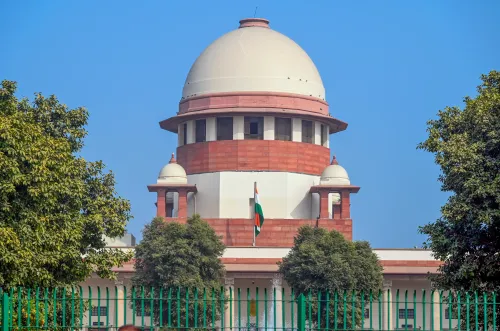
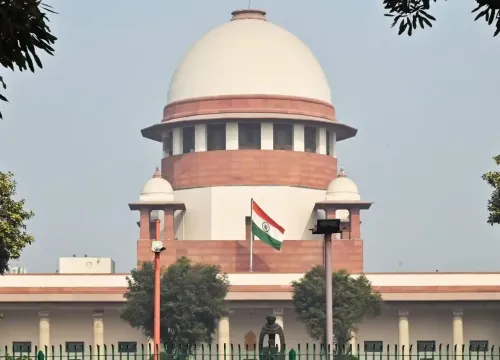
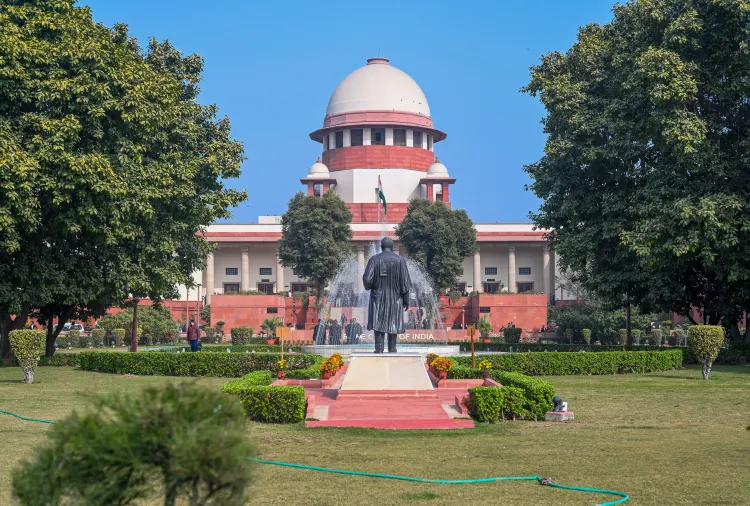
The Supreme Court of India on April 24, 2025 ordered the reinstatement of Gujarat Senior Civil Judge Chandni Prateek Sharma with full consequential benefits.
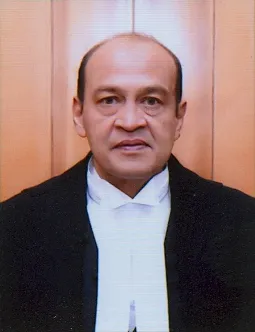
A bench of Justice P.S.
Narasimha and Justice Alok Aradhe ruled that the de novo inquiry ordered against Sharma violated Rule 10 of the Gujarat Civil Services (Discipline and Appeal) Rules, 1971 .
Sharma had been suspended in February 2020 ; an inquiry officer examined 21 witnesses and proved only one charge , exonerating her of the rest.
The Gujarat High Court's September 26, 2024 judgment upholding the de novo inquiry was quashed by the Supreme Court.
The apex court clarified that a further inquiry under the rules does not mean a fresh or de novo inquiry, a distinction with nationwide implications for civil service disciplinary proceedings.
The ruling is expected to serve as a binding precedent protecting judicial officers and civil servants from procedurally illegal disciplinary actions across India.
The Supreme Court of India on April 24, 2025 ordered the reinstatement of Gujarat judicial officer Chandni Prateek Sharma with all consequential benefits, striking down a disciplinary action that had subjected her to an unlawful de novo inquiry. The apex court held that the move violated established service rules and set aside the Gujarat High Court judgment that had endorsed it. The ruling delivers a significant victory for judicial service employees facing procedurally flawed disciplinary proceedings.
Supreme Court's Key Ruling and Legal Reasoning
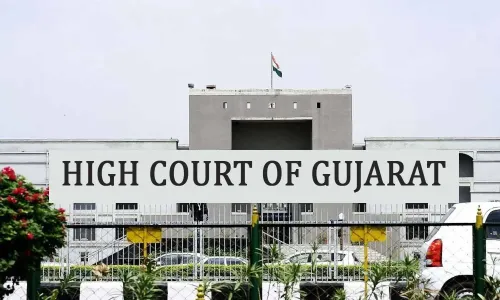
A bench comprising Justice P.S. Narasimha and Justice Alok Aradhe unequivocally held that ordering a fresh inquiry against Sharma was contrary to the governing service rules. The bench quashed the Gujarat High Court's September 26, 2024 judgment, which had upheld the disciplinary authority's decision to initiate a de novo inquiry.
The court ordered: "The respondents are directed to reinstate the appellant and to grant her all consequential benefits" while allowing Sharma's appeal. The ruling is binding and immediately enforceable.
The court clarified that Rule 10 of the Gujarat Civil Services (Discipline and Appeal) Rules, 1971 permits only a further inquiry and not a fresh or de novo inquiry. The Justice Narasimha-led bench observed that the expression further inquiry does not mean a fresh or a de novo inquiry but only a further inquiry, laying down a clear interpretive standard.
Background: Chandni Sharma's Suspension and Inquiry
Chandni Prateek Sharma joined the Gujarat State Judicial Service in 2012 and was promoted to the rank of Senior Civil Judge in 2018. In February 2020, she was placed under suspension following complaints alleging misconduct, including habitual absenteeism and procedural irregularities.
An inquiry officer examined 21 witnesses during the proceedings and found only one charge proved, exonerating Sharma of all remaining allegations. Despite this largely favourable outcome, the disciplinary authority disagreed with the inquiry officer's findings and issued a show cause notice before ordering an entirely fresh de novo inquiry.
The Gujarat High Court, in its ruling, had sided with the disciplinary authority, noting that reasons had been recorded for ordering the fresh inquiry. The Supreme Court firmly rejected this view, holding that the High Court had failed to appreciate the settled legal position on the matter.
Why This Ruling Matters for Judicial Officers Across India
This judgment carries significant implications beyond Sharma's individual case. It reinforces the principle that disciplinary authorities cannot bypass procedural safeguards by ordering de novo inquiries when service rules only permit further inquiries. Such a distinction protects judicial officers and all civil servants from prolonged, arbitrary disciplinary proceedings.
The ruling is particularly significant because it involves a judicial officer, whose independence and security of tenure are considered foundational to the integrity of the justice delivery system. Subjecting judges to repeated or unlawful inquiries can have a chilling effect on judicial independence at the subordinate court level, where millions of ordinary litigants seek justice daily.
This also comes amid broader national conversations about the treatment of judicial officers in state services, where disciplinary actions have sometimes been used as instruments of administrative pressure rather than genuine accountability.
Gujarat High Court's Error and Supreme Court's Correction
The Supreme Court was pointed in its criticism of the Gujarat High Court's September 2024 judgment. The apex court held that the High Court erred in upholding the de novo inquiry merely because the disciplinary authority had recorded reasons for it. Recording reasons, the Supreme Court clarified, does not cure a procedural illegality if the action itself is ultra vires the applicable rules.
By quashing the impugned judgment and restoring Sharma's service, the Supreme Court reaffirmed that procedural compliance in disciplinary proceedings is non-negotiable even for high-level administrative authorities. Sharma is now entitled to full back-pay, seniority, and all other service benefits flowing from her reinstatement.
Impact and What Happens Next
With the Supreme Court's order now in force, the Gujarat government and relevant authorities are legally bound to reinstate Sharma immediately and process all consequential benefits, including arrears of salary for the period of suspension and subsequent proceedings. Failure to comply could invite contempt proceedings.
Legal experts note that this ruling will serve as a precedent in disciplinary matters involving civil servants and judicial officers governed by analogous state service rules across India. States with similar provisions in their discipline and appeal rules will need to review pending de novo inquiry orders to ensure compliance with this interpretation. The decision is expected to prompt a fresh look at how disciplinary authorities handle disagreements with inquiry officer findings nationwide.
Point of View
And a High Court endorses it without scrutinising the legal basis, the system fails at two levels. The apex court's ruling exposes a troubling pattern: in India's subordinate judiciary and civil services, suspension and repeated inquiry have sometimes functioned as punishment in themselves, long before any guilt is established. This judgment, if taken seriously, should prompt states to audit pending disciplinary proceedings for similar illegalities.
NationPress
19 Sept 2026
Frequently Asked Questions
What did the Supreme Court rule in the Chandni Prateek Sharma case?
The Supreme Court ordered the reinstatement of Gujarat judicial officer Chandni Prateek Sharma with all consequential benefits, holding that the de novo inquiry ordered against her violated Rule 10 of the Gujarat Civil Services (Discipline and Appeal) Rules, 1971. The court quashed the Gujarat High Court's September 2024 judgment that had upheld the disciplinary action.
Why was Chandni Prateek Sharma suspended from the Gujarat judicial service?
Chandni Prateek Sharma was placed under suspension in February 2020 following complaints alleging habitual absenteeism and procedural irregularities. An inquiry officer examined 21 witnesses and found only one charge proved, exonerating her of the remaining allegations.
What is the difference between a further inquiry and a de novo inquiry under Gujarat service rules?
Under Rule 10 of the Gujarat Civil Services (Discipline and Appeal) Rules, 1971, only a further inquiry — meaning additional proceedings building on the existing record — is permitted. A de novo inquiry means starting entirely afresh, which the Supreme Court ruled is not allowed under these rules.
What benefits will Chandni Sharma receive after reinstatement?
The Supreme Court directed that Sharma be granted all consequential benefits flowing from her reinstatement, which typically include arrears of salary for the suspension period, restoration of seniority, and other service entitlements. The Gujarat government is legally bound to comply immediately.
What is the broader impact of this Supreme Court ruling on civil servants in India?
The ruling sets a significant precedent that disciplinary authorities cannot order de novo inquiries where service rules only permit further inquiries, protecting civil servants and judicial officers from prolonged or arbitrary proceedings. States with similar provisions in their discipline rules will need to review pending cases for compliance.