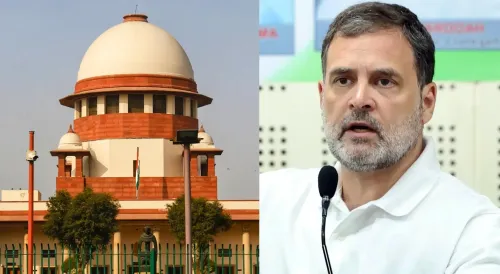
SC quashes defamation case against Rahul Gandhi over Savarkar remarks
Synopsis
The Supreme Court has quashed the criminal defamation case against Rahul Gandhi over his Savarkar remarks — not on the merits, but because the Uttar Pradesh government never granted the mandatory sanction to prosecute. A procedural gap, not a verdict on the substance, ends a case that had been politically charged since the 2022 Bharat Jodo Yatra.
Key Takeaways
The Supreme Court on 14 August quashed criminal defamation proceedings against Rahul Gandhi over remarks on V.D.
The bench of Justice Dipankar Datta and Justice Sheel Nagu ruled that mandatory prosecution sanction from the Uttar Pradesh government had not been obtained.
The lower court had summoned Gandhi under Sections 153A and 505 of the Indian Penal Code following a complaint by lawyer Nripendra Pandey .
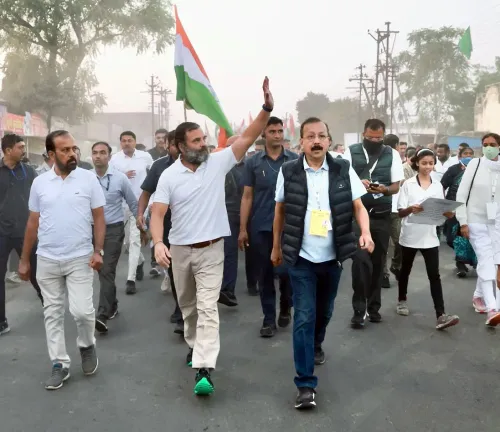
Gandhi's remarks — calling Savarkar a 'servant of the British' who received a British pension — were made during the Bharat Jodo Yatra in Maharashtra in 2022 .
The court's ruling was on procedural grounds only; it did not rule on the substantive defamation allegations.
The Supreme Court on Friday, 14 August quashed criminal defamation proceedings against Lok Sabha Leader of Opposition Rahul Gandhi over his remarks on Hindutva ideologue V.D. Savarkar, ruling that the prosecution could not proceed due to a critical procedural lapse. The apex court found that the mandatory sanction from the Uttar Pradesh government — required by law to prosecute Gandhi in the case — had never been obtained.
What the Court Ruled
A bench comprising Justice Dipankar Datta and Justice Sheel Nagu allowed Gandhi's plea after noting that the criminal case lacked the requisite government sanction under the applicable legal provisions. Consequently, the court set aside the summons issued to Gandhi by the lower court, effectively terminating the proceedings.
Background: The Savarkar Remarks
The case originated from statements Gandhi made during the Indian National Congress party's Bharat Jodo Yatra in Maharashtra in 2022. During a public address, Gandhi described Savarkar as a 'servant of the British' and alleged that the freedom fighter 'used to receive a pension from the British.' The remarks drew sharp criticism and triggered a legal complaint.
Lawyer Nripendra Pandey filed a complaint before a lower court, alleging the statements were defamatory and promoted disharmony. The lower court found a prima facie case and issued summons to Gandhi under Section 153A (promoting enmity between different groups) and Section 505 (statements conducing to public mischief) of the Indian Penal Code.
The Procedural Lapse That Decided the Case
During Supreme Court proceedings, it emerged that the prosecution had not secured the mandatory sanction from the Uttar Pradesh government — a legal prerequisite for offences under Sections 153A and 505 of the IPC. The apex court took note of this procedural failure and quashed both the criminal proceedings and the summons.
Notably, the court's ruling was grounded entirely in this procedural deficiency, and did not adjudicate on the substantive merits of the defamation allegations against Gandhi.
Broader Legal Context
This ruling marks a significant legal reprieve for Gandhi, who has faced multiple criminal and civil proceedings arising from political speeches in recent years. The Supreme Court's intervention brings the Savarkar-linked case to a definitive close. This is not the first time courts have intervened in proceedings against Gandhi on procedural grounds — a pattern that underscores the importance of compliance with sanction requirements in public-speech prosecutions.
With the summons set aside, the matter now rests unless the prosecution pursues a fresh complaint after securing the required government approval.
Point of View
Not a vindication on the merits — and that distinction matters. The court did not say the Savarkar remarks were permissible political speech; it said the prosecution was never properly authorised to begin. That leaves the door open for a fresh complaint if the Uttar Pradesh government chooses to grant sanction. More broadly, the case illustrates how sanction requirements under the IPC function as a structural check on politically motivated prosecutions — but also how their absence can become a shield regardless of the underlying facts. The pattern of criminal cases against opposition leaders collapsing on procedural grounds, rather than being decided on substance, does little to resolve the deeper political and historical disputes at their core.
NationPress
28 Sept 2026
Frequently Asked Questions
Why did the Supreme Court quash the defamation case against Rahul Gandhi?
The Supreme Court quashed the case because the mandatory prosecution sanction from the Uttar Pradesh government — required by law for offences under Sections 153A and 505 of the IPC — had not been obtained. Without this sanction, the court held that the criminal proceedings could not lawfully continue.
What did Rahul Gandhi say about Savarkar that triggered the case?
During the Congress party's Bharat Jodo Yatra in Maharashtra in 2022, Gandhi described V.D. Savarkar as a 'servant of the British' and alleged that Savarkar 'used to receive a pension from the British.' These remarks prompted lawyer Nripendra Pandey to file a criminal complaint alleging defamation and promotion of disharmony.
What were the charges against Rahul Gandhi in this case?
A lower court had issued summons to Gandhi under Section 153A (promoting enmity between different groups) and Section 505 (statements conducing to public mischief) of the Indian Penal Code, after finding a prima facie case in the complaint.
Does the Supreme Court ruling mean Rahul Gandhi's remarks were legally cleared?
No. The court ruled solely on a procedural ground — the absence of the required government sanction — and did not examine or adjudicate the substance of the defamation allegations. A fresh complaint could potentially be filed if the required sanction is obtained.
Who filed the complaint against Rahul Gandhi in the Savarkar case?
Lawyer Nripendra Pandey filed the complaint before a lower court, alleging that Gandhi's remarks about Savarkar were defamatory and promoted disharmony among different groups.