Did the SC Direct Calcutta HC to Assess NIA's UAPA Use in Beldanga Violence?
Synopsis
The Supreme Court has ordered the Calcutta High Court to review the National Investigation Agency's use of the UAPA in the context of violence in Beldanga, West Bengal. This follows a petition from the state government questioning the justification for federal intervention. The outcome could set a significant precedent for federal-state relations in handling unrest.
Key Takeaways
The Supreme Court has requested a review of the NIA's use of the UAPA.
The Calcutta High Court must independently assess the situation.
The decision could influence federal-state relations regarding law enforcement.
Concerns about national security were raised during the proceedings.
The West Bengal government's challenge indicates local dissent against federal oversight.
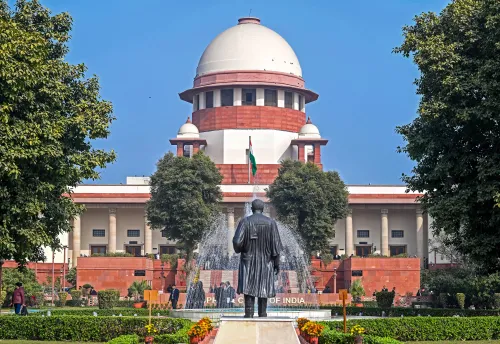
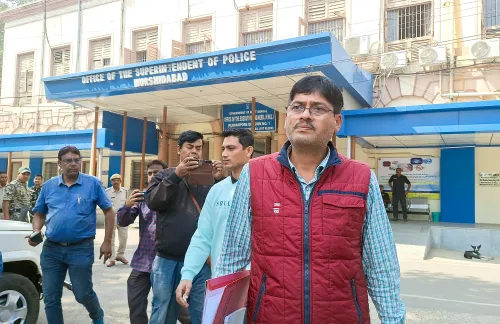
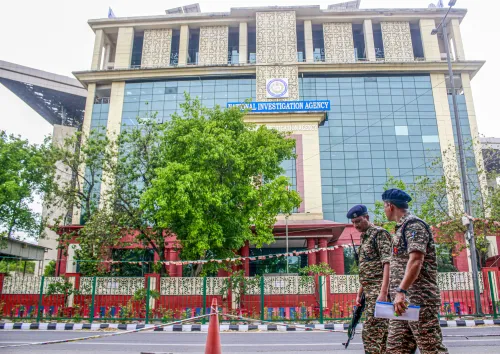
New Delhi, Feb 11 (NationPress) - The Supreme Court has requested the Calcutta High Court to conduct an independent evaluation of the National Investigation Agency's (NIA) application of the Unlawful Activities (Prevention) Act (UAPA) concerning the recent unrest in Beldanga, located in West Bengal's Murshidabad district.
A bench led by Chief Justice of India (CJI) Surya Kant and Justice Joymalya Bagchi was addressing a petition from the West Bengal government that opposed a Calcutta High Court ruling granting permission for the Union government to consider an NIA investigation into the violence, alongside a notification from the Union Ministry of Home Affairs assigning the investigation to the anti-terror agency.
The apex court rejected the state's petition and ordered the NIA to present a status report—whether after or during the investigation—to the Calcutta High Court in a sealed envelope, indicating whether a prima facie case under the UAPA had been established based on the evidence collected.
“Given that the High Court's order contains only fleeting remarks without a definitive opinion on the applicability of the UAPA, we urge the High Court to evaluate the NIA's status report independently and issue necessary directives,” the CJI Kant-led bench stated.
The Supreme Court made it clear that it has not commented on the merits of the case and instructed that the West Bengal government's request be reviewed by a Division Bench led by the Chief Justice of the Calcutta High Court, before which a related petition is already under consideration.
During the proceedings, the CJI Kant-led bench questioned the rationale behind the NIA's UAPA application when filing the FIR in this case.
“You stated that Section 15 of the UAPA is justified without reviewing documents. The case diary was not presented. This seems to be a pre-decisional conclusion,” it noted.
The Supreme Court cautioned that “not every emotional outburst can be classified as a threat to economic security.”
Senior advocate Kalyan Banerjee, representing the West Bengal government, asserted that no scheduled offence under the NIA Act had occurred to justify the involvement of the Central agency.
He contended that the West Bengal Police had already filed FIRs and made arrests related to the violence and questioned how the offence of terrorism under Section 15(1) of the UAPA was applicable, especially in the absence of explosives.
In response, the CJI Kant-led bench remarked that these arguments could be presented to the Calcutta High Court when seeking a reassessment of the earlier ruling.
Additional Solicitor General (ASG) S.V. Raju, representing the Centre, informed the Supreme Court that the Union Ministry of Home Affairs had directed the NIA to take over the investigation on January 28.
The Centre's legal representative argued that the incident occurred near the Bangladesh border, involved the use of lethal weapons, and raised national security concerns. “This is a porous border adjacent to Bangladesh. There was violence, and deadly weapons were utilized. We are conducting an independent investigation. They are not providing us with the investigation papers. Please direct them to comply,” ASG Raju stated, alleging a lack of cooperation from the West Bengal Police.
The Supreme Court acknowledged that while the state government had contested an order permitting the Centre to assign the probe to the NIA, the question of whether the anti-terror agency's invocation of UAPA provisions was justified would have to be evaluated by the Calcutta High Court based on the materials presented.
In a ruling issued on January 20, a Division Bench of the Calcutta High Court, led by Chief Justice Sujoy Paul, had permitted the Union government to order an NIA investigation into the violence and unrest that lasted for two days in Beldanga, a minority-majority area in the Murshidabad district, following protests over the alleged killing of a migrant worker in Jharkhand.
Acting on a public interest litigation (PIL) filed by the Leader of Opposition in the West Bengal Assembly, Suvendu Adhikari, the Calcutta High Court also mandated the deployment of Central Armed Police Forces (CAPF) in the affected area until order was restored. The subsequent handover of the investigation to the NIA by the Union Ministry of Home Affairs led the West Bengal government to approach the Supreme Court.
Point of View
It's crucial to highlight the delicate balance between state autonomy and federal intervention in law enforcement. The Supreme Court's directive to the Calcutta High Court underscores the importance of judicial oversight in ensuring that the invocation of laws like the UAPA is justified, particularly in politically sensitive contexts.
NationPress
23 Sept 2026
Frequently Asked Questions
Why is the Supreme Court involved?
The Supreme Court is involved to ensure that the application of the UAPA by the NIA in the Beldanga violence case is justified and lawful.
What prompted the state government to challenge the NIA's involvement?
The West Bengal government believes that the violence does not warrant the NIA's involvement under the UAPA as local police have already taken action.
What are the implications of this case?
The case could set a precedent for how federal agencies can intervene in state matters, especially regarding issues of national security.
What is the next step in the legal process?
The Calcutta High Court will review the NIA's status report and determine whether the UAPA was appropriately invoked in this case.