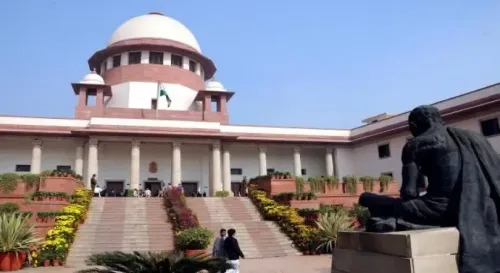
Supreme Court Orders States to Fix ICU Standards in 3 Weeks
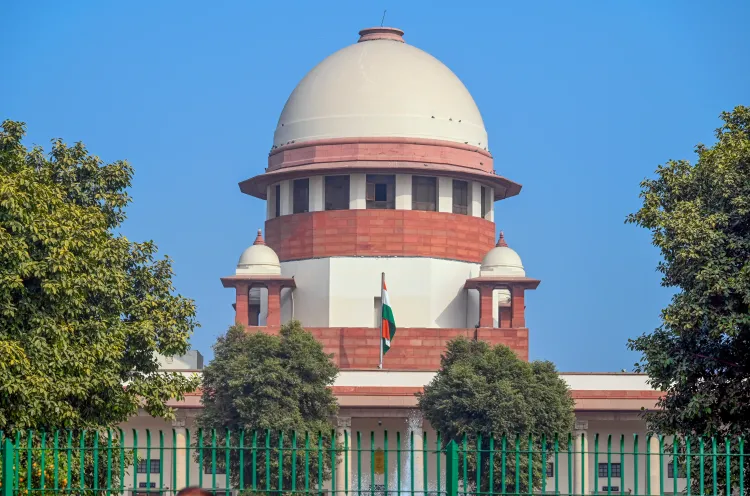
Synopsis
The Supreme Court has given India's states and UTs just three weeks to draft action plans for minimum ICU standards, mandating a GPS-based hospital locator, nursing council reforms, and a national blueprint — in one of the most sweeping judicial interventions in India's critical care history.
Key Takeaways
Supreme Court Bench of Justices Ahsanuddin Amanullah and R.
Mahadevan issued the ICU standards directive on April 25, 2025 .
All states and Union Territories must submit action plans for minimum ICU standards within three weeks , with the next hearing on May 18, 2025 .
Health department heads must convene meetings within one week and identify five core manpower and equipment priorities for ICUs.
A GPS-based real-time hospital locator has been mandated to help the public find the nearest medical facility during emergencies.
The Indian Nursing Council and Para Medical Council of India have been formally impleaded and must submit plans to upgrade ICU-related training and curricula.
The Union Health Ministry must issue the guidelines as an official advisory and publish all reports on its website for public transparency.
The Supreme Court of India on April 25, 2025, issued a landmark directive ordering all states and Union Territories to implement minimum standards for Intensive Care Units (ICUs) within a strictly defined timeframe, marking a significant judicial intervention in India's critical care infrastructure. The order comes amid longstanding concerns over uneven emergency healthcare access across urban and rural India, and sets a three-week deadline for a comprehensive national action plan to be finalised.
What the Supreme Court Ordered
A Supreme Court Bench comprising Justices Ahsanuddin Amanullah and R. Mahadevan recorded that a consensus-based "foundational document" outlining guidelines for the organisation and delivery of intensive care services has already been prepared and circulated to all states and UTs. The Bench described the guidelines as "practical, implementable, and necessary as a minimum standard for an Intensive Care Unit."
As an immediate first step, the court directed that Additional Chief Secretaries or Secretaries heading Health Departments in every state and UT must convene meetings within one week to prepare a "realistic and practical" action plan for rolling out the ICU guidelines. Authorities have been specifically asked to identify and prioritise five basic requirements relating to manpower and equipment at the initial stage.
The entire exercise must be completed within three weeks from the date of the order, with the matter listed for further hearing on May 18, 2025.
GPS Hospital Locator and Technology Mandate
In one of the most forward-looking directives of the order, the Supreme Court stressed the urgent need for a real-time hospital access system powered by technology. "Most importantly, a GPS-based hospital locator should be created so that, in times of need, the public may identify the nearest medical facility and the services available there, depending upon the nature of the case and the condition of the patient concerned," the Bench stated.
This directive addresses a critical gap in India's emergency response ecosystem, where patients and families frequently lose precious time locating hospitals with functional ICU beds — a problem starkly exposed during the COVID-19 pandemic in 2021 when real-time bed availability data was absent in most states.
Role of Medical Experts and Key Institutions
During the hearing, several leading medical professionals from premier institutions assisted the court, including experts from AIIMS, Tata Memorial Centre, Medanta, and Sir Ganga Ram Hospital. The Justice Amanullah-led Bench described their suggestions as "highly practical and deserving of due consideration", particularly those concerning the prescription of timelines, training of specialised personnel, and formulation of Standard Operating Procedures (SOPs) in the form of checklists.
The court's engagement with domain experts reflects a growing judicial trend of evidence-based policymaking through litigation — a model that has previously shaped India's environmental and prison reform jurisprudence.
Nursing Council and Para Medical Council Impleaded
In a significant development, the Supreme Court impleaded the Indian Nursing Council and the Para Medical Council of India as formal parties to the proceedings, underscoring the critical role of nursing staff in ICU care. The court noted that nurses remain with patients "round the clock" and called the augmentation of nursing training "not only pragmatic but also imperative."
Both bodies have been directed to submit a plan detailing how their training programmes, courses, and curricula will be enhanced to equip healthcare professionals to manage ICU situations effectively. This move could trigger a significant overhaul of nursing education standards across the country.
National Blueprint and Union Health Ministry's Role
State and UT-level reports are to be forwarded to the Union Health Ministry, which will subsequently coordinate a joint meeting of all stakeholders to develop a unified national blueprint. The Union Health Ministry has also been directed to formally issue the guidelines as an advisory to all states and UTs and publish them, along with subsequent compliance reports, on its official website for public transparency.
This comes amid India's persistent challenge of bridging the healthcare divide between its top-tier urban hospitals and rural health centres, where ICU facilities are either absent or severely under-resourced. According to data from the National Health Profile, India has approximately 2.3 ICU beds per 100,000 people — far below the global benchmark of 15–20 beds per 100,000 in developed nations. The court's intervention could be the catalyst needed to begin closing this gap systematically.
With the next hearing scheduled for May 18, 2025, all eyes will be on whether states submit credible, funded action plans — or whether this becomes another compliance exercise on paper. The Supreme Court's willingness to monitor implementation directly suggests it will not accept tokenism this time.
Point of View
With patients dying outside hospitals that had no beds or oxygen. The Supreme Court's three-week deadline is bold, but the real test is enforcement: India has a long history of landmark health directives that dissolve into bureaucratic inaction. The impleading of the Indian Nursing Council is the most underreported detail here — it signals that the court understands systemic reform, not just infrastructure checklists. If states treat this as a compliance exercise rather than a genuine overhaul, the next pandemic will find us equally unprepared.
NationPress
19 Sept 2026
Frequently Asked Questions
What has the Supreme Court ordered regarding ICU standards in India?
The Supreme Court has directed all states and Union Territories to implement minimum ICU standards within three weeks, including drafting action plans, identifying five core manpower and equipment requirements, and submitting reports to the Union Health Ministry. The matter will be reviewed at the next hearing on May 18, 2025.
What is the GPS hospital locator that the Supreme Court mentioned?
The Supreme Court has called for the creation of a GPS-based hospital locator system that allows the public to identify the nearest medical facility and the services available there in real time. This is intended to reduce delays in emergency care access across India.
Why were the Indian Nursing Council and Para Medical Council impleaded in this case?
The Supreme Court recognised that nursing staff are central to ICU care, remaining with patients round the clock. Both bodies were made parties to the case so they can submit plans for upgrading training, courses, and curricula to ensure healthcare professionals can effectively manage ICU situations.
Which hospitals and institutions contributed to the Supreme Court's ICU guidelines?
Medical experts from AIIMS, Tata Memorial Centre, Medanta, and Sir Ganga Ram Hospital assisted the Supreme Court during the hearing. Their suggestions on timelines, specialised training, and standard operating procedures were described by the Bench as highly practical.
What is the deadline for states to comply with the Supreme Court's ICU order?
States and UTs must convene health department meetings within one week and complete the entire exercise — including action plans and reports to the Union Health Ministry — within three weeks of April 25, 2025. The Supreme Court will review progress at the next hearing on May 18, 2025.