Why Did the Supreme Court Stay the Delhi HC's Order in Sengar's Rape Case?
Synopsis
In a significant turn of events, the Supreme Court has intervened in the Delhi High Court's recent decision, maintaining the life sentence for Kuldeep Singh Sengar. This ruling raises concerns about public trust and legal interpretations surrounding crimes against women, especially in high-profile cases.
Key Takeaways
The Supreme Court stayed the Delhi High Court's order suspending Sengar's life sentence.
Sengar is currently serving a separate 10-year sentence related to the death of the survivor's father.
The case highlights ongoing societal issues regarding justice for victims of sexual crimes.
Public protests have emerged in response to perceived injustices in the judicial process.
The Supreme Court provided an avenue for the survivor to seek legal assistance.
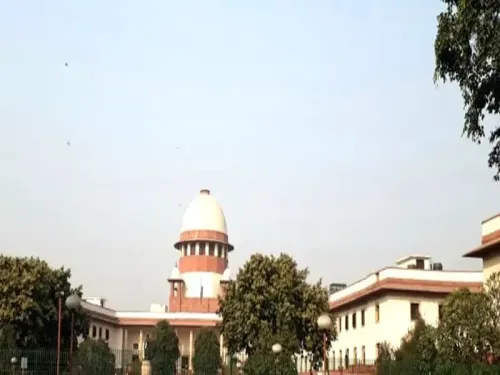
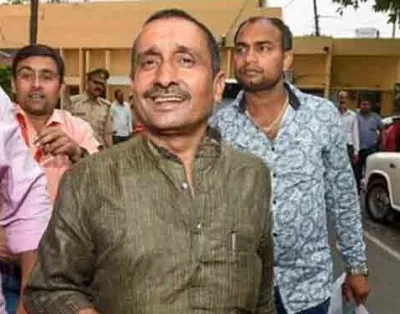
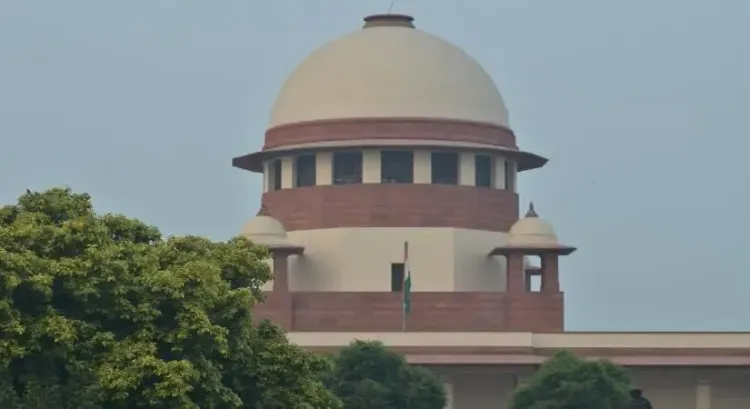
New Delhi, Dec 29 (NationPress) The Supreme Court on Monday issued a stay on the Delhi High Court's order, which had suspended the life sentence and granted bail to Kuldeep Singh Sengar, the expelled leader of the Bharatiya Janata Party, in connection with the 2017 Unnao rape case.
"We acknowledge that typically, when someone convicted or awaiting trial is released, such orders are not often stayed without hearing from those individuals. However, given the exceptional circumstances where the convict has been found guilty of another crime, we have decided to stay the Delhi High Court's order," stated a three-judge panel led by Chief Justice of India Surya Kant.
The bench, which also included Justices J.K. Maheshwari and Augustine George Masih, has issued a notice to Sengar in response to the Central Bureau of Investigation (CBI) appeal and mandated that a counter-affidavit be submitted within four weeks.
The apex court made it clear that Sengar would not be released under the contested Delhi High Court ruling.
The CJI-led bench consented to assess the arguments put forth by Solicitor General Tushar Mehta, who emphasized that the interpretation from the Delhi High Court could imply that a police constable could qualify as a "public servant" under the Protection of Children from Sexual Offences (POCSO) Act, while excluding a legislator.
Representing the CBI, SG Mehta contended that the Delhi High Court had made a mistake in ruling that a legislator doesn't fit within the definition of a "public servant" when it comes to sentencing.
He presented evidence from the trial court’s conviction order, underscoring that the victim was under 16 years old—approximately 15 years and 10 months—when the rape occurred.
SG Mehta further pointed out that Sengar cannot be released as he is currently serving a separate 10-year sentence related to the death of the survivor's father in 2018. “This convict was found guilty of murdering the survivor’s father. He remains incarcerated for that. I implore this court to stay the order for the sake of the child who was victimized,” he argued.
The Supreme Court also clarified that the survivor has the option to file a separate special leave petition (SLP) if necessary, and the SC Legal Services Committee would offer legal assistance.
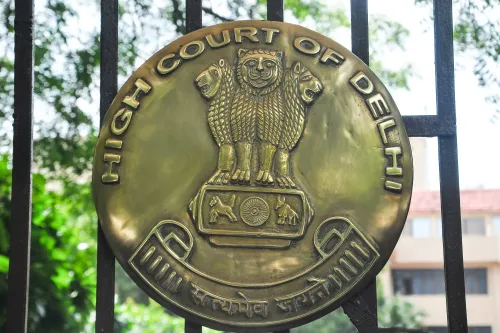
Previously, on December 23, a Division Bench of Justices Subramonium Prasad and Harish Vaidyanathan Shankar from the Delhi High Court had suspended Sengar's life sentence and granted him conditional bail during the ongoing appeal, with strict conditions attached.
This bail ruling sparked protests from the survivor's family and women's rights advocates, who claimed it undermined public trust and conveyed a negative message regarding crimes against women.
In December 2019, the trial court convicted Sengar of kidnapping and raping a minor girl, sentencing him to life imprisonment along with a fine of ₹25 lakh. The Supreme Court had earlier transferred all related cases from Uttar Pradesh to Delhi and mandated that the trial proceed on a daily basis.
Point of View
We must emphasize the importance of a robust legal framework in addressing crimes against women. The Supreme Court's decision to stay the Delhi High Court's order reinforces the need for accountability and justice, especially in cases involving vulnerable individuals. This incident serves as a reminder that the legal system must act decisively to protect victims and uphold public confidence.
NationPress
6 Oct 2026
Frequently Asked Questions
What was the Supreme Court's recent decision regarding Kuldeep Singh Sengar?
The Supreme Court stayed the Delhi High Court's order that had suspended Sengar's life sentence and granted him bail in the Unnao rape case.
What are the implications of this ruling?
The ruling underscores the importance of public trust in the judicial system and highlights the complexities involved in cases of sexual violence against minors.
Why was there public protest regarding Sengar's bail?
The survivor's family and women's rights activists protested, claiming that the bail decision undermined faith in the justice system and sent a negative message about crimes against women.