SC to hear pregnant journalist's plea against Rahul Gandhi on Nov 3
Synopsis
The Supreme Court has confirmed a 3 November hearing on a pregnant journalist's plea alleging that Rahul Gandhi grabbed and pulled her during the INDIA bloc's march to the apex court on 12 October. With CCTV evidence preserved, Congress denying wrongdoing, and a parallel plea seeking safeguards against political protests near the court, the case puts India's highest court at the centre of a sharp political and legal confrontation.
Key Takeaways
The Supreme Court has fixed 3 November as the hearing date for journalist Richa Parashar's plea alleging assault during the INDIA bloc march on 12 October .
Parashar, who was three months pregnant , alleged that Rahul Gandhi grabbed and pulled her aggressively, and that his security personnel pushed her to the ground, resulting in hospitalisation.
Senior advocate Gaurav Bhatia flagged the unlisted matter before CJI Surya Kant , who confirmed notice had already been issued.
A Bench of CJI Surya Kant and Justice Joymalya Bagchi on 15 October directed preservation of CCTV footage and digital evidence related to the incident.
Congress has denied the allegations, calling them politically motivated, and circulated video footage to dispute the account.
A separate plea seeking safeguards against political demonstrations near Supreme Court premises is also pending.
The Supreme Court on Tuesday, 27 October 2026, confirmed that a plea filed by pregnant journalist Richa Parashar — alleging that Leader of the Opposition Rahul Gandhi grabbed and pulled her aggressively during the INDIA bloc's march to the apex court premises — will be taken up for hearing on 3 November. The matter was mentioned before Chief Justice of India (CJI) Surya Kant, who clarified that notice had already been issued and fixed the date.
What the Journalist Alleged
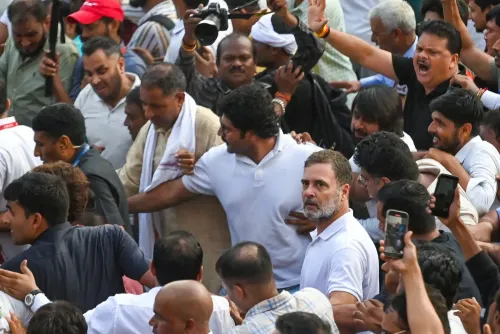
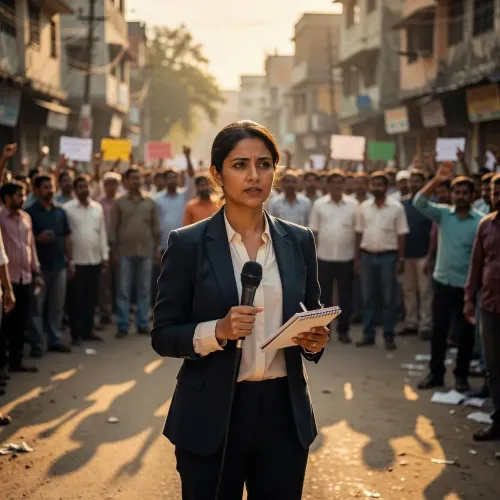
Richa Parashar, who works with a news website and was three months pregnant at the time, alleged that Gandhi grabbed her hand and pulled her aggressively while she was covering the Opposition leaders' march on 12 October. She further alleged that his security personnel pushed her, causing her to fall to the ground. Parashar was subsequently hospitalised following the incident.
How the Matter Reached the Supreme Court
Senior advocate Gaurav Bhatia mentioned the matter before the CJI-led Bench, submitting that the application concerning Parashar had not yet been listed for hearing. The Bench responded by clarifying that notice had already been issued and confirmed the 3 November hearing date.
Separately, on 15 October, a Bench comprising CJI Surya Kant and Justice Joymalya Bagchi had issued notice on a related plea seeking safeguards against political demonstrations in and around the Supreme Court premises. That Bench also directed the preservation of CCTV footage and other digital evidence linked to the incident.
Congress Denies the Allegations
The Indian National Congress (INC) has denied the allegations, describing them as politically motivated. Party leaders and supporters circulated videos of the incident, questioning whether the visuals conclusively establish that Gandhi pushed the journalist. The dispute over the footage's interpretation has deepened the political controversy around the incident.
Background: The Opposition March and Its Context
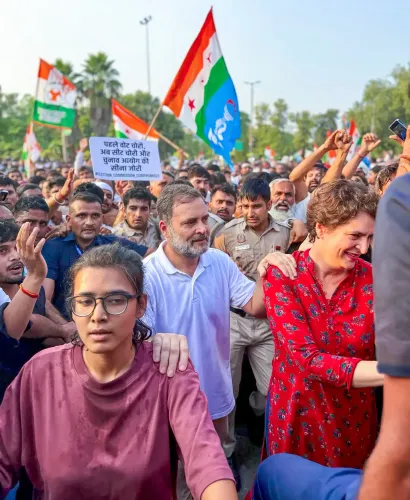
The INDIA bloc leaders, including Gandhi and Congress president Mallikarjun Kharge, marched to the Supreme Court premises on 12 October following the CJI's refusal to meet them and receive a memorandum on the Special Intensive Revision (SIR) of electoral rolls. The CJI had advised the Opposition to approach the court through established legal channels, noting that convening a meeting to discuss pending cases would be contrary to the constitutional principle of separation of powers. The march itself, and the accompanying commotion, set the stage for the incident now under judicial scrutiny.
With the 3 November hearing approaching, the case is poised to test both the court's response to alleged physical harm during a political demonstration on its own premises and broader questions about the permissibility of such protests near the apex court.
Point of View
The custodian of evidence related to it, and the adjudicator of the resulting plea — an unusually layered position for the apex court. The CJI had already signalled discomfort with the Opposition march itself, citing separation of powers when declining to meet the delegation. The Parashar case adds a further dimension: whether physical harm, however disputed, occurred on the court's own grounds during a political demonstration. Congress's move to circulate counter-videos reflects a calculated effort to shift the evidentiary burden into the public sphere before the courtroom argument begins. The preservation of CCTV footage suggests the court is taking the matter seriously regardless of political framing, and the 3 November date will determine whether this proceeds as a full hearing or gets disposed of on procedural grounds.
NationPress
27 Oct 2026
Frequently Asked Questions
What is Richa Parashar's plea in the Supreme Court about?
Journalist Richa Parashar, who was three months pregnant, has filed a plea in the Supreme Court alleging that Rahul Gandhi grabbed her hand and pulled her aggressively during the INDIA bloc's march to the apex court on 12 October, and that his security personnel subsequently pushed her to the ground, resulting in her hospitalisation.
When will the Supreme Court hear the case?
The Supreme Court has confirmed it will take up Richa Parashar's plea on 3 November. Chief Justice of India Surya Kant clarified that notice had already been issued when senior advocate Gaurav Bhatia mentioned the matter on 27 October.
What has Congress said about the allegations?
The Indian National Congress has denied the allegations, describing them as politically motivated. Party leaders and supporters have circulated videos of the incident, questioning whether the footage conclusively establishes that Rahul Gandhi pushed the journalist.
What evidence has been preserved in connection with the incident?
On 15 October, a Supreme Court Bench comprising CJI Surya Kant and Justice Joymalya Bagchi directed the preservation of CCTV footage and all other digital evidence relating to the 12 October incident on and around the court premises.
Why did the INDIA bloc march to the Supreme Court in the first place?
The INDIA bloc leaders, including Rahul Gandhi and Congress president Mallikarjun Kharge, marched to the Supreme Court on 12 October after the CJI declined their request for a meeting to submit a memorandum on the Special Intensive Revision (SIR) of electoral rolls. The CJI had advised them to use established legal channels, citing the constitutional principle of separation of powers.