CM Sai's Hasdeo Brand Gives Chhattisgarh Products New Identity
Synopsis
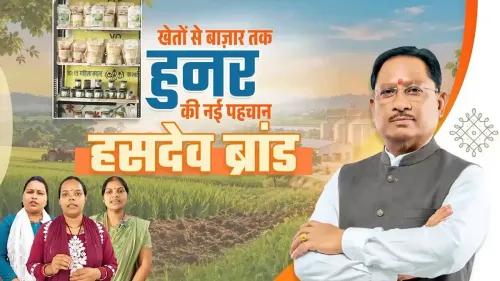
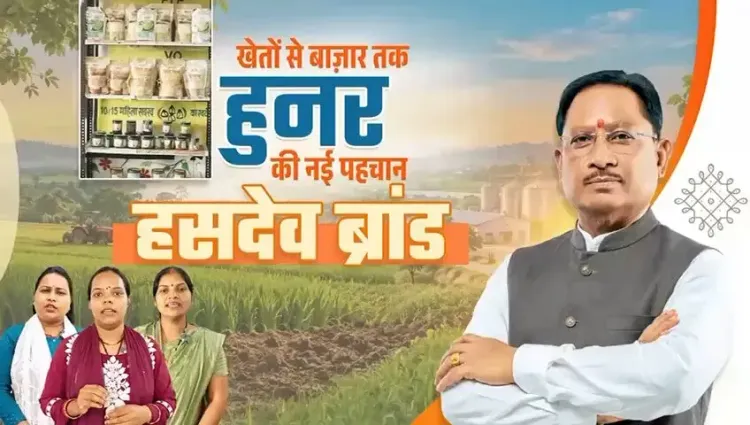
Chhattisgarh's CMO unveiled the Hasdeo Brand on 27 October 2026, a state-backed quality identity for local products under CM Vishnu Deo Sai, aligning with India's Vocal for Local drive to boost artisans and small enterprises.
Key Takeaways
The Hasdeo Brand is Chhattisgarh's official quality-identity label for locally made products, announced on 27 October 2026 .
Chief Minister Vishnu Deo Sai , in office since December 2023 , is driving the initiative as part of an Atmanirbhar Chhattisgarh vision.
The brand aligns with the national Atmanirbhar Bharat and Vocal for Local campaigns launched in 2020 .
Primary beneficiaries include local artisans, weavers, farmers, and small enterprises across the state.
The brand name is drawn from the Hasdeo river , a culturally significant waterway in northern Chhattisgarh.
Specific product categories, launch timelines, and market outcomes are yet to be publicly detailed.
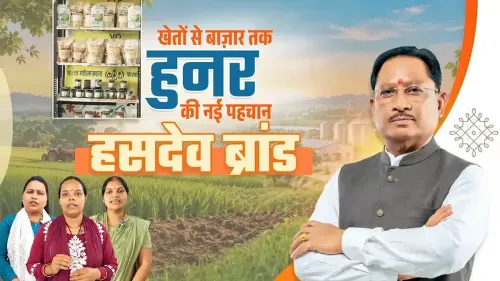
A river-valley name is becoming a quality seal. The Chief Minister's Office of Chhattisgarh announced on Tuesday, 27 October 2026 that the Hasdeo Brand — a state-backed identity mark for local products — is gaining momentum under Chief Minister Vishnu Deo Sai, positioning the landlocked central-Indian state as a serious player in India's home-grown enterprise story.
The CMO post described the initiative in direct terms: 'Hasdeo Brand, Chhattisgarh ki pehchaan aur guṇvattā kā pratīk' — 'Hasdeo Brand, a symbol of Chhattisgarh's identity and quality.' The statement frames the branding effort as a convergence of three ideas: the state's rich cultural heritage, its grassroots enterprises, and the broader goal of an Atmanirbhar Chhattisgarh — a self-reliant state.
What the Hasdeo Brand stands for
The Hasdeo Brand draws its name from the Hasdeo river, a lifeline of northern Chhattisgarh that flows through forested, resource-rich terrain and holds deep cultural significance for the region's communities. By anchoring the brand to this geography, the state government is betting that provenance — where something comes from and what it represents — can become a commercial asset for local artisans, farmers, and small enterprises.
The initiative fits squarely within the national Vocal for Local and Make in India framework that the central government has championed since 2020 under the Atmanirbhar Bharat campaign. Across India, states from Uttar Pradesh to Telangana have developed similar regional certification and branding mechanisms, each trying to connect heritage goods with domestic retail and export channels. Chhattisgarh's Hasdeo effort is its formal entry into that race.
CM Sai's economic pitch for the state's margins
Chief Minister Vishnu Deo Sai, who took office in December 2023, has consistently pitched Chhattisgarh's tribal heritage and natural resources as economic differentiators rather than development challenges. The Hasdeo Brand is an extension of that framing — turning the state's cultural distinctiveness into a market-facing proposition that can lift producers at the grassroots.
The beneficiaries are concrete: weavers, forest-produce collectors, food processors, and handicraft makers whose goods, under a unified quality-assured label, could command better shelf space and fairer prices. A credible state brand also creates accountability — products that carry the Hasdeo mark must meet a defined standard, nudging producers toward consistency and buyers toward trust.
What remains to be watched is how quickly the brand translates into verified market access — specific retail tie-ups, trade-fair presence, or export listings. That on-the-ground rollout will determine whether Hasdeo becomes a genuine economic lever or stays a well-crafted story. For now, the signal from Raipur is unambiguous: Chhattisgarh wants its name on the label.
Point of View
CM Sai ties the initiative to an emotionally resonant local anchor, which is a smarter play than a generic 'quality mark' that consumers can ignore. The real test is institutional follow-through: without budget-backed market linkages, trade promotion, and quality enforcement, regional brands in India have historically peaked at awareness and stalled at commerce. If Raipur can connect Hasdeo-labelled goods to modern retail and export pipelines, it sets a replicable model for other resource-rich, heritage-deep states seeking to escape commodity-price traps.
NationPress
27 Oct 2026
Frequently Asked Questions
What is the Hasdeo Brand in Chhattisgarh?
The Hasdeo Brand is a state government initiative in Chhattisgarh that serves as a quality and identity mark for locally made products, named after the Hasdeo river of northern Chhattisgarh.
Who launched the Hasdeo Brand?
The initiative is being driven by Chief Minister Vishnu Deo Sai, who has been in office since December 2023, with the Chief Minister's Office promoting it under the Atmanirbhar Chhattisgarh vision.
How does the Hasdeo Brand relate to Vocal for Local?
The Hasdeo Brand aligns directly with India's national Vocal for Local and Atmanirbhar Bharat campaigns launched in 2020, which encourage states to promote and market domestically produced goods.
Who benefits from the Hasdeo Brand scheme?
The primary beneficiaries are local artisans, weavers, farmers, forest-produce collectors, and small enterprises in Chhattisgarh who can market their goods under a unified, state-backed quality label.
What products come under the Hasdeo Brand?
Specific product categories covered under the Hasdeo Brand have not been officially detailed in public records as of October 2026; the state government is expected to announce further rollout details.