Jal Shakti Minister Paatil champions river interlinking push
Synopsis
Union Jal Shakti Minister C. R. Paatil on 27 October 2026 reaffirmed the Modi government's push for river interlinking, calling it a decisive stride toward a water-prosperous India and signalling continued political momentum behind the National River Linking Project.
Key Takeaways
Union Jal Shakti Minister C.
Paatil publicly backed river interlinking on 27 October 2026 , framing it as central to India's water security vision.
The National Perspective Plan for river interlinking was first drawn up in 1980 ; the Supreme Court directed the government to expedite it in 2012 .
The Ken-Betwa Link Project , the first project under the programme, received Cabinet approval in 2021 and targets drought-stressed Bundelkhand .
River interlinking is part of a wider water infrastructure push that also includes the Jal Jeevan Mission and the Namami Gange programme .
Upcoming Union Budget allocations and NITI Aayog clearances for new link projects are the key policy milestones to watch.
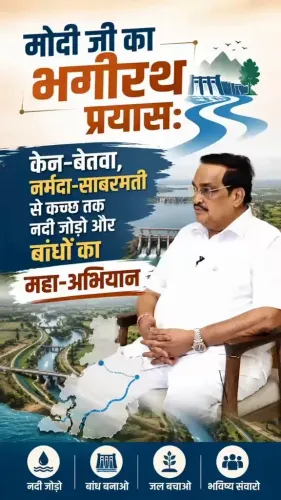
India's water security ambition got a fresh political endorsement on Tuesday, 27 October 2026, when Union Jal Shakti Minister C. R. Paatil invoked the confluence of rivers as a symbol of the nation's drive toward lasting water resilience — framing river interlinking as a defining commitment of Prime Minister Narendra Modi's government.
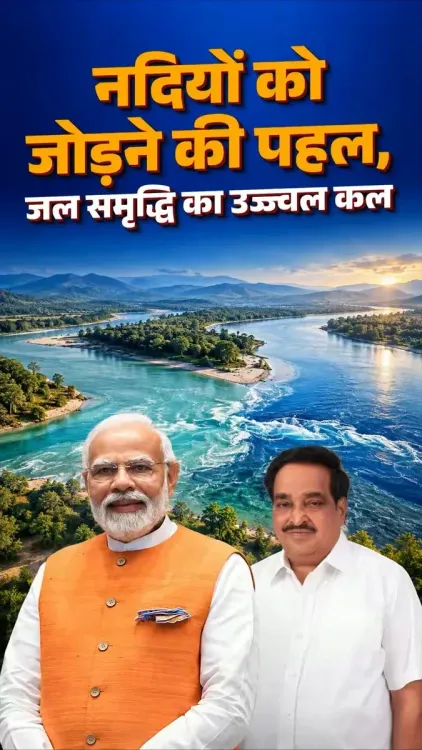
Posting in Hindi, Paatil wrote: 'Nadiyon ka sangam, jal suraksha ki disha mein sashakt qadam' — 'The confluence of rivers, a powerful step toward water security.' He added that the initiative to interlink rivers, under Prime Minister Modi's leadership, is advancing both the better utilisation of water resources and the resolve to build a jal samriddh Bharat — a water-prosperous India.
A decades-old blueprint, now at the centre of policy
River interlinking in India is not a new idea — it dates to the National Perspective Plan drawn up by the then-Ministry of Irrigation in 1980, which envisioned a vast network of canals and reservoirs connecting Himalayan and peninsular river systems to move water from surplus basins to deficit ones. The plan sat largely dormant for decades before the Supreme Court in 2012 directed the central government to accelerate the programme.
The first concrete step under the current administration came with the Cabinet's approval of the Ken-Betwa Link Project in 2021 — the inaugural scheme under the National River Linking Project. Designed to carry surplus waters of the Ken river in Madhya Pradesh to the water-scarce Betwa basin, the project promises to irrigate hundreds of thousands of hectares and supply drinking water to drought-stressed districts in Bundelkhand.
Water security as a strategic pillar — not just infrastructure
Paatil's post situates river interlinking within the Jal Shakti Ministry's broader portfolio, which also spans the Jal Jeevan Mission — the flagship scheme to deliver tap water to every rural household — and the Namami Gange programme for Ganga rejuvenation. Together, these programmes represent the NDA government's argument that large-scale water infrastructure is the strategic answer to India's deepening cycle of floods in some regions and chronic drought in others.
For farmers in drought-prone states, river interlinking holds the promise of predictable irrigation water independent of monsoon variability. For river-basin states, it raises perennial questions about allocation and sovereignty over shared water — a negotiation that has historically made multi-state projects difficult to advance. Paatil's framing of the initiative as a national 'resolve' signals the political will to keep pushing through those fault lines.
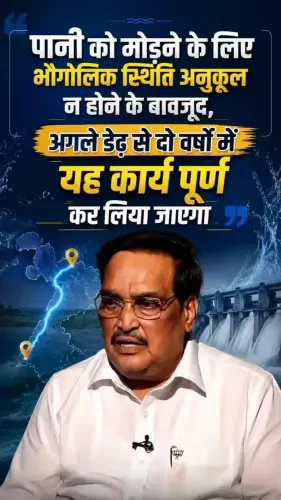
With the next Union Budget cycle approaching, watchers of water policy will track whether NITI Aayog or the Cabinet clear additional river-link projects or announce fresh allocations to accelerate the ones already in the pipeline. The Minister's post, paired with a video, suggests a communication push that could precede exactly such an announcement.
Point of View
The Jal Shakti Minister is signalling both institutional continuity and electoral salience — water scarcity remains a live grievance in large parts of peninsular and central India. The framing of interlinking as a 'resolve' rather than a project suggests the government is preparing the ground for the next wave of approvals. Whether that resolve translates into budget allocations and inter-state agreements will be the true test of this political communication.
NationPress
27 Oct 2026
Frequently Asked Questions
What is India's National River Linking Project?
The National River Linking Project is a long-standing plan to connect India's Himalayan and peninsular river systems through a network of canals and reservoirs, redistributing water from surplus basins to water-scarce regions. The idea was first outlined in the National Perspective Plan of 1980 .
What is the Ken-Betwa Link Project?
The Ken-Betwa Link Project is the first scheme to be approved under India's river interlinking programme. Cleared by the Union Cabinet in 2021 , it will channel surplus water from the Ken river in Madhya Pradesh to the Betwa basin, benefiting drought-prone districts of Bundelkhand.
Who is C. R. Paatil and what ministry does he head?
C. R. Paatil is a senior BJP leader and former Gujarat state president of the party who currently serves as the Union Minister of Jal Shakti , the central ministry responsible for water resources, river development and the Ganga rejuvenation programme.
How does river interlinking help farmers in drought-prone areas?
By moving water from river basins with a surplus to those with a deficit, interlinking projects aim to provide farmers in drought-prone regions with a more reliable source of irrigation water that is less dependent on monsoon variability, reducing crop losses during dry years.
What other water schemes does the Jal Shakti Ministry run?
Beyond river interlinking, the Jal Shakti Ministry oversees the Jal Jeevan Mission , which targets tap-water connections for every rural household, and the Namami Gange programme , focused on the conservation and rejuvenation of the Ganga river.