Supreme Court urges media restraint in Twisha Sharma dowry death case
Synopsis
The Supreme Court's suo motu intervention in the Twisha Sharma dowry death case is a pointed signal: when the accused include a lawyer and a retired judicial officer, the judiciary itself steps in to insulate the probe. With the CBI now taking over and the court appealing for media silence, the case has moved from a local tragedy to a national test of institutional accountability.
Key Takeaways
The Supreme Court on 25 May called for a 'fair, independent and unbiased' investigation into the suspected dowry death of Twisha Sharma .
A Bench led by CJI Surya Kant urged media outlets to refrain from publishing statements of potential witnesses in the case.
The CBI is set to take over the investigation immediately, as assured by Solicitor General Tushar Mehta on behalf of the Madhya Pradesh government.
Twisha Sharma was found hanging at her matrimonial home in Bhopal on 12 May , with her family alleging dowry harassment.
The court's suo motu case was triggered by alleged lapses including delayed FIR registration and inconsistencies in post-mortem findings.
The court clarified it has not expressed any opinion on the merits of the allegations; all aspects will be examined by the CBI .
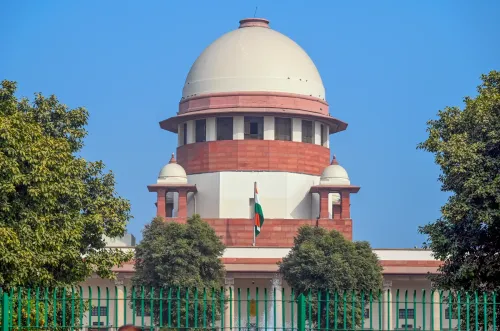
The Supreme Court on Monday, 25 May called for a 'fair, independent and unbiased' investigation into the suspected dowry death of model-turned-actor Twisha Sharma, while urging all parties and media outlets to refrain from public statements that could compromise the ongoing probe. The apex court was hearing a suo motu case registered over allegations of institutional bias and procedural lapses in the investigation.
What the Court Said
A Bench led by Chief Justice of India (CJI) Surya Kant, and comprising Justice Joymalya Bagchi and Justice Vipul M. Pancholi, said it was 'slightly in pain' over certain developments surfacing through media coverage. The Bench appealed directly to journalists: 'We will request our media friends not to go for the statements of the victim's family or the other family. Let things move as per law and procedure.'
The court further requested both the victim's family and the accused to channel their versions through the investigating agency rather than media platforms. 'We request both sides that whatever statements they wish to make should be made before the investigating agency so that the ongoing probe is not adversely affected,' the Bench observed.
Why the Court Took Suo Motu Cognisance
The Supreme Court had taken suo motu cognisance of the matter amid concerns over alleged procedural lapses, including delay in FIR registration, inconsistencies in post-mortem findings, and apprehensions of institutional bias. The court noted that the backdrop to these concerns was significant: the husband of the deceased is reportedly an advocate, and her mother-in-law a retired judicial officer — a combination that, critics argued, may have influenced the pace and direction of the initial investigation.
Notably, the court clarified it had not expressed any opinion on the merits of the allegations, stating that all aspects would be independently examined by the Central Bureau of Investigation (CBI).
CBI to Take Over the Investigation
Solicitor General Tushar Mehta, appearing for the Madhya Pradesh government, informed the court that the CBI would assume charge of the investigation immediately, with all necessary administrative formalities to be completed without delay. Recording this assurance, the Bench noted in its order that the Centre's second-highest law officer had committed to ensuring the CBI takes over expeditiously.
The court expressed confidence in the probe agencies, stating: 'We have no doubt that whichever agency investigates the matter will carry the probe to its logical conclusion and uncover the truth.'
Background: The Death of Twisha Sharma
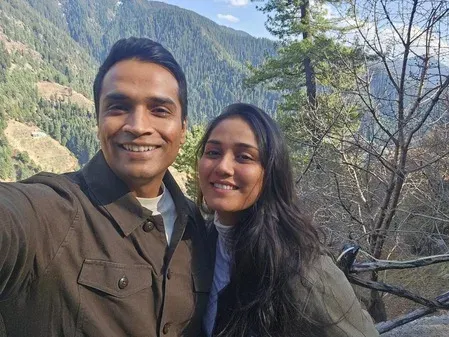
Twisha Sharma, a model-turned-actor, was found hanging at her matrimonial home in Bhopal on 12 May, triggering widespread outrage and allegations of dowry harassment from her family. The case drew national attention, with concerns mounting over the manner in which the initial investigation was conducted. The Supreme Court's intervention reflects the gravity of those concerns and the perceived need for an independent agency to take the matter forward.
Appeal for Public Restraint
Beyond media and the parties directly involved, the apex court also appealed to the general public to refrain from speculation and to place trust in the CBI's investigation. The court specifically requested news platforms to avoid publishing statements from potential witnesses, warning that such coverage could affect the outcome of issues yet to be probed. This is a rare but not unprecedented step — courts have issued similar advisories in high-profile cases where media trial concerns have arisen.
With the CBI now set to take charge, the case enters a critical new phase that will test both institutional impartiality and the judiciary's ability to insulate sensitive investigations from public pressure.
Point of View
But the media restraint appeal, while well-intentioned, raises a harder question: in an era of real-time social media, judicial advisories to news platforms carry limited enforceability. The real accountability test lies with the CBI — whether it can deliver findings that are both thorough and visibly independent of professional networks that the accused may have cultivated over years.
NationPress
21 Oct 2026
Frequently Asked Questions
Who was Twisha Sharma and how did she die?
Twisha Sharma was a model-turned-actor who was found hanging at her matrimonial home in Bhopal on 12 May. Her family alleged dowry harassment, and the circumstances of her death triggered widespread outrage and concerns over the conduct of the initial police investigation.
Why did the Supreme Court intervene in the Twisha Sharma case?
The Supreme Court took suo motu cognisance amid allegations of institutional bias and procedural lapses in the investigation, including delayed FIR registration and inconsistencies in post-mortem findings. Concerns were heightened by the fact that the deceased's husband is an advocate and her mother-in-law a retired judicial officer.
Which agency will now investigate the Twisha Sharma case?
The CBI will take over the investigation, as assured by Solicitor General Tushar Mehta on behalf of the Madhya Pradesh government during the Supreme Court hearing on 25 May. Administrative formalities are to be completed without delay.
What did the Supreme Court say about media coverage of the case?
The court urged media outlets to refrain from publishing or recording statements from potential witnesses, warning that such coverage could adversely affect the investigation. It also requested both the victim's family and the accused to present their versions before the investigating agency rather than through the media.
Has the Supreme Court expressed any opinion on the guilt of the accused?
No. The court explicitly clarified that it has not expressed any opinion on the allegations involved in the case. It stated that all aspects will be independently examined by the CBI, and that it has full confidence in the agency's ability to uncover the truth.