Supreme Court sets aside NCLT order over AI-generated fake judgments, declares zero tolerance
Synopsis
The Supreme Court has declared that any judicial order tainted by even a trace of AI-generated fake precedents is void in the eyes of law — and compared the threat of AI hallucinations in courts to the Bhopal gas leak: invisible until catastrophic. With the Bar Council of India now directed to frame disciplinary rules, this ruling could reshape how India's entire legal profession uses AI tools.
Key Takeaways
The Supreme Court on 2 July set aside the NCLT's 28 August 2024 order and NCLAT's 11 September 2025 judgment after finding reliance on AI-generated fake judicial precedents .
A Bench of Justice P.S.
Narasimha and Justice Alok Aradhe declared zero tolerance for unverified AI-generated material in adjudication.
The court ruled that any decision based on hallucinated AI precedents is 'no decision in the eyes of law' and must be set aside.
Citing unverified AI-generated judgments was termed misconduct for advocates; judicial reliance on such material was called a 'serious lapse.' The Bar Council of India (BCI) has been directed to constitute a committee and prescribe disciplinary guidelines on the issue.
The NCLT has been directed to re-decide the Essel Infraprojects insolvency matter afresh within two weeks .
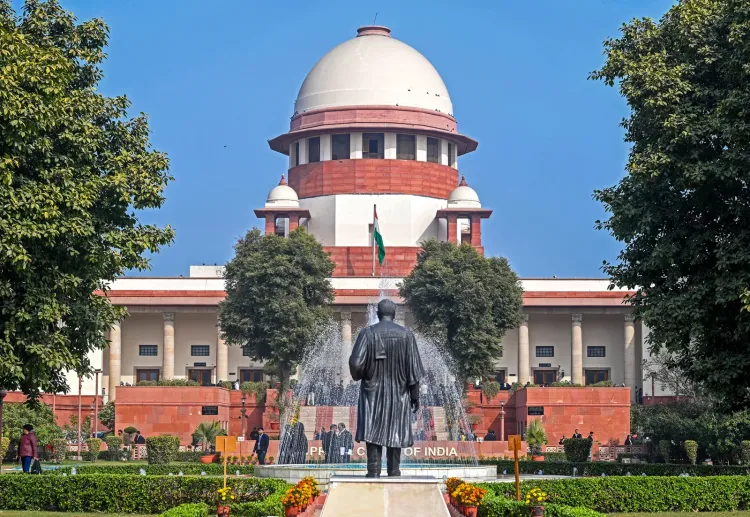
The Supreme Court of India on Thursday, 2 July set aside orders passed by the National Company Law Tribunal (NCLT) and the National Company Law Appellate Tribunal (NCLAT) after finding that the NCLT had relied on Artificial Intelligence (AI)-generated fake, non-existent, and hallucinated judicial precedents in its decision-making. The apex court declared a policy of 'zero tolerance' towards the use of such unverified AI-generated material in judicial proceedings.
What the Supreme Court Found
A Bench of Justice P.S. Narasimha and Justice Alok Aradhe held that a decision founded on fabricated or hallucinated AI-generated precedents was 'no decision in the eyes of law' and amounted to a subversion of the rule of law. The court found that several judgments cited by the NCLT were either entirely non-existent or contained AI-generated paragraphs wrongly attributed to genuine Supreme Court rulings.
'This is yet again a case where the Tribunal relied on non-existent, fake and hallucinated material, generated through Artificial Intelligence (AI), as if it were a precedent in support of its judgment,' the apex court stated.
Orders Set Aside, Matter Restored to NCLT
The Justice Narasimha-led Bench set aside the NCLT's 28 August 2024 order and the NCLAT's 11 September 2025 judgment, restoring the insolvency proceedings to the NCLT for fresh adjudication. The tribunal has been directed to decide the matter afresh within two weeks, with parties required to maintain status quo in the interim. The Bench clarified it had expressed no opinion on the merits of the underlying dispute.
Background: The Essel Infraprojects Case
The judgment arose from an appeal filed by Pooja Ramesh Singh, suspended director of Essel Infraprojects Ltd., contesting the initiation of insolvency proceedings by Jammu and Kashmir Bank Ltd. under Section 7 of the Insolvency and Bankruptcy Code. During the hearing, senior advocate Madhavi Divan, appearing for the appellant, flagged that multiple NCLT-cited judgments were either non-existent or carried fabricated paragraphs. Jammu and Kashmir Bank subsequently filed an affidavit stating that its counsel had not cited the fake judgments and that the tribunal had relied on them based on its own research.
Court's Warning on AI in Adjudication
Stressing that AI can assist but cannot replace human judicial reasoning, the Supreme Court asserted 'total and absolute control over adjudication, with a human in the loop at every stage.' In a striking analogy, the Bench compared unchecked AI hallucinations in law to the release of methyl isocyanate — 'invisible, insidious, and catastrophic by the time anyone notices.'
The court ruled that even if 'an iota of fake or hallucinated AI-generated material enters the decision-making process,' the resulting order must be set aside, as it violates the sanctity of adjudication. Citing unverified AI-generated precedents was characterised as misconduct on the part of an advocate, while judicial reliance on such material was termed a 'serious lapse.'
Bar Council of India Directed to Act
The apex court directed the Bar Council of India (BCI) to constitute a committee to examine the issue of lawyers placing fake or hallucinated AI-generated precedents before courts. The BCI has been asked to prescribe guiding principles and disciplinary measures to prevent recurrences. Notably, the court's use of the phrase 'yet again' signals that this is not an isolated incident — it is at least the second publicly documented case of AI hallucination contaminating tribunal proceedings in India.
The ruling sets a significant institutional precedent at a time when AI tools are rapidly being adopted across the legal profession, and raises urgent questions about verification protocols in courts and tribunals nationwide.
Point of View
Not a one-off. The NCLT, which handles high-stakes insolvency disputes affecting creditors, employees, and promoters, should have had verification protocols long before this became a judicial crisis. Directing the Bar Council of India to frame guidelines is necessary, but the deeper gap is institutional: tribunals conducting their own AI-assisted research with no mandatory cross-check mechanism. Until courts and tribunals are required to log and verify every cited precedent — AI-sourced or otherwise — the problem will recur regardless of how forceful the Supreme Court's language is.
NationPress
1 Oct 2026
Frequently Asked Questions
Why did the Supreme Court set aside the NCLT and NCLAT orders?
The Supreme Court set aside the orders because the NCLT had relied on AI-generated fake, non-existent, and hallucinated judicial precedents in its decision-making. The apex court held that a ruling founded on fabricated material is 'no decision in the eyes of law' and amounts to a subversion of the rule of law.
What is the Essel Infraprojects case about?
The case involves an appeal by Pooja Ramesh Singh, suspended director of Essel Infraprojects Ltd., challenging insolvency proceedings initiated by Jammu and Kashmir Bank Ltd. under Section 7 of the Insolvency and Bankruptcy Code. The Supreme Court has now restored the matter to the NCLT for fresh adjudication within two weeks.
What action has the Supreme Court directed against AI misuse in courts?
The Supreme Court has declared zero tolerance for unverified AI-generated precedents and directed the Bar Council of India to constitute a committee to examine the issue. The BCI must prescribe guiding principles and disciplinary measures for advocates who cite such material without verification.
Is citing AI-generated judgments without verification a misconduct for lawyers?
Yes. The Supreme Court explicitly held that citing AI-generated precedents without verification constitutes misconduct on the part of an advocate. Equally, a judge relying on such fabricated material was termed a 'serious lapse' by the Bench.
What does the Supreme Court say about AI's role in judicial proceedings?
The Supreme Court affirmed that AI can assist but cannot replace human judicial reasoning, insisting on 'a human in the loop at every stage.' It compared unchecked AI hallucinations in law to the release of methyl isocyanate — 'invisible, insidious, and catastrophic by the time anyone notices.'