Allahabad HC hijab ruling: Congress, SP, JD(U) weigh in on school dress code
Synopsis
The Allahabad High Court's dismissal of a Prayagraj student's petition to wear a hijab with her school uniform has split political opinion — Congress backed institutional rules, SP deferred to the Supreme Court, and JD(U) urged courts to weigh broader freedoms. With the Karnataka hijab case still pending before the Supreme Court, this ruling could be far from the last word.
Key Takeaways
The Allahabad High Court dismissed a petition by a minor girl in Prayagraj seeking permission to wear a headscarf with her prescribed school uniform.
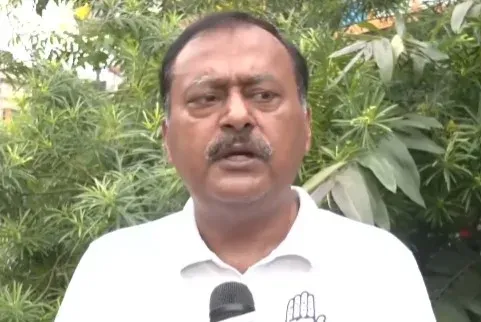
Congress spokesperson Surendra Rajput said school dress-code rules must be followed even as religious freedom is respected.
JD(U) National General Secretary Shyam Rajak called on courts to consider religious, social, and educational freedoms while passing such orders.
Samajwadi Party spokesperson Ashutosh Verma said his party will abide by whatever the Supreme Court ultimately decides.
The Karnataka High Court issued a similar ruling in 2022 ; that matter is still pending before the Supreme Court .
The Allahabad High Court's ruling that students cannot alter school-prescribed dress codes on personal grounds has drawn measured but divergent reactions from Congress, Samajwadi Party (SP), and Janata Dal (United), reflecting the political sensitivity of the intersection between religious freedom and institutional rules in India.
What the Allahabad High Court Ruled
The court dismissed a petition filed by a minor girl studying at a private school in Prayagraj, who sought permission to wear a headscarf alongside her prescribed school uniform. The student had completed her high school education and was seeking admission to Class 11 at the same institution. The court clarified that no student holds a right to modify a dress code based on personal preferences, upholding the authority of educational institutions to set and enforce uniform policies.
Congress: Respect Faith, Follow School Rules
Congress spokesperson Surendra Rajput on Tuesday said religious freedom must be respected, but students are equally bound by the dress-code regulations of their respective educational institutions. 'There is one law across the country, and everyone is allowed to practice religious harmony. However, the school uniform is governed by the rules of the school administration. So, the rules of the school administration should not be violated, so that all students maintain uniformity...' Rajput said. His remarks reflect Congress's attempt to walk a careful line — affirming both constitutional rights and institutional discipline.
JD(U): Courts Should Weigh Broader Freedoms
Janata Dal (United) National General Secretary Shyam Rajak said political leaders should refrain from commenting on judicial orders, but added that courts ought to factor in the religious, social, and educational freedoms of citizens when passing such verdicts. 'Regarding the order passed by the Hon'ble Judge of the Allahabad High Court, we cannot comment on a court order. However, it would be appropriate if such orders are passed while taking into consideration people's religious, social, and educational freedoms...' Rajak said. He also raised the broader concern of pendency in Indian courts, arguing that prioritising select issues over the crores of long-pending cases 'does not seem right.'
Samajwadi Party: Supreme Court Should Have the Final Word
Samajwadi Party spokesperson Ashutosh Verma said his party would abide by whatever the Supreme Court ultimately decides on the matter, while questioning the rationale behind restricting a student from wearing a hijab as an expression of faith alongside a standard uniform. 'We will abide by whatever the Hon'ble Supreme Court says. But what is the problem with wearing a hijab along with a school uniform? If a person wears a hijab as part of their faith, there should be no problem with it...' Verma said. The SP's stance implicitly signals an expectation — and possibly a push — for the matter to reach the apex court.
Broader Context and What Comes Next
This is not the first time Indian courts have grappled with the question of religious attire in educational settings. The Karnataka High Court in 2022 had similarly upheld a ban on hijabs in classrooms, a ruling that was subsequently challenged before the Supreme Court, where the matter remains sub judice. The Prayagraj case adds a fresh dimension — involving a private school rather than a government institution — potentially raising questions about the extent to which private managements can enforce uniform compliance. Legal observers note that the Supreme Court's eventual ruling on the Karnataka matter could have a cascading effect on cases like this one. Political parties, for now, appear to be calibrating their positions ahead of that anticipated verdict.
Point of View
Instead retreating to procedural arguments — follow institutional rules, wait for the Supreme Court, consider broader freedoms. What is missing from the debate is a substantive engagement with how private school managements derive the authority to enforce uniform codes and whether that authority is constitutionally bounded. With the Karnataka hijab case still unresolved at the Supreme Court, each new High Court ruling adds to a patchwork of conflicting precedents that leaves students, schools, and parents in legal limbo. The real question — where exactly does institutional discipline end and constitutional religious freedom begin — has yet to receive a definitive national answer.
NationPress
25 Aug 2026
Frequently Asked Questions
What did the Allahabad High Court rule on the hijab case?
The Allahabad High Court dismissed a petition by a minor girl from a private school in Prayagraj who sought permission to wear a headscarf along with her prescribed school uniform. The court ruled that students do not have the right to alter an institution's dress code based on personal preferences.
What was Congress's reaction to the Allahabad HC hijab ruling?
Congress spokesperson Surendra Rajput said religious freedom must be respected, but students are also bound by the dress-code rules of their schools. He stressed that school administration rules should not be violated in order to maintain uniformity among students.
What did the Samajwadi Party say about the hijab ruling?
Samajwadi Party spokesperson Ashutosh Verma said the party would abide by whatever the Supreme Court ultimately decides. He also questioned why a student should be prevented from wearing a hijab alongside a school uniform if it is worn as an expression of faith.
How does this ruling relate to the Karnataka hijab ban case?
The Karnataka High Court issued a similar ruling in 2022, upholding a ban on hijabs in classrooms. That case was challenged before the Supreme Court, where it remains pending. The Allahabad ruling adds to a series of High Court orders on the issue, all awaiting a definitive apex court verdict.
Who filed the petition in the Allahabad High Court hijab case?
The petition was filed by a minor girl studying at a private school in Prayagraj. She had completed her high school education and was seeking admission to Class 11 at the same institution, requesting that she be allowed to wear a headscarf with the prescribed uniform.