Amit Shah hails PM Modi as 'Upbhog Shunya Swami'
Synopsis
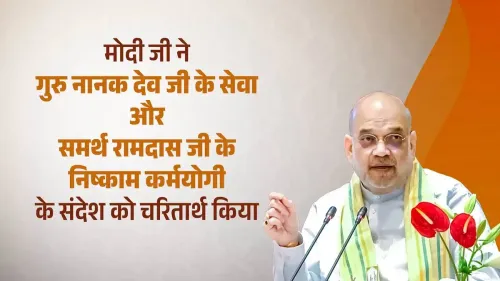
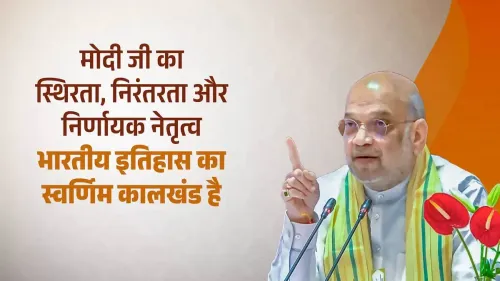
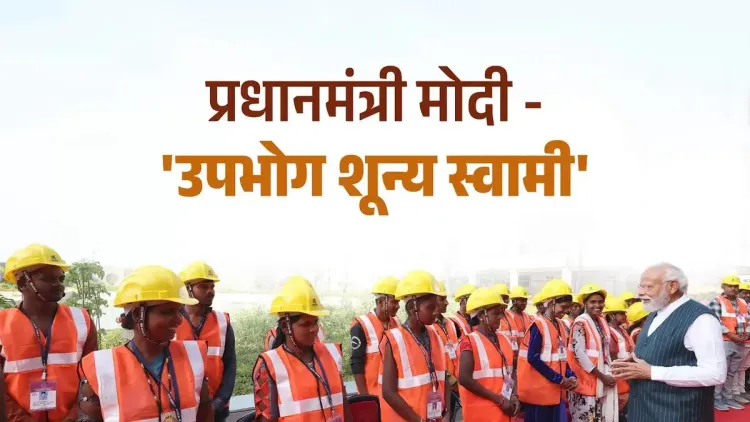
Union Home Minister Amit Shah on June 11, 2026 described Prime Minister Narendra Modi as 'Upbhog Shunya Swami' — a master of zero consumption — in a tribute post on X, reinforcing the BJP's long-running narrative of selfless, ascetic leadership ahead of the next election cycle.
Key Takeaways
Amit Shah posted the phrase उपभोग शून्य स्वामी ('one who is a master of zero consumption') on June 11, 2026 to describe PM Modi .
The phrase invokes classical Sanskrit-inflected ideals of renunciation and selfless public service.
The tribute is consistent with BJP communication since 2014 that frames Modi's personal lifestyle as a model of governance ethics.
The messaging aligns with the party's 'Minimum Government, Maximum Governance' formulation from the 2014 election campaign.
Similar statements from other senior BJP ministers are anticipated as the next general election cycle approaches.
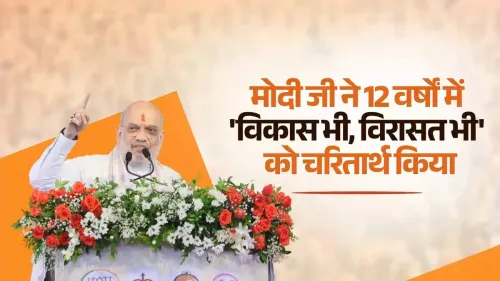
Union Home Minister Amit Shah on Thursday, June 11, 2026, took to X to describe Prime Minister Narendra Modi with the phrase उपभोग शून्य स्वामी ('one who is a master of zero consumption'), offering a pointed tribute to what he characterised as the Prime Minister's austere and self-denying personal conduct.
Context
The post, brief by design, carries a Sanskrit-inflected Hindi phrase that translates loosely as 'a lord of zero indulgence' — invoking a classical ideal of renunciation associated with saintly or ascetic leadership. Shah, as one of the most senior figures in the Bharatiya Janata Party, has periodically framed Modi's personal lifestyle in precisely these terms, drawing on a vocabulary familiar to the party's core constituency.
The tribute lands at a moment when the BJP continues to position its leadership as rooted in personal sacrifice and public duty rather than personal gain — a recurring motif in the party's communication since 2014.
Policy Backdrop
The phrase connects to the broader ideological framing the Modi government has cultivated since its first term: the 'Minimum Government, Maximum Governance' formulation articulated during the 2014 general election campaign. That formulation presented a lean, self-disciplined executive as the antidote to what the party described as the entitlement culture of the preceding decade.
Senior BJP figures have consistently reinforced this image through short, high-visibility statements — on social media, in speeches, and at party conclaves — presenting the Prime Minister's lifestyle as a model of public-service ethics rather than political ambition.
Stakeholders and Impact
The primary audience for such messaging is the BJP's own support base, for whom the imagery of an ascetic, self-denying leader resonates with traditional Hindu and Gandhian ideals of service. The phrase उपभोग शून्य ('zero consumption') is deliberately evocative, placing Modi in a lineage of leaders defined by what they forgo rather than what they accumulate.
Political observers note that such tributes also serve a secondary function: they pre-empt opposition narratives around governance and accountability by anchoring the Prime Minister's identity in personal virtue rather than policy outcomes alone.
What's Next
With the next general election cycle on the horizon, similar statements from other cabinet ministers are likely to follow, building a coordinated communication arc around the theme of selfless leadership. Shah's post, brief as it is, may be an early signal of a broader messaging push that frames the BJP's electoral appeal around the personal character of its leadership rather than any single policy announcement.
Point of View
Yet dense enough in its classical vocabulary to resonate with a culturally attuned core vote. By reaching for the phrase 'Upbhog Shunya Swami', Shah situates Modi not merely as an administrator but as a figure in a longer Indian tradition of ascetic public service, a framing that is difficult for opponents to contest on purely factual grounds. This fits a well-established BJP pattern of building the Prime Minister's brand around personal virtue rather than specific deliverables, insulating the leadership from accountability debates. With the election cycle approaching, expect this vocabulary to intensify and broaden across the party's communication machinery.
NationPress
26 Oct 2026
Frequently Asked Questions
What does 'Upbhog Shunya Swami' mean in English?
'Upbhog Shunya Swami' is a Hindi-Sanskrit phrase meaning 'a lord or master of zero consumption' — describing someone who lives without personal indulgence or material desire. Amit Shah used it to characterise PM Modi's austere lifestyle.
Why did Amit Shah post about PM Modi on June 11, 2026?
Amit Shah posted the tribute on June 11, 2026 as part of the BJP's ongoing communication strategy that highlights PM Modi's personal discipline and selfless conduct as defining qualities of his leadership.
What is the BJP's 'Minimum Government, Maximum Governance' idea?
'Minimum Government, Maximum Governance' is a formulation the Modi government articulated during the 2014 election campaign, advocating for a lean, efficient state and a leadership style free from personal excess — a theme Shah's tribute reinforces.
Is this the first time Amit Shah has praised Modi's personal lifestyle?
No. Senior BJP figures, including Amit Shah, have periodically issued statements emphasising PM Modi's personal austerity and discipline since 2014, making it a recurring element of the party's public communication.
What is the political significance of describing a leader as 'Upbhog Shunya'?
Describing a leader as 'Upbhog Shunya' (of zero consumption) places them in a tradition of ascetic Indian leadership, invoking both Hindu and Gandhian ideals of renunciation. For the BJP's core supporters, it signals moral legitimacy that transcends policy debates.