Amit Shah Hails Modi as India's Longest-Serving Elected PM
Synopsis
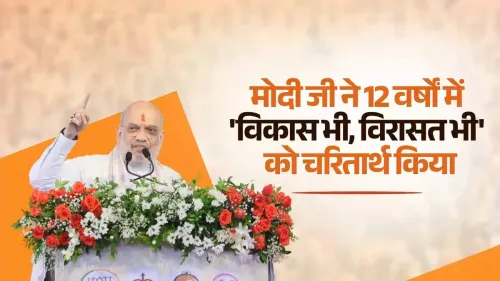
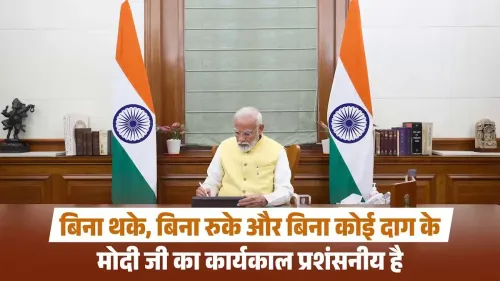
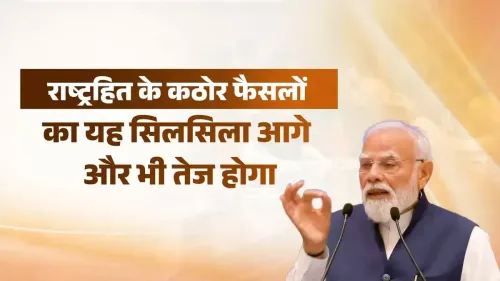
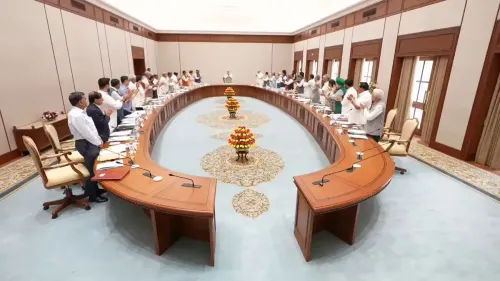
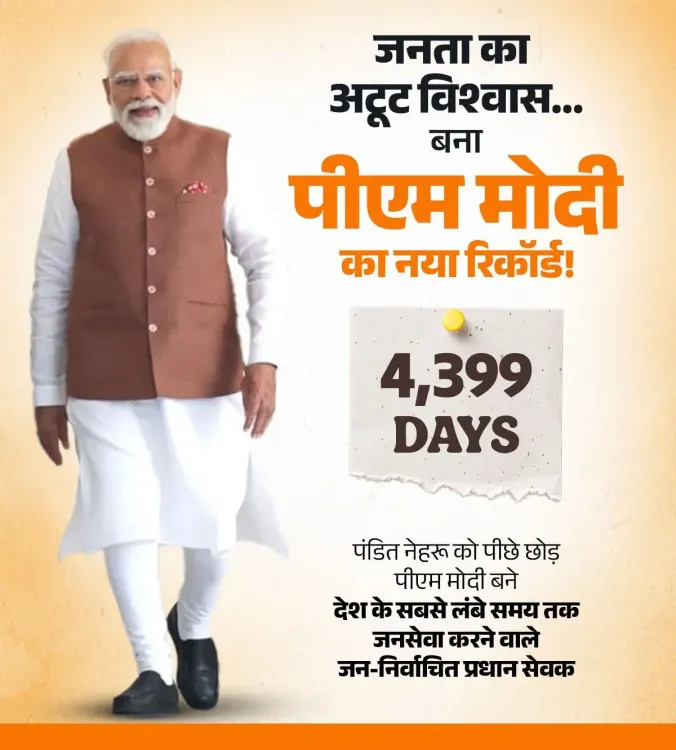
Union Home Minister Amit Shah on June 10, 2026 hailed Prime Minister Narendra Modi on becoming India's longest-serving elected PM, listing Article 370 abrogation, Ram Mandir, three new criminal laws, the new Parliament building, and Atmanirbhar Bharat as defining achievements of the 12-year tenure.
Key Takeaways
Amit Shah congratulated Narendra Modi on June 10, 2026 for becoming India's longest-serving elected Prime Minister.
Modi has served as Prime Minister since May 26, 2014 , completing 12 years in office.
Article 370 was abrogated in August 2019 , removing Jammu and Kashmir's special constitutional status.
Three new criminal laws replacing colonial-era statutes were enacted in December 2023 .
The National Education Policy 2020 opened pathways for medical and engineering education in mother tongues.
The new Parliament building was inaugurated in 2023 as part of the Central Vista project in New Delhi.
Union Home Minister Amit Shah on Wednesday, June 10, 2026 congratulated Prime Minister Narendra Modi on achieving the milestone of becoming India's longest-serving elected Prime Minister, crediting his 12-year tenure with transforming the country's self-confidence, security, and cultural identity.
Context
Shah's post, shared on X, offered an expansive tribute to Modi's governance record since May 26, 2014, when Modi was first sworn in as Prime Minister following the BJP-led NDA's general election victory. The post used the hashtag #LongestServingElectedPMModi, signalling a coordinated political acknowledgement of the milestone within the ruling party.
Translated from Hindi, Shah wrote: 'Heartfelt congratulations and best wishes to the honourable Prime Minister Shri Narendra Modi on the historic achievement of serving the people as the country's longest-serving elected Prime Minister.'
Policy Backdrop
Shah's tribute enumerated several landmark decisions of the Modi government. He highlighted the abrogation of Article 370 in August 2019, which removed the special constitutional status of Jammu and Kashmir, and the construction of the Ram Mandir in Ayodhya as defining moments of cultural and constitutional significance.
The post also referenced the enactment of three new criminal laws in December 2023 — replacing colonial-era statutes — the National Education Policy 2020, which promotes mother-tongue instruction including in medical and engineering education, and the inauguration of the new Parliament building in 2023 as part of the Central Vista project in New Delhi. The Atmanirbhar Bharat initiative, launched in 2020 to boost domestic production and reduce import dependence, was cited as having become a national resolve.
On internal security, Shah stated that terrorism had been met with 'a befitting reply to every terrorist incident' and pointed to a significant decline in Naxal activity, though the research notes that claims of complete elimination of Naxalism remain unverified.
Stakeholders and Impact
The tribute directly invokes Jammu and Kashmir residents, security forces, and the broader Indian citizenry as beneficiaries of the governance decisions listed. Shah framed the restoration of 'lost self-respect and pride' among Indians as Modi's greatest achievement, a line of messaging consistent with BJP communications since the party's first majority government in 2014.
The emphasis on mother-tongue instruction in technical education is of particular relevance to students and institutions in non-Hindi-speaking states, where implementation of NEP provisions continues to be debated. Parliamentary oversight of internal security operations in Naxal-affected districts remains an active area of legislative and administrative attention.
What's Next
The post is likely to set the tone for a wider wave of tributes from BJP leaders and NDA allies as the party marks this political milestone. Continued rollout of mother-tongue instruction in technical colleges and ongoing counter-insurgency operations in formerly Naxal-affected districts will be watched as tests of the governance record Shah has highlighted. As Shah put it, 'Today, a new India is establishing its identity on every global platform with full confidence, and the world is witnessing the rise of a capable, empowered, and new India.'
Point of View
Selecting milestones — Article 370, Ram Mandir, new criminal laws, Atmanirbhar Bharat — that map directly onto the BJP's core ideological and governance commitments since 2014. The framing of the tribute around 'self-respect', 'cultural renaissance', and freedom from a 'colonial mindset' reflects a long-running BJP narrative that positions the Modi era as a civilisational break from the pre-2014 political order. Marking a 12-year milestone publicly is also a forward signal: it reinforces Modi's stature within the party ahead of any future electoral cycle. The enumeration of specific policy outcomes — rather than just rhetorical praise — suggests the BJP intends to run on this record as a consolidated legacy.
NationPress
26 Oct 2026
Frequently Asked Questions
When did Narendra Modi become India's longest-serving elected Prime Minister?
Narendra Modi, who was first sworn in on May 26, 2014, crossed the milestone of becoming India's longest-serving elected Prime Minister, which Amit Shah publicly acknowledged on June 10, 2026.
What is Article 370 and when was it abrogated?
Article 370 was a constitutional provision granting special status to Jammu and Kashmir. It was revoked by presidential order on August 5, 2019, and the region was reorganised into two Union Territories.
What are the three new criminal laws mentioned by Amit Shah?
The three laws — replacing the colonial-era Indian Penal Code, Code of Criminal Procedure, and Indian Evidence Act — were enacted in December 2023 and came into force thereafter.
What is Atmanirbhar Bharat?
Atmanirbhar Bharat, meaning 'self-reliant India', is an initiative launched in 2020 aimed at strengthening domestic manufacturing and reducing India's dependence on imports across key sectors.
What did the National Education Policy 2020 change about technical education?
The National Education Policy 2020, approved by the Union Cabinet in July 2020, promotes mother-tongue instruction and opened pathways for medical and engineering education to be offered in regional Indian languages.