Congress alleges SIR deleted 6.18 crore voters, calls it 'Shah-instigated removal'
Synopsis
Congress claims the Election Commission's Special Intensive Revision has deleted 6.18 crore voters in Phase III alone — with a combined deletion-and-risk rate of 32% nationally — and calls the exercise a 'Shah-instigated removal' of marginalised voters. With Delhi topping the chart at 53.73% and 7.8 crore names already gone in earlier phases, this is shaping up as one of the sharpest pre-election battles over franchise rights in recent Indian political memory.
Key Takeaways
Congress on 20 September 2026 alleged that the Special Intensive Revision (SIR) of electoral rolls is causing large-scale voter deletions.
Jairam Ramesh claimed 6.18 crore voters had been deleted in Phase III, with a deletion rate of over 17 per cent .
An additional 5.43 crore voters have been issued notices, raising the 'at-risk' proportion to a combined 32 per cent — roughly one in three.
The first two phases of the SIR reportedly resulted in deletion of 7.8 crore names , at a rate of 13 per cent .
Delhi had the highest combined deletion-and-risk rate at 53.73 per cent , followed by Chandigarh at 52.58 per cent and Telangana at 48.90 per cent .
Congress alleged deletions disproportionately affect women and economically disadvantaged communities, and criticised the ECI for not proactively publishing deletion lists.
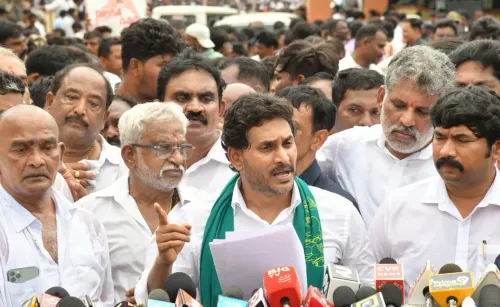
Congress on Sunday, 20 September 2026, alleged that the Election Commission of India's (ECI) ongoing Special Intensive Revision (SIR) of electoral rolls is causing large-scale voter deletions across 16 states and three Union Territories, describing the exercise as an assault on the Constitution. The opposition party claimed that roughly one in three voters covered under the third phase of the SIR has either been removed from electoral rolls or faces imminent risk of deletion.
Key Allegations by Congress
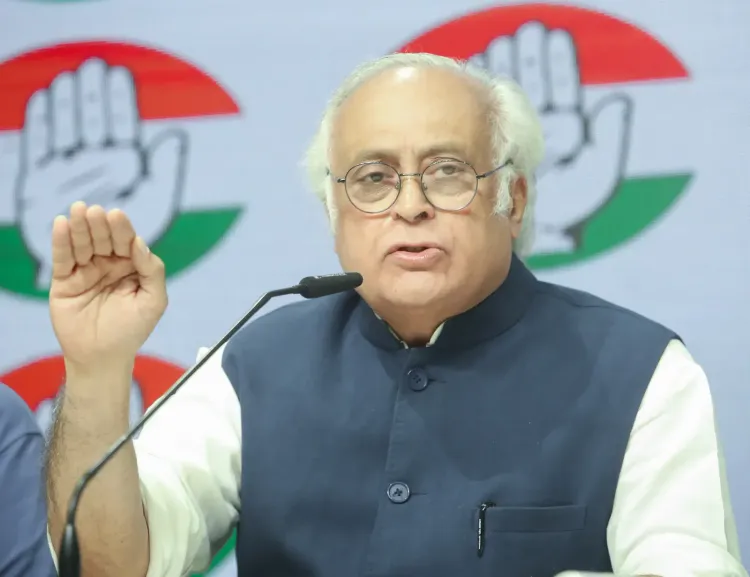
Congress General Secretary Jairam Ramesh alleged that 6.18 crore voters out of the 36.06 crore covered in 12 states and two Union Territories under the third phase had been deleted from the rolls. He put the deletion rate at over 17 per cent, with an additional 5.43 crore voters issued notices requiring extra documentation to retain their names — a 'risk of deletion' rate of another 15 per cent.
'Thus, a staggering 32 per cent (or about one in three) of voters have had their names deleted or face risk of deletion,' Ramesh said in a statement. He added that the first two phases of the SIR had already resulted in the deletion of 7.8 crore names, at a deletion rate of 13 per cent of the pre-revision rolls.
State-wise Breakdown
According to figures cited by Ramesh, the combined proportion of voters deleted or at risk of deletion was highest in Delhi at 53.73 per cent, followed by Chandigarh at 52.58 per cent and Telangana at 48.90 per cent. The figure stood at 39.57 per cent in Jharkhand, 37.5 per cent in Haryana, 35.71 per cent in Uttarakhand, 35.36 per cent in Meghalaya, and 33.88 per cent in Maharashtra.
In Karnataka, the figure was 27.6 per cent; in Odisha, 23.67 per cent; in Andhra Pradesh, 21.17 per cent; and in Punjab, 15.23 per cent, according to Ramesh's cited data. He also alleged that in most major states, more women than men had been removed from the rolls, and that the deletions were disproportionately affecting economically and socially disadvantaged communities.
What the Election Commission Has Said
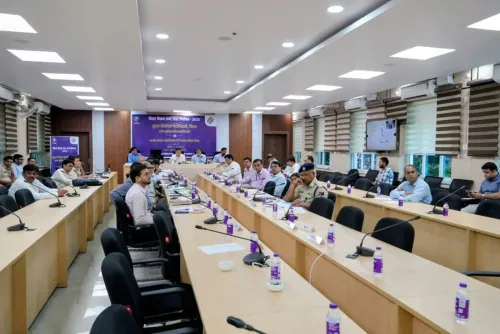
According to the Election Commission of India, Phase III of the SIR was ordered across 16 states and three Union Territories — covering Andhra Pradesh, Arunachal Pradesh, Haryana, Jharkhand, Karnataka, Maharashtra, Manipur, Meghalaya, Mizoram, Nagaland, Odisha, Punjab, Sikkim, Tripura, Telangana, and Uttarakhand, along with Delhi, Chandigarh, and Dadra and Nagar Haveli and Daman and Diu. More than 3.94 lakh Booth Level Officers are conducting house-to-house verification of over 36.73 crore electors.
Ramesh criticised the ECI for not publishing the lists of voters facing possible deletion in all states, noting that Delhi released its list only on 19 September 2026, reportedly following sustained public pressure.
Congress's Constitutional Objection
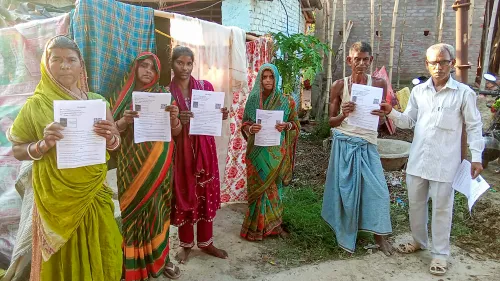
Ramesh alleged that the SIR process effectively shifts the burden of proving voting eligibility onto citizens, requiring documents that, in many cases, the state itself may never have issued them. 'A test that the overwhelming majority of citizens cannot pass is just a machine for exclusion,' he said.
The Congress leader described the exercise as 'SIR — actually a massive Shah Instigated Removal of voters,' in an apparent reference to Union Home Minister Amit Shah, calling it 'an assault on our Constitution.' He labelled the process as reflecting 'structural flaws' in the entire SIR framework. This comes amid broader opposition concerns about the ECI's independence and the timing of large-scale roll revisions ahead of state elections in several of the affected states.
As Phase III continues, the scale of the deletions and the transparency of the process are expected to remain contested ground between the ruling establishment and opposition parties.
Point of View
But the underlying numbers — a 32% combined deletion-and-risk rate across 36-plus crore electors — deserve independent scrutiny beyond partisan spin. Electoral roll purges, even when procedurally legitimate, carry systemic risk when documentation requirements outpace the state's own record-keeping capacity, particularly for women, migrants, and informal-sector workers. The ECI's decision not to proactively publish deletion lists in most states compounds the opacity. What is missing from mainstream coverage is a granular audit of whether the deletion rates track demographic vulnerability rather than genuine ineligibility — and whether the burden-of-proof shift built into the SIR design is consistent with universal adult franchise.
NationPress
20 Sept 2026
Frequently Asked Questions
What is the Special Intensive Revision (SIR) of electoral rolls?
The Special Intensive Revision (SIR) is an Exercise initiated by the Election Commission of India to verify and update voter rolls, currently in its third phase covering 16 states and 3 Union Territories with over 36.73 crore electors. Booth Level Officers conduct house-to-house verification, and voters who cannot produce required documents face deletion from the rolls.
How many voters has Congress alleged have been deleted under SIR?
Congress General Secretary Jairam Ramesh alleged that 6.18 crore voters were deleted in Phase III alone, across 12 states and two Union Territories. Combined with the 7.8 crore deletions from the first two phases, the total alleged deletions across all three phases exceed 13 crore.
Which states have the highest voter deletion or risk rates according to Congress?
According to figures cited by Ramesh, Delhi has the highest combined deletion-and-risk rate at 53.73%, followed by Chandigarh at 52.58% and Telangana at 48.90%. Jharkhand, Haryana, Uttarakhand, Meghalaya, and Maharashtra also recorded rates above 33%.
Why is Congress calling the SIR an 'assault on the Constitution'?
Congress argues that the SIR shifts the burden of proving eligibility onto citizens by demanding additional documents that the state itself may not have issued to them, effectively functioning as a mechanism for exclusion. Jairam Ramesh called it a 'machine for exclusion' that disproportionately affects women, economically disadvantaged groups, and marginalised communities.
Has the Election Commission responded to Congress's allegations?
As of 20 September 2026, the Election Commission had not issued a direct public rebuttal to Congress's specific claims about deletion rates. The ECI has stated that Phase III covers over 36.73 crore electors through house-to-house verification by more than 3.94 lakh Booth Level Officers, and that the exercise is a routine process to ensure accurate electoral rolls.