Shashi Tharoor invokes Emergency overthrow to rebut BJP 'regime change' charge
Synopsis
Shashi Tharoor turned the BJP's own anti-Emergency legacy against it — arguing that the 1977 coalition that defeated Indira Gandhi, which included the RSS, is the original template for Opposition unity. It's a sharp rhetorical move that reframes the 'regime change' allegation as a tribute to the BJP's own founding moment.
Key Takeaways
Congress MP Shashi Tharoor rebutted BJP's 'regime change' allegations at the NDTV World Summit on 23 October 2026 .
Tharoor cited the 1977 defeat of Indira Gandhi's Emergency regime by a unified Opposition — which included the RSS and BJP — as historical precedent for the current protests.
He drew a firm constitutional line: peaceful protest is a democratic right; violence is not, explicitly rejecting comparisons to unrest in France .
Congress demanded accountability from the government and the Election Commission of India (ECI) over alleged irregularities in the Special Intensive Revision (SIR) of electoral rolls.
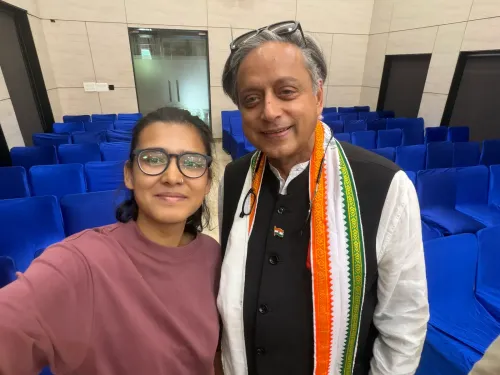
Tharoor defended aligning with AISA National President Neha Bora , framing it as 'Opposition unity' despite Congress-AISA electoral rivalry in Kerala .
Congress MP Shashi Tharoor on Friday, 23 October 2026, directly countered the Bharatiya Janata Party's (BJP) assertion that the anti-Special Intensive Revision (SIR) protests are driven by a 'regime change' agenda — invoking the 1977 defeat of the Emergency-era Congress government as precedent for legitimate, unified Opposition action.
Tharoor's Emergency Argument
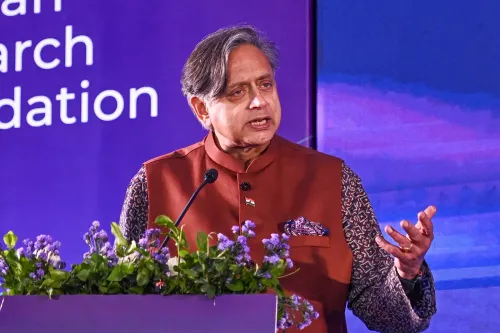
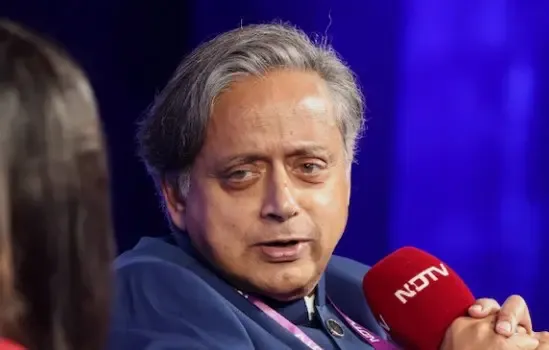
Speaking at the NDTV World Summit in New Delhi, Tharoor drew a pointed historical parallel. 'Modi does keep talking about the Emergency and how the Emergency was overthrown. How was it overthrown? Through an Opposition, where the RSS and the BJP were merging with socialists and leftists. They all united in order to defeat the government that had declared the Emergency. That's recent Indian political history, just half a century ago,' he said.
The remark was a direct reference to the Janata Party coalition that swept Indira Gandhi's Congress from power in the 1977 general elections — a coalition that included the Rashtriya Swayamsevak Sangh (RSS) and its political affiliates alongside socialist and Left formations. By citing it, Tharoor turned the BJP's own foundational anti-Emergency narrative against the party's current allegations.
On Violence and Constitutional Boundaries
Tharoor also pushed back against comparisons between the anti-SIR agitation and violent protests in France, drawing a sharp constitutional line. 'The line is very clearly drawn by our Constitution, by our laws. It is that peaceful protest is the democratic right of every Indian citizen; violence is not,' he stated.
He categorically distanced the Congress from any endorsement of violence, adding: 'What we've seen happening in France is not something that anybody in India's political space would condone. I don't, and I don't think my party in any way would welcome (violence).'
Congress's Demand: Accountability on SIR
The former Union Minister maintained that the path forward lies in institutional accountability rather than confrontation. 'We believe in peaceful, organised, and disciplined protest. At the same time, we expect that if we can actually find the government, and the Election Commission as well, willing to be accountable for the deep irregularities (in) the SIR process in the last couple of years, then we believe there will once again be a clean system,' he said.
Tharoor argued that a free and fair electoral process would organically produce 'government change' — as opposed to what he characterised as the BJP's loaded framing of 'regime change'. 'The Indian public has seen the inadequacies of the present government, but we want to bring that (change) about through free and fair elections,' he added.
The Broader Protest Context
The remarks come against a charged backdrop. AISA National President Neha Bora had earlier praised Bangladesh's Gen-Z movement as an 'inspiration' for young Indians, while senior advocate Prashant Bhushan had described the protests targeting Chief Election Commissioner Gyanesh Kumar as a 'fight for regime change' — statements that gave the BJP fresh ammunition.
Asked about the Congress aligning with Left formations like the All India Students Association (AISA) while contesting them in his home state Kerala, Tharoor acknowledged the tension but framed it as the realpolitik of Opposition unity. 'These parties have their value, but Neha Bora wasn't campaigning against us. I like her; she's brought a lot of energy, colour, and life into the protest, the movement. It's about the Congress party being a moderate party and about acceptance. It's Opposition unity,' he said.
With both sides hardening their positions over the SIR controversy and the Election Commission's accountability in the spotlight, the political battle over electoral roll integrity is set to intensify in the weeks ahead.
Point of View
Documented evidence of voter-roll manipulation to sustain a nationwide agitation — or whether the movement risks overreaching and gifting the BJP a 'destabilisation' narrative ahead of the next electoral cycle.
NationPress
23 Oct 2026
Frequently Asked Questions
What did Shashi Tharoor say about the BJP's 'regime change' allegation?
Tharoor argued that the BJP's own history disproves its allegation — pointing out that the RSS and BJP united with socialists and leftists to defeat the Emergency-era Congress government in 1977. He said this proves that Opposition unity to challenge an incumbent government is a legitimate democratic tradition, not a 'regime change' conspiracy.
What is the SIR controversy that triggered the protests?
The Special Intensive Revision (SIR) of electoral rolls is a process by which the Election Commission of India updates voter lists. The Congress and other Opposition parties have alleged deep irregularities in the SIR process over the last couple of years, claiming eligible voters were removed or excluded, thereby undermining their right to vote.
How did Tharoor respond to comparisons with violent protests in France?
Tharoor firmly rejected the comparison, stating that the Indian Constitution and law clearly distinguish between peaceful protest — a democratic right — and violence, which he said no party in India's political space would condone. He added that the Congress party would not welcome violence in any form.
Why is Tharoor defending alignment with AISA despite competing with it in Kerala?
Tharoor acknowledged the electoral rivalry but framed it as the practical logic of Opposition unity at the national level, saying AISA's Neha Bora was not campaigning against the Congress. He described the Congress as a 'moderate party' capable of accepting partners with different ideological positions for common causes.
What outcome does the Congress say it wants from the anti-SIR protests?
The Congress wants the government and the Election Commission to be held accountable for alleged irregularities in the SIR process. Tharoor said that once a clean electoral system is restored, the party seeks 'government change' through free and fair elections — not the 'regime change' the BJP alleges.