Congress defends Tharoor's 'resilient democracy' remark; BJP says he 'stays among communists'
Synopsis
At the NDTV World Anviksha Summit, Shashi Tharoor positioned India as South Asia's most resilient democracy amid youth protests — and sparked a sharp political exchange. Congress claimed the credit; BJP said Tharoor simply 'stays among communists.' Both parties are now racing to own the Gen Z narrative, revealing how central young voters have become to India's political calculus.
Key Takeaways
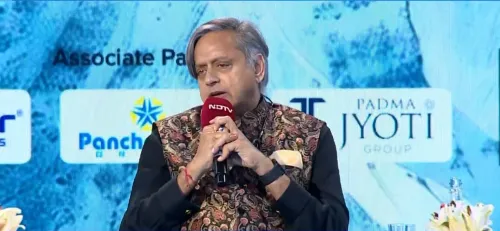
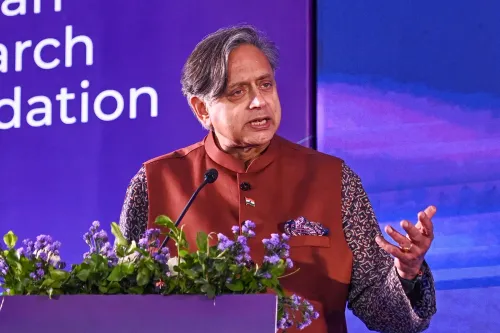
Shashi Tharoor praised India's democratic resilience at the NDTV World Anviksha Summit on Thursday, 27 August , saying the 'Indian system bent, didn't break' amid Gen Z protests.
Congress spokesperson Atul Londhe credited the party for building strong democratic institutions over 70 years , while alleging attempts to weaken the RBI , judiciary, and agencies like ED and CBI in the past 12 years .
BJP MP Dinesh Sharma dismissed Tharoor's outlook, saying he 'stays among the communists in Kerala.' Sharma countered by citing Startup India , Stand-Up India , Make in India , and Digital India as the BJP's record on youth welfare since 2014 .
Tharoor compared political responses to youth protests across six South Asian nations : Pakistan, Myanmar, Nepal, Sri Lanka, Bangladesh, and India.
The Indian National Congress on Friday, 28 August stood firmly behind its Thiruvananthapuram MP Shashi Tharoor after he praised India's democratic resilience in the face of recent Gen Z protests, with the party claiming credit for building the country's democratic foundations — even as the Bharatiya Janata Party (BJP) dismissed Tharoor's worldview, saying he 'stays among the communists in Kerala.'
What Tharoor Said
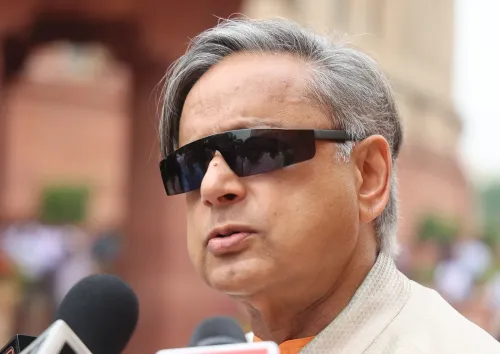
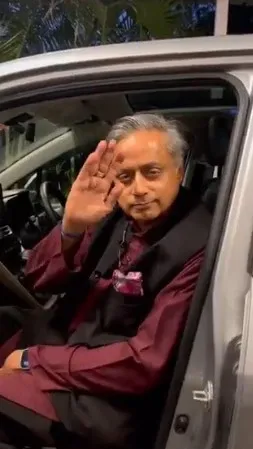
A day earlier, on Thursday, Tharoor had spoken at the NDTV World Anviksha Summit, offering a comparative analysis of how political systems across South Asia responded to youth-led agitations over the past decade. He observed that six major South Asian countries — Pakistan, Myanmar, Nepal, Sri Lanka, Bangladesh, and India — had all witnessed significant protests by young populations in recent years. 'The difference among them is in the political systems in these countries and how the political establishment responded and dealt with them,' Tharoor noted. He concluded that the 'Indian system bent, didn't break.'
Congress Claims Credit for Democratic Institutions
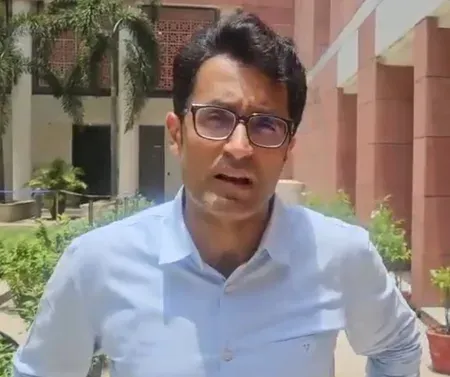
Congress spokesperson Atul Londhe defended Tharoor's remarks, framing India's democratic durability as the party's legacy. 'I will proudly give the credit for this to Congress. If we have given something to the country in 70 years, that is a strong democracy and strong democratic institutions despite attempts being made to weaken these in the past 12 years, whether it is the RBI, judicial system, bureaucracy or use of ED, CBI etc.,' he said.
Londhe further argued that the student protests themselves were proof of a functioning democracy. 'Despite these efforts (of the ruling alliance), the students kept democracy alive. Only because of a strong democracy, students could react like this; otherwise, we have seen in other countries how people violently react after their trust in the system breaks,' he added.
BJP's Counter: Gen Z Belongs to Their Vision
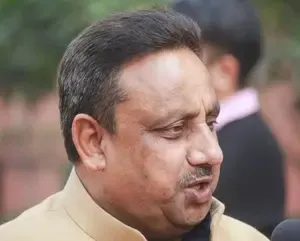
BJP MP Dinesh Sharma offered a pointed rebuttal, questioning Tharoor's ideological moorings. 'Shashi Tharoor's thoughts are different; he stays among the communists in Kerala,' Sharma said. He then reframed the Gen Z narrative around the BJP's own record, describing young Indians as 'the dream of the BJP whose wholesome development has been the target since Prime Minister Narendra Modi first took oath as Prime Minister in 2014.'
Sharma cited government schemes — Startup India, Stand-Up India, Make in India, and Digital India — as the 'biggest platforms for the welfare of the youth.' He also drew a connection between Gen Z and the Rashtriya Swayamsevak Sangh (RSS), describing young Indians as those who 'also represent the Bal Swayamsevak of the RSS and youth wing members of the BJP.'
The Broader Context: South Asia's Youth Uprising
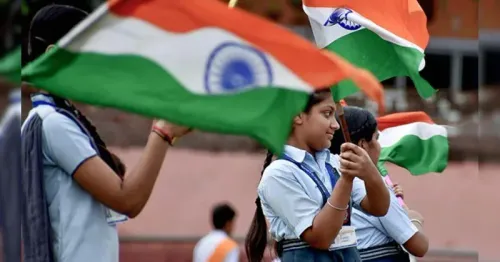
Tharoor's remarks come amid a broader wave of youth-led political movements across South Asia, most notably in Bangladesh, where student protests recently culminated in a dramatic political transition. His framing positions India's institutional response as comparatively more resilient — a claim that Congress has now adopted as a political talking point, and one the BJP contests on different grounds. Notably, both parties are competing to claim ownership of India's youth, even as they disagree on what that youth stands for.
Point of View
Not partisan. Sharma's RSS reference, meanwhile, risks narrowing the BJP's youth appeal at precisely the moment it needs to broaden it.
NationPress
12 Oct 2026
Frequently Asked Questions
What did Shashi Tharoor say about India's democracy?
Tharoor said the 'Indian system bent, didn't break' in response to recent Gen Z protests, speaking at the NDTV World Anviksha Summit. He compared India's political response to youth-led agitations with that of five other South Asian nations — Pakistan, Myanmar, Nepal, Sri Lanka, and Bangladesh.
How did Congress respond to Tharoor's remarks?
Congress spokesperson Atul Londhe backed Tharoor fully, crediting the party for building India's democratic institutions over 70 years. He argued that the student protests themselves demonstrated the strength of a democracy Congress had nurtured, despite what he described as attempts to weaken institutions over the past 12 years.
What was the BJP's reaction to Tharoor's comments?
BJP MP Dinesh Sharma dismissed Tharoor's perspective, saying he 'stays among the communists in Kerala.' Sharma instead highlighted BJP government schemes — Startup India, Stand-Up India, Make in India, and Digital India — as evidence of the party's commitment to Gen Z since 2014.
Which countries did Tharoor compare India with?
Tharoor compared India's institutional response to youth protests with those of Pakistan, Myanmar, Nepal, Sri Lanka, and Bangladesh — six South Asian nations that have all witnessed significant youth-led agitations in recent years.
Why are both parties focused on Gen Z?
Gen Z voters represent a large and growing share of India's electorate, and their political mobilisation — seen in recent protests — has made them a key constituency. Both Congress and BJP are competing to claim alignment with young Indians' aspirations, reflecting the demographic's rising political significance.