CM Fadnavis: Congress rejected in 18 states for decades
Synopsis
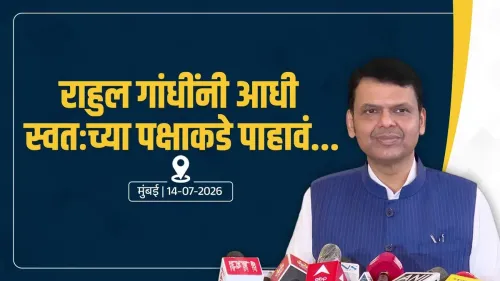
Maharashtra CM Devendra Fadnavis posted from Nagpur on 12 October 2026, listing nine major states — led by Tamil Nadu at 59 years — where Congress has been electorally shut out for decades, demanding the party introspect before criticising others.
Key Takeaways
Tamil Nadu has rejected Congress for 59 years — the longest streak in Fadnavis's list.
West Bengal (49 years), Sikkim (42 years), UP (37 years), and Bihar (36 years) round out the top five states of prolonged Congress absence.
Fadnavis claims Congress has been denied public support in nearly 18 states across India for multiple decades.
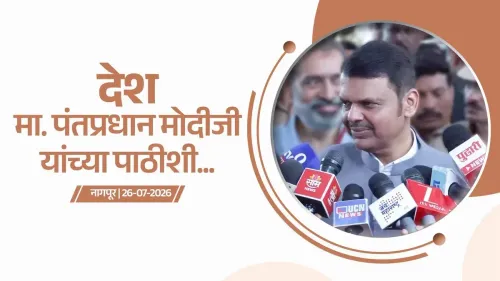
The post was delivered in both Marathi and Hindi from Nagpur , using the hashtag #INDIAlliance to signal its target.
The BJP leader called for Congress to 'introspect' rather than raise questions about other parties' performance.
Before questioning others, look inward — that is the sharp message Maharashtra Chief Minister Devendra Fadnavis fired at the Congress party from Nagpur on 12 October 2026, backing it with a state-by-state electoral ledger that spans nearly six decades of voter verdicts.
A nine-state charge sheet, decade by decade
Posting in both Marathi and Hindi, Fadnavis laid out a methodical roll-call of states where voters have continuously kept Congress out of power. 'काँग्रेसने आत्मपरीक्षण करण्याची गरज आहे' — 'Congress needs to introspect,' he opened — before listing nine states with precise year-counts.
According to the post, Tamil Nadu voters have rejected Congress for 59 years; West Bengal for 49 years; Sikkim for 42 years; Uttar Pradesh for 37 years; Bihar for 36 years; Tripura for 33 years; Gujarat for 31 years; Odisha for 26 years; and Madhya Pradesh for 23 years. Each figure is presented not as a talking point but as a verdict — the quiet, accumulated arithmetic of successive elections.
The 18-state figure and what Fadnavis is really arguing
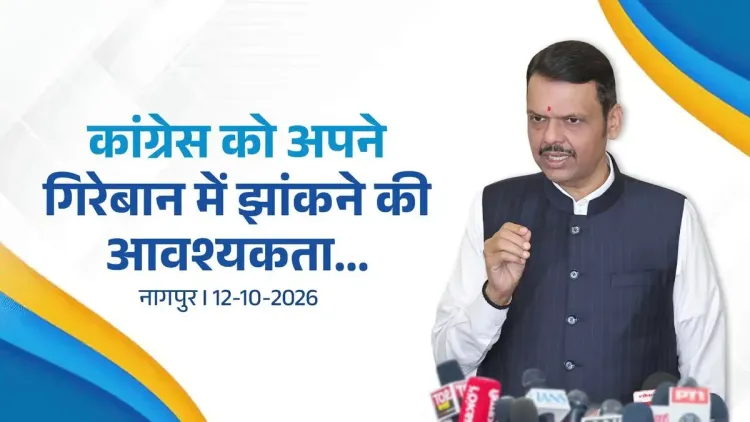
Fadnavis extends the indictment beyond the nine named states, asserting that Congress has been denied public support in nearly 18 states across the country for decades. The Hindi formulation cuts even sharper: 'कांग्रेस को अपने गिरेबान में झांकने की आवश्यकता है' — 'Congress must look into its own collar,' a colloquial idiom that implies a reckoning long overdue.
The timing and venue matter. Nagpur is both the RSS headquarters and a city that has sent Fadnavis to power repeatedly — a deliberate stage for an attack aimed at the national opposition. The hashtags #Maharashtra, #Nagpur, and #INDIAlliance signal clearly that the broadside is aimed at Congress within the context of the broader Opposition coalition.
Why the electoral math stings
The states Fadnavis lists are not peripheral. They include India's most populous state (Uttar Pradesh), its most industrialised non-BJP bastion (West Bengal), and its fastest-growing large state (Gujarat). Together, they represent hundreds of Lok Sabha seats that have moved beyond Congress's consistent reach. For a party that governed India for the better part of the post-Independence era, the cumulative arithmetic of these absences is, as Fadnavis frames it, a question that demands an answer — not deflection.
The kicker is implicit in the data itself: when the ledger of rejection runs to 59 years in one state alone, 'introspection' is not a suggestion — it is an electoral imperative.
Point of View
He converts what is usually a rhetorical charge into an ostensibly evidence-based indictment. The Nagpur dateline and the #INDIAlliance tag suggest the attack is calibrated to undercut Congress's credibility as the anchor of the Opposition coalition ahead of any state or national electoral cycle. The sharpest political risk for Congress is not the attack itself but the absence of a ready counter-narrative that can match the specificity of the numbers.
NationPress
12 Oct 2026
Frequently Asked Questions
What did CM Devendra Fadnavis say about Congress on 12 October 2026?
Fadnavis posted on X from Nagpur, asserting that Congress has been electorally rejected in nearly 18 states for decades and urging the party to introspect rather than question others.
Which states did Fadnavis say have rejected Congress for the longest time?
Tamil Nadu tops the list at 59 years, followed by West Bengal at 49 years, Sikkim at 42 years, Uttar Pradesh at 37 years, and Bihar at 36 years, according to the post.
How many states does Fadnavis claim have rejected Congress for decades?
Fadnavis stated that Congress has been denied public support in nearly 18 states across India for multiple decades.
Why did Fadnavis post this from Nagpur?
The post carries the dateline Nagpur, 12 October 2026. Nagpur is Fadnavis's political base and a BJP stronghold in Maharashtra, making it a symbolically significant location for a national political statement.
Is Fadnavis's post directed at the INDIA alliance?
The post uses the hashtag #INDIAlliance, indicating the criticism is aimed at Congress in the context of the broader Opposition coalition, not just the party in isolation.