Shashi Tharoor: India's democracy 'bent, didn't break' amid Gen Z protests
Synopsis
At a Kathmandu summit, Shashi Tharoor mapped six South Asian nations rocked by Gen Z protests — and concluded that India alone had a system that 'bent without breaking.' With rulers fleeing in Bangladesh and Sri Lanka, militaries seizing power in Myanmar and Pakistan, and Nepal reshuffling through elections, Tharoor's comparative lens makes India's institutional resilience the outlier — and the argument.
Key Takeaways
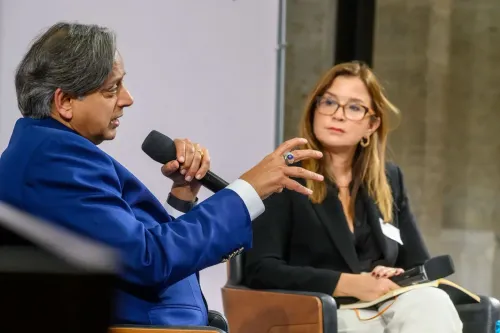
Shashi Tharoor praised India's democratic resilience at the NDTV World Anviksha Summit in Kathmandu on 27 August .
He compared six South Asian countries — Myanmar, Pakistan, Sri Lanka, Bangladesh, Nepal, and India — all of which faced significant Gen Z-led protests.
In Bangladesh and Sri Lanka , rulers fled; Nepal held fresh elections; Pakistan saw a military-backed 'puppet government'; Myanmar experienced a full military takeover.
Tharoor described India as having a 'self-correcting mechanism' that compelled the government to respond to protesters' demands without systemic collapse.
He said the Indian system 'adapted itself to the new reality with astonishing speed,' calling it a key differentiator from its neighbours.
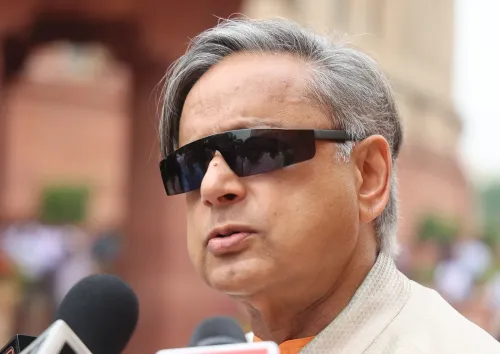
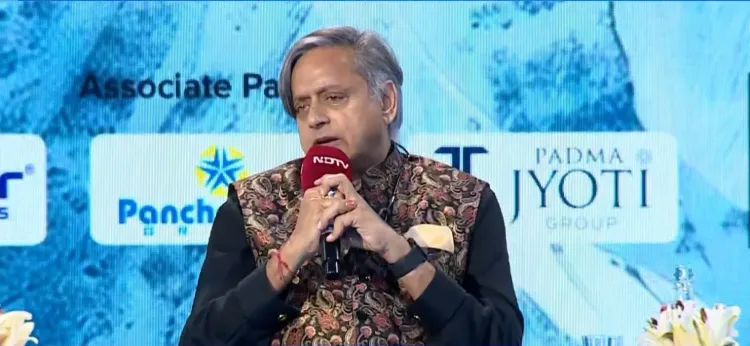
Congress MP and former diplomat Shashi Tharoor on Thursday, 27 August praised India's democratic resilience at the NDTV World Anviksha Summit in Kathmandu, arguing that unlike several South Asian neighbours, India's political system absorbed Gen Z-led protest pressure without fracturing. His remarks drew a pointed contrast between India's institutional flexibility and the far more turbulent outcomes witnessed across the region.
Six Countries, Six Outcomes
Tharoor offered a systematic comparison of youth-led agitations across South Asia over the past decade, identifying six countries where young populations took to the streets in significant numbers. 'Starting with Myanmar protests in 2012, we then saw young people hitting the streets in Pakistan, Sri Lanka, Bangladesh, Nepal and recently in India,' he said, describing these movements as varying expressions of Gen Z discontent.
The outcomes, he noted, diverged sharply depending on the nature of each country's political establishment and how it chose to respond. This comparative framing gave his remarks an analytical weight beyond simple India-boosting.
How Neighbouring Nations Fared
In Bangladesh and Sri Lanka, according to Tharoor, incumbent rulers were unable to contain the unrest and were ultimately forced to flee, opening the door to new leadership. Nepal experienced a regime change as well, though through a comparatively orderly route — fresh elections were held and a new government took office. Pakistan saw military intervention, with what Tharoor described as a 'puppet government' installed in the protests' aftermath. Myanmar witnessed the most extreme outcome: a full military takeover.
India's 'Self-Correcting' Democratic Mechanism
India, Tharoor argued, stood apart from all these cases. He pointed to what he called a 'self-correcting mechanism in the Indian political system' that ensured protesters' voices were eventually heard. 'In India, however, the mechanism is self-correcting. There is a democratic system which adapted itself to the new reality with astonishing speed,' he said.
He attributed this to a functioning democratic framework that compelled the government to respond to the demands of young protesters — a process he characterised as the system bending under pressure rather than breaking. Notably, Tharoor did not elaborate on which specific Gen Z protests in India he was referencing, or the precise policy responses he considered adequate.
Broader Context at the Summit
Tharoor's remarks were part of a wider discussion at the Kathmandu summit on political systems across South Asia, youth discontent, and the diverging trajectories of democratic resilience in the region. His analysis reflects a growing international conversation about whether established democracies are better equipped than hybrid or authoritarian regimes to absorb generational political pressure without systemic collapse.
As youth-led movements continue to reshape political landscapes from Dhaka to New Delhi, the question of institutional adaptability is likely to remain central to South Asian political discourse in the months ahead.
Point of View
Nor the policy concessions he counts as adequate democratic response. The argument that a system 'bent without breaking' can equally describe resilience or suppression, depending on what protesters actually achieved. His South Asia comparison also risks flattening complex national contexts: Nepal's 'orderly' transition and Bangladesh's upheaval each have histories that resist a simple democracy-versus-authoritarianism binary. The more uncomfortable question — whether India's democratic mechanisms delivered substantive outcomes for young protesters, or merely managed optics — goes unasked at the summit.
NationPress
11 Oct 2026
Frequently Asked Questions
What did Shashi Tharoor say about India's democracy at the Kathmandu summit?
Tharoor said India's political system 'bent, didn't break' in response to Gen Z protests, crediting a 'self-correcting mechanism' that compelled the government to respond to young protesters' demands. He made the remarks at the NDTV World Anviksha Summit in Kathmandu on 27 August.
Which South Asian countries did Tharoor compare in his speech?
Tharoor compared six countries: Myanmar, Pakistan, Sri Lanka, Bangladesh, Nepal, and India — all of which experienced significant youth-led protests over the past decade. He argued each country's political system responded differently, with outcomes ranging from military takeovers to democratic adaptation.
What happened in Bangladesh and Sri Lanka during the Gen Z protests, according to Tharoor?
According to Tharoor, incumbent rulers in both Bangladesh and Sri Lanka were unable to manage the protests and were forced to flee, paving the way for new leadership. He contrasted this with India's outcome, where the democratic system adapted without a change of regime.
How did Tharoor describe Pakistan's response to youth protests?
Tharoor said the military intervened in Pakistan and installed what he termed a 'puppet government' in the aftermath of protests. Myanmar, he added, saw an even more extreme outcome — a full military takeover.
Why does Tharoor consider India's democratic response significant?
Tharoor argues that India's institutional flexibility — its ability to absorb protest pressure and adapt quickly — sets it apart from neighbours where political systems either collapsed or were overtaken by military force. He called this adaptability 'astonishing' and central to India's democratic identity.