Shekhawat greets nation on Sharad Purnima 2026
Synopsis
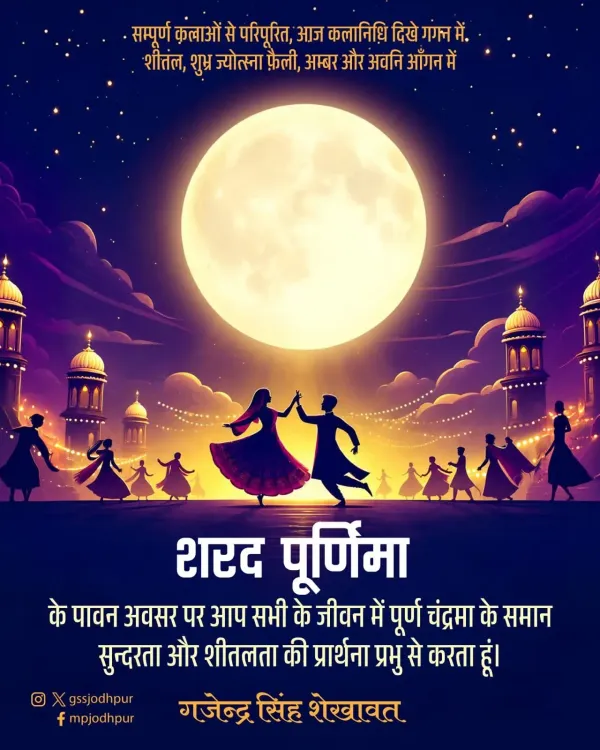
Union Culture and Tourism Minister Gajendra Singh Shekhawat greeted the nation on Sharad Purnima 2026 with a poetic Hindi message invoking the moon as Kalanidhi — the keeper of the sixteen arts — and praying for beauty and coolness in every Indian's life.
Key Takeaways
Union Culture and Tourism Minister Gajendra Singh Shekhawat posted Sharad Purnima greetings on 25 October 2026 .
His message used the classical Sanskrit term Kalanidhi — meaning treasury of arts — as an epithet for the full moon.
Sharad Purnima falls on the full moon of the Hindu month of Ashwin and is associated with the moon displaying all sixteen kalas (arts).
The festival marks the end of monsoon, carries harvest significance, and is observed with night-long vigils and offerings of kheer to moonlight.
The post aligns with the Ministry of Culture's ongoing effort to keep India's intangible heritage and classical vocabulary in public discourse.
On the auspicious occasion of Sharad Purnima, Union Culture and Tourism Minister Gajendra Singh Shekhawat offered a poetic Sanskrit-inflected greeting to the nation on Sunday, 25 October 2026, praying that every Indian's life be graced with the full moon's beauty and cool luminance.
In his post, the minister wrote in lyrical Hindi: 'सम्पूर्ण कलाओं से परिपूरित, आज कलानिधि दिखे गगन में' — 'Filled with all arts, today the treasury of arts [the moon] appears in the sky' — invoking the classical image of the full moon as Kalanidhi, the keeper of the sixteen arts. He expressed his prayer to the divine that the coolness and radiance of Purnima illuminate every life.
What Sharad Purnima means and why it is celebrated
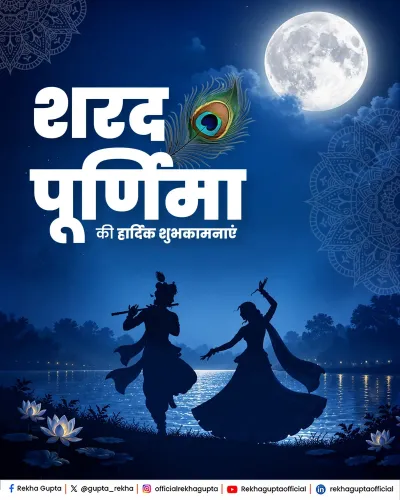
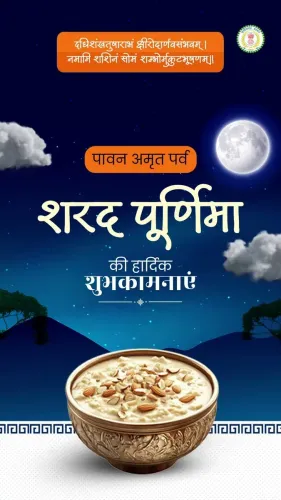
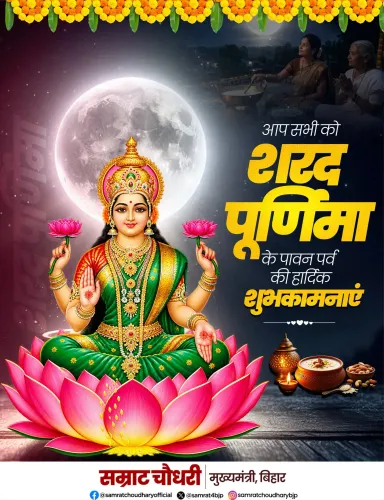
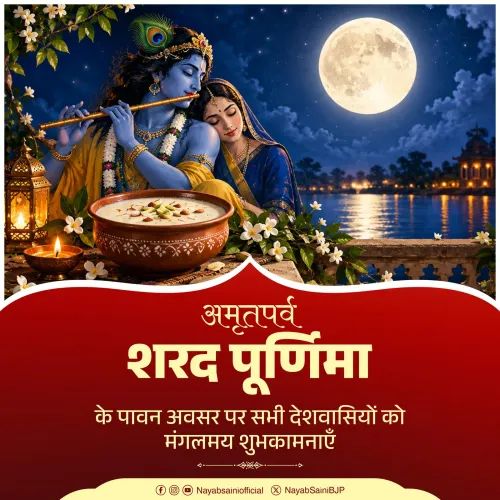
Sharad Purnima falls on the full moon night of the Hindu month of Ashwin, marking the end of the monsoon and the arrival of autumn. Tradition holds that on this night alone the moon shines with all sixteen kalas — a concept from classical Indian aesthetics denoting completeness — and that moonlight on this night carries unique nourishing properties. Across India, devotees keep night-long vigils, offer kheer to the moonlight, and recite devotional texts.
The festival carries both a harvest dimension — celebrating the first cool nights after the monsoon — and a deeply cultural one, linking music, poetry, and ritual to the seasonal calendar. It is regarded as one of the most visually and spiritually significant full moons of the Hindu year.
Culture Ministry's role in amplifying India's seasonal heritage
Shekhawat's evocative post is consistent with the Ministry of Culture's broader emphasis on India's intangible heritage — the web of seasonal observances, classical references, and folk traditions that anchor cultural identity. Union ministers routinely use the reach of social media to give festival greetings a sharper cultural-literary texture, framing them not merely as pleasantries but as reminders of living tradition. For a minister who holds the culture portfolio, invoking the classical term Kalanidhi — a Sanskrit epithet for both the moon and a repository of artistic knowledge — signals the ministry's intent to keep high-register cultural vocabulary in public circulation.
Point of View
Particularly those holding the culture portfolio. By anchoring a seasonal greeting in high classical vocabulary like Kalanidhi and the sixteen-kala framework, the ministry implicitly positions itself as a custodian of living Sanskrit-rooted tradition, not merely an administrative body. This soft-power dimension of festival communication — using political reach to amplify cultural literacy — is increasingly a feature of how New Delhi projects civilisational identity domestically. The pattern is likely to intensify as the festive calendar moves toward Diwali and beyond.
NationPress
25 Oct 2026
Frequently Asked Questions
What is Sharad Purnima and why is it celebrated?
Sharad Purnima is the full moon night of the Hindu month of Ashwin, celebrated as the night the moon shines with all sixteen kalas or arts. Devotees keep vigils, place kheer under moonlight, and observe the festival as a harvest and cultural milestone marking the end of monsoon.
What did Gajendra Singh Shekhawat post on Sharad Purnima 2026?
Union Culture and Tourism Minister Gajendra Singh Shekhawat posted a poetic Hindi message on 25 October 2026 invoking the moon as Kalanidhi and praying that the full moon's beauty and coolness grace every person's life.
What does Kalanidhi mean?
Kalanidhi is a classical Sanskrit term meaning 'treasury of arts' or 'repository of the sixteen kalas.' It is used as an epithet for the moon, which in Hindu tradition is believed to embody all sixteen arts on Sharad Purnima.
What are the sixteen kalas associated with Sharad Purnima?
In classical Indian aesthetics, the sixteen kalas refer to the complete, full manifestation of the moon's luminescence and, by extension, of artistic and spiritual completeness. Sharad Purnima is believed to be the one night the moon displays all sixteen simultaneously.
Why do Union ministers post festival greetings on social media?
Union ministers routinely use social media to issue greetings on major Hindu festivals, a practice that aligns with the Ministry of Culture's mandate to spotlight India's intangible heritage and keep seasonal traditions visible in national public discourse.