Dr. Jitendra Singh Highlights Heval River Revival in Tehri Garhwal
Synopsis
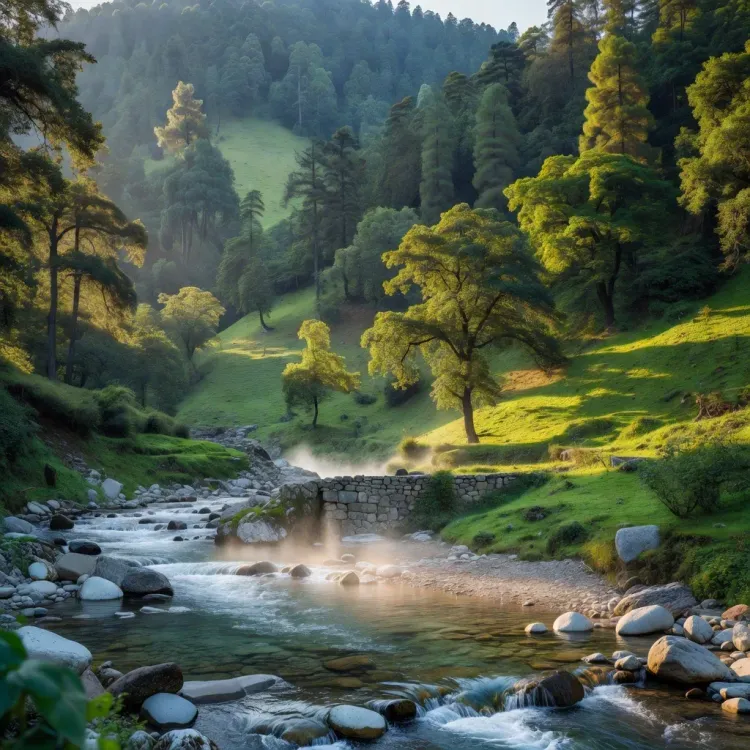
Union Minister Dr. Jitendra Singh shared how residents of Tehri Garhwal and local administration revived the Heval river through rainwater harvesting, groundwater recharge, and mass plantation, also restoring dozens of surrounding natural water sources.
Key Takeaways
Jitendra Singh spotlighted the Heval river revival story on 25 October 2026 under #MannKiBaat .
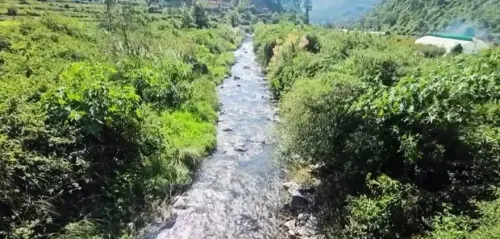
The Heval river in Tehri Garhwal, Uttarakhand had been experiencing declining water levels along with drying surrounding springs.
A joint effort by local villagers and district administration involved rainwater retention, groundwater recharge work, and large-scale plantation.
The initiative has helped revive dozens of natural water sources in the region alongside the river itself.
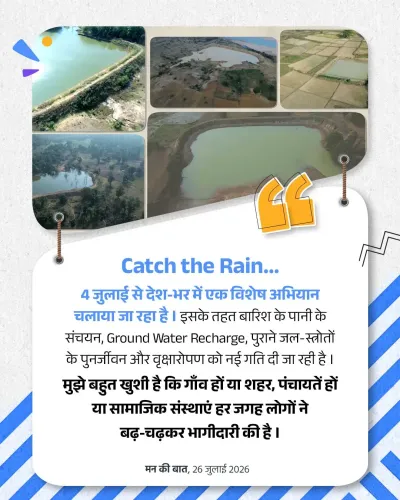
Mann Ki Baat , PM Modi's monthly radio programme since October 2014 , regularly amplifies such grassroots conservation success stories nationally.
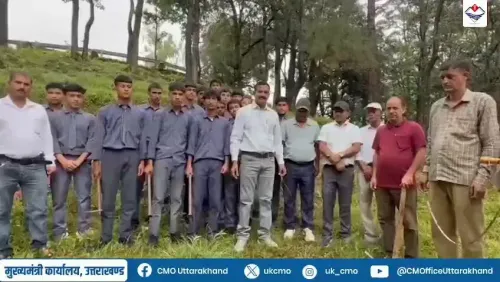
A river once quietly dying in the Himalayan folds of Tehri Garhwal, Uttarakhand, has found its breath again — and the story behind it is entirely human. Union Science and Technology Minister Dr. Jitendra Singh shared on Sunday, 25 October 2026, how local villagers and district administration joined hands to rescue the Heval river, turning a slow ecological crisis into a community-led triumph.
The minister's post, shared under the #MannKiBaat hashtag, describes a moment before the intervention when the Heval's water levels had begun to fall sharply and the natural springs in surrounding areas were drying up. The community responded not with bureaucratic inertia but with action: rainwater harvesting structures were built to arrest runoff, groundwater recharge work was undertaken, and a large-scale plantation drive was carried out across the catchment.
How a dying Himalayan stream was brought back
The revival of the Heval is a textbook case of integrated watershed management executed at the grassroots. Rainwater retention slows surface runoff and allows water to percolate into the soil; that moisture eventually feeds the springs and streams that form the lifeblood of hill communities. In the Heval's case, the combined effort has not only revived the river but also helped dozens of natural water sources in the region spring back to life, according to the minister's post.
Uttarakhand's hill districts are no strangers to this kind of slow-burn water crisis. Rapid land-use change, deforestation on fragile slopes, and erratic monsoons have stressed streams and springs across the state for years. Community-driven responses — often low-tech, high-participation — have repeatedly proved more durable than top-down engineering fixes alone.
Mann Ki Baat as a national amplifier for local wins
Mann Ki Baat, the monthly radio programme launched by Prime Minister Narendra Modi in October 2014, has long served as a platform to surface exactly these kinds of ground-up success stories — from water warriors in Rajasthan to forest protectors in the Northeast. By flagging the Heval story on social media under its hashtag, Dr. Jitendra Singh signals that the initiative could feature in an upcoming broadcast, bringing national attention — and possibly institutional support — to what began as a village-level effort.
The timing also aligns with India's broader push on water security. Central schemes focused on watershed restoration and spring recharge in Himalayan and hill states have sought to formalise and fund exactly the kind of community action seen along the Heval. Whether the Tehri Garhwal model gets plugged into that larger architecture remains to be watched — but the proof of concept, at least, is already flowing.
A village, a river, a decision to not give up. Sometimes the most consequential policy stories don't start in a ministry — they start on a hillside with a shovel.
Point of View
Which the BJP government has consistently deployed to build a narrative of citizen-led nation-building. The move is politically low-risk but strategically smart: it ties community action in a BJP-governed Uttarakhand hill district to a flagship PM programme ahead of a likely broadcast mention. More broadly, it reflects a pattern of using social media by science and environment ministers to build public salience for water security — an issue that directly affects millions of hill-state voters — without requiring legislative action or budgetary announcements.
NationPress
25 Oct 2026
Frequently Asked Questions
What is the Heval river and where is it located?
The Heval is a river in the Tehri Garhwal district of Uttarakhand, a Himalayan state in northern India. It had been experiencing declining water flow before a community-driven conservation effort helped revive it.
How was the Heval river revived in Uttarakhand?
Local villagers and the district administration carried out a combined programme that included rainwater harvesting to arrest runoff, groundwater recharge works, and large-scale tree plantation across the river's catchment area.
What is Mann Ki Baat and why was the Heval story shared under its hashtag?
Mann Ki Baat is a monthly radio programme launched by Prime Minister Narendra Modi in October 2014 to highlight positive citizen initiatives from across India. Sharing the Heval story under its hashtag signals the initiative may be featured in an upcoming episode.
Why are rivers and springs drying up in Uttarakhand?
Hill districts in Uttarakhand face water stress due to a combination of deforestation, land-use changes on fragile slopes, and increasingly erratic monsoon patterns, all of which reduce the natural recharge of springs and streams.
What central government schemes support river and spring revival in Indian hill states?
India has pursued watershed management and spring recharge initiatives in Himalayan and hill regions under schemes focused on water conservation and the Jal Shakti Abhiyan, though the specific integration of the Heval project with central funding has not been confirmed.