Giriraj Singh highlights Punjab's Nav Trinjan weaving revival
Synopsis
Union Textiles Minister Giriraj Singh spotlighted 'Nav Trinjan,' a traditional handloom revival in Punjab's Malwa region, praising women-led production using natural cotton as a model of self-reliance and environmental consciousness under the Atmanirbhar Bharat narrative.
Key Takeaways
Nav Trinjan is a traditional weaving initiative in Malwa, Punjab highlighted by Union Textiles Minister Giriraj Singh on 25 October 2026 .
The initiative centres women weavers and uses natural cotton , positioning it as both an empowerment and an environmental programme.
The minister linked Nav Trinjan to the Atmanirbhar Bharat self-reliance campaign launched in 2020 .
The National Handloom Development Programme , active since the 12th Five Year Plan , provides the existing policy framework for such cluster-based textile initiatives.
Punjab's handloom sector is historically smaller than those of neighbouring states, making this spotlight significant for the region's artisan community.
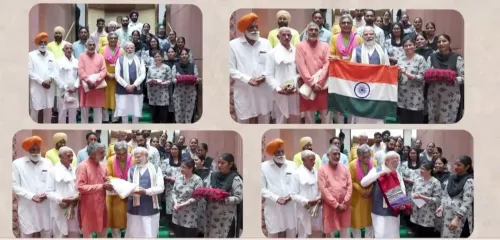
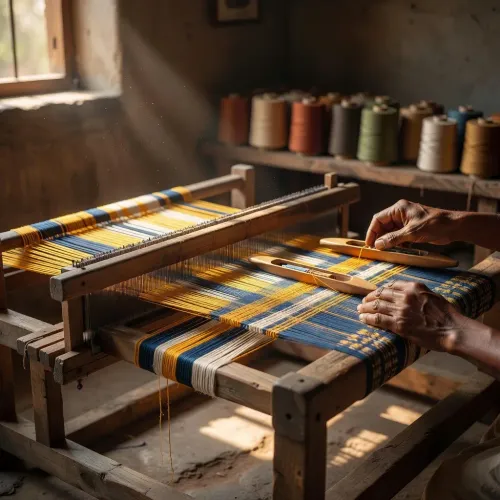
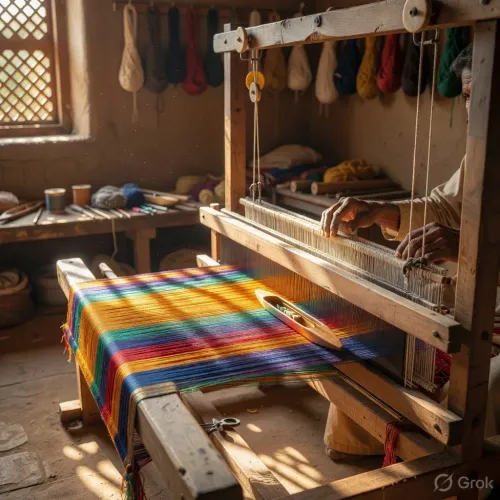
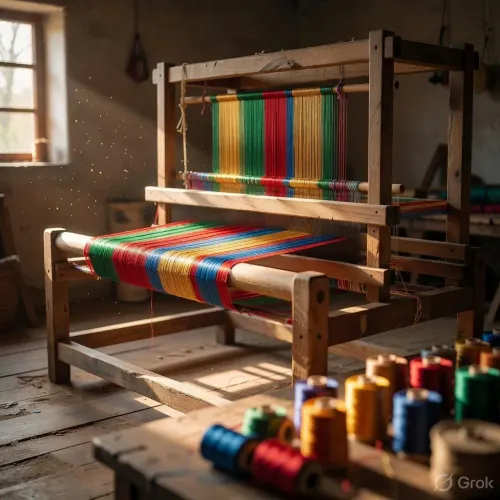
From the cotton fields of Malwa, Punjab, a quiet weaving revival is making noise in New Delhi's textile policy circles. Union Textiles Minister Giriraj Singh on Sunday, 25 October 2026 spotlighted 'Nav Trinjan,' an initiative giving new identity to traditional handloom craft in the region — weaving together natural cotton, indigenous skill, and women's enterprise into a single thread.
Posting on X, the minister wrote: 'पंजाब के मालवा में नव त्रिंजन पारंपरिक बुनाई को नई पहचान दे रहा है' — 'Nav Trinjan is giving a new identity to traditional weaving in Malwa, Punjab.' He added that garments being produced through natural cotton, indigenous craftsmanship, and women's participation carry a dual message: self-reliance and environmental conservation.
Malwa's looms and the women behind them
Malwa, the large agrarian belt in southern Punjab, has historically sat in the shadow of bigger handloom clusters in states like Andhra Pradesh, West Bengal, and Uttar Pradesh. Yet the region carries its own textile heritage — one that 'Nav Trinjan' appears designed to formalise and amplify. The initiative's name itself resonates culturally: trinjan is a Punjabi word for the communal spinning and weaving gatherings once central to rural women's social and economic life.
By centering women weavers as both producers and symbols of the programme, the messaging aligns neatly with a pattern the Ministry of Textiles has cultivated: frame handloom revival as women's economic empowerment, not just craft preservation. That framing has real policy backing — the National Handloom Development Programme, active since the 12th Five Year Plan, has channelled support into state-level clusters, weaver training, and skill certification across India.
Natural fibre, Atmanirbhar optics
The minister's emphasis on natural cotton is deliberate. Synthetic substitutes have steadily undercut handloom economics across India, and the push toward organic, indigenous fibre is both an ecological argument and a market-differentiation strategy. Linking the initiative to Atmanirbhar Bharat — the self-reliance campaign launched in 2020 — places a local Punjab cluster inside a national economic narrative, giving it political salience well beyond the Malwa belt.
Central government textile messaging has consistently used exactly this structure: a state-specific example, a natural-fibre angle, women's participation, and the Atmanirbhar umbrella. Nav Trinjan fits the template precisely — and a minister's X post is often the first public signal before cluster funding announcements or state-central coordination meetings follow.
Whether Nav Trinjan translates into a formal funded cluster under the National Handloom Development Programme or remains a spotlight moment will be the real test — but for Malwa's weavers, the loom is already turning.
Point of View
Women's economic participation, and Atmanirbhar Bharat all bundled in one regional showcase. Punjab is not a traditional handloom powerhouse, so the spotlight carries strategic intent: it signals potential cluster-development attention in a state where the BJP has electoral and governance stakes. The 'Nav Trinjan' branding is culturally sharp, invoking the Punjabi communal weaving tradition to lend indigenous authenticity to what is also a policy priority. Analysts should watch whether this post precedes a formal funding announcement or a state-central textiles coordination meeting.
NationPress
25 Oct 2026
Frequently Asked Questions
What is Nav Trinjan in Punjab?
'Nav Trinjan' is a traditional handloom weaving initiative in Punjab's Malwa region that involves women weavers producing garments using natural cotton and indigenous craftsmanship. The name draws on the Punjabi cultural tradition of communal spinning and weaving gatherings known as 'trinjan.'
What did Giriraj Singh say about Nav Trinjan?
Union Textiles Minister Giriraj Singh said on 25 October 2026 that Nav Trinjan is giving a new identity to traditional weaving in Malwa, Punjab, and that the garments produced carry a message of both self-reliance and environmental conservation.
Where is Malwa and why is it significant for textiles?
Malwa is the large agrarian belt in southern Punjab. While historically a smaller handloom region compared to states like West Bengal or Andhra Pradesh, it has a traditional textile heritage that government initiatives are now seeking to formalise and scale.
What is the National Handloom Development Programme?
The National Handloom Development Programme is a central government scheme, active since the 12th Five Year Plan period, that supports state-level handloom clusters, weaver training, and skill certification across India.
How does Nav Trinjan connect to Atmanirbhar Bharat?
The initiative's emphasis on natural cotton, indigenous skill, and domestic production directly echoes the Atmanirbhar Bharat self-reliance campaign launched in 2020, which the Textiles Ministry frequently invokes to give local craft revivals a national policy framing.