Giriraj Singh hails NIFT Gandhinagar's Chhap 2026 craft showcase
Synopsis
Union Textiles Minister Giriraj Singh spotlighted NIFT Gandhinagar's Chhap 2026, a showcase blending Bihar's Bawan Buti, Himachal's Chamba Rumal, Gujarat's Patola and Vidarbha's loom traditions with modern design to create new opportunities for artisans and connect youth with India's craft heritage.
Key Takeaways
Chhap 2026 is a NIFT Gandhinagar initiative showcasing four regional textile traditions simultaneously.
Bihar's Bawan Buti , Himachal Pradesh's Chamba Rumal , Gujarat's Patola , and Vidarbha's loom heritage are the featured crafts.
The initiative aims to link traditional arts with modern design and technology to reach younger audiences.
Creating new livelihood opportunities for artisans is an explicitly stated objective alongside cultural preservation.
NIFT , established in 1986 under the Ministry of Textiles, has a long mandate to bridge craft clusters with design education.
Patola holds a Geographical Indication tag, underscoring the legally recognised uniqueness of India's heritage textiles.
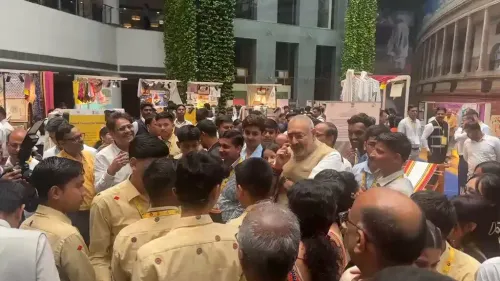
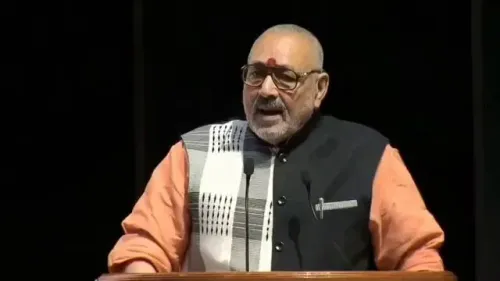
Four living textile traditions — Bihar's Bawan Buti, Himachal Pradesh's Chamba Rumal, Gujarat's Patola, and Vidarbha's loom heritage — are sharing a single stage at NIFT Gandhinagar's Chhap 2026, and Union Textiles Minister Giriraj Singh wants the country to take notice. The minister took to X on Sunday, 25 October 2026, to spotlight the initiative as a model for connecting ancient craft with modern design thinking.
Posting in Hindi, Singh wrote that 'Chhap 2026' is showcasing the country's 'rich craft heritage' (समृद्ध शिल्प विरासत) and that NIFT Gandhinagar's initiative aims 'to connect traditional arts with modern design and new technology and bring them to the younger generation, while providing new opportunities to artisans.'Four crafts, four corners of the country
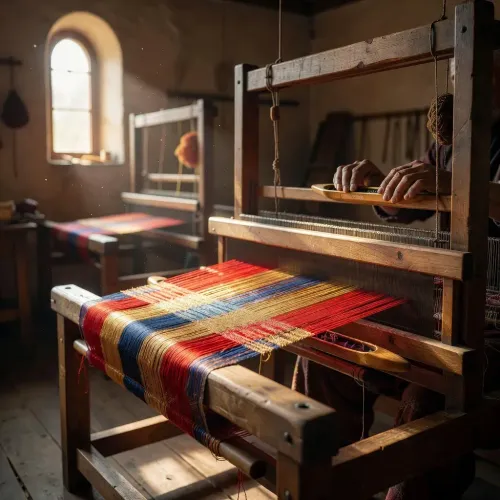
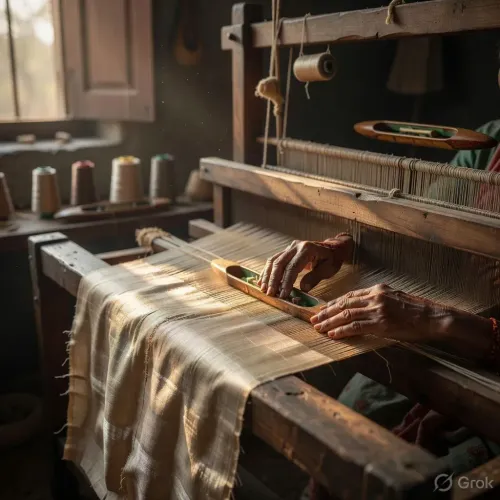
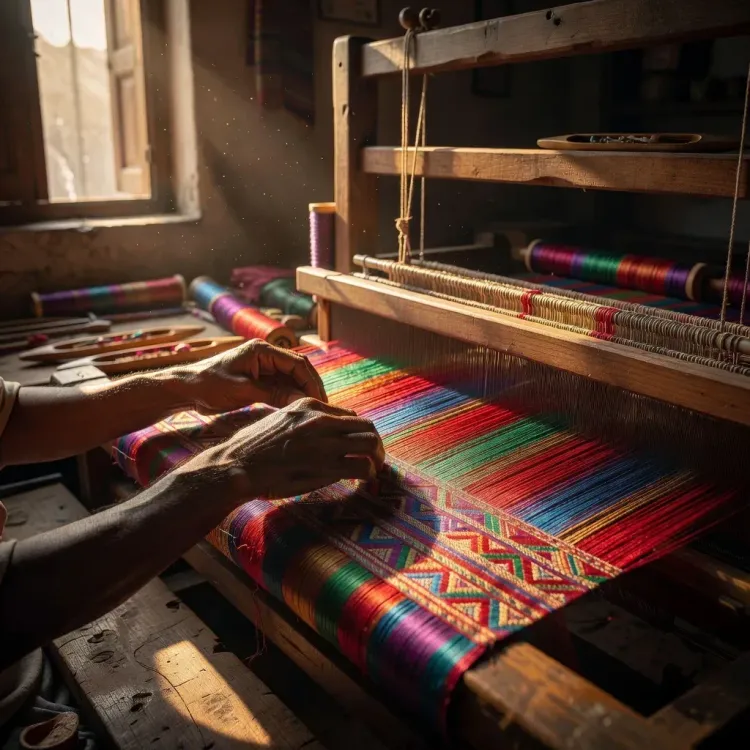
The line-up at Chhap 2026 reads like a geography of Indian textile mastery. Bawan Buti from Bihar is a handloom tradition celebrated for its geometric and figurative motifs woven directly into fabric. Chamba Rumal — a fine-needlework embroidery from the hills of Himachal Pradesh — carries centuries of royal-court patronage in every stitch. Patola, Gujarat's prized double-ikat silk weave, holds a Geographical Indication tag that underlines just how irreplaceable the craft is considered. And Vidarbha's loom traditions bring Maharashtra's cotton-belt weaving culture into the conversation.
Together, they represent not just aesthetic diversity but distinct artisan communities whose livelihoods have historically depended on the strength — or weakness — of market demand for traditional textiles.
Why NIFT Gandhinagar is the right room for this conversation
NIFT was established in 1986 under the Ministry of Textiles to build professional human resources for India's fashion and textile sector. Its Gandhinagar campus sits at the heart of Gujarat's textile economy — a strategic location for an initiative that anchors GI-protected crafts like Patola to the design-education mainstream. The bet is straightforward: put heritage weavers in the same conversation as young designers and technologists, and the craft gains both a contemporary aesthetic vocabulary and a new generation of champions.
This is not a standalone impulse. The Ministry of Textiles has for years sought to link regional craft clusters with design institutions and digital tools, visible across multiple NIFT campuses and state-level handloom promotion schemes. Chhap 2026 appears to crystallise that approach into a single, named showcase event.
The artisan at the centre of the equation
Singh's post is explicit that artisan opportunity — not just cultural display — is the point. Providing 'new opportunities to artisans' (कारीगरों को नए अवसर प्रदान करना) is stated as a core objective alongside youth outreach. That framing matters: heritage showcases that stop at celebration rarely shift the economic needle for weavers and embroiderers. The question Chhap 2026 implicitly poses is whether design-school collaboration and technology integration can translate prestige into sustainable income for the craftspeople keeping these traditions alive.
With the Ministry's weight behind it and four high-profile craft traditions in the frame, the initiative sets a visible benchmark — one that artisan clusters and design institutions across the country will be watching to replicate, or improve upon.
Point of View
The ministry signals a shift from preservation-as-display toward preservation-as-industry. The multi-state craft curation also carries a political subtext: simultaneously elevating Bihar, Himachal Pradesh, Gujarat and Maharashtra aligns with the BJP's broad artisan-outreach coalition. Whether design-school partnerships translate into measurable income gains for weavers remains the harder test this showcase will eventually have to answer.
NationPress
25 Oct 2026
Frequently Asked Questions
What is Chhap 2026 at NIFT Gandhinagar?
Chhap 2026 is an initiative by NIFT Gandhinagar to showcase India's traditional textile crafts — including Bawan Buti, Chamba Rumal, Patola and Vidarbha weaving — while connecting them with modern design practices and technology to benefit artisans and engage younger audiences.
What is Bawan Buti from Bihar?
Bawan Buti is a traditional handloom textile tradition from Bihar known for its intricate geometric and figurative motifs woven directly into the fabric.
What is Chamba Rumal?
Chamba Rumal is a fine needlework embroidery tradition from Himachal Pradesh, historically associated with royal patronage and recognised as one of India's significant craft heritage forms.
Why does Patola have a Geographical Indication tag?
Patola, a double-ikat silk weave from Gujarat, received a Geographical Indication tag in the early 2000s to legally protect the craft's unique origin and prevent misrepresentation, reflecting its irreplaceable cultural and commercial value.
What role does the Ministry of Textiles play in craft preservation?
The Ministry of Textiles, which oversees NIFT, has long sought to link regional craft clusters with design education, technology and market access — Chhap 2026 is one expression of that sustained policy direction.