Shekhawat hails Jodhpur's new terminal as gateway to Viksit Bharat

Synopsis
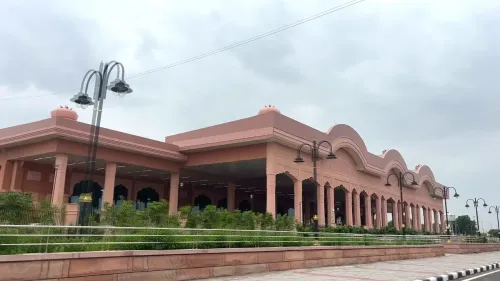
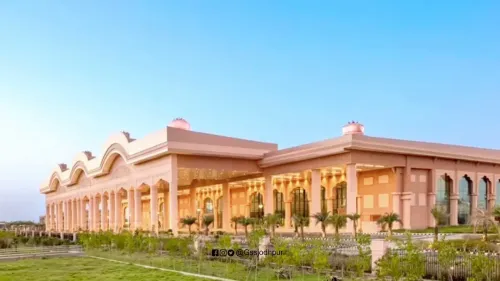
Union Culture and Tourism Minister Gajendra Singh Shekhawat on 4 July 2026 hailed the new Jodhpur Airport terminal as a symbol of heritage, culture, and modernity, calling it a gateway welcoming the world to a developed India under the Viksit Bharat vision.
Key Takeaways
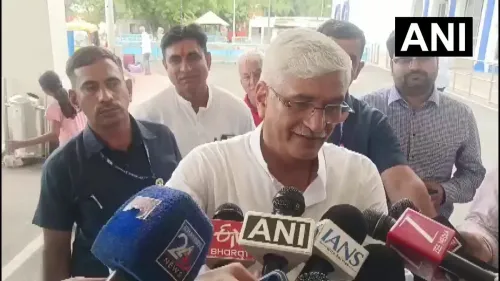
Gajendra Singh Shekhawat , Union Culture and Tourism Minister and Jodhpur MP, celebrated the new Jodhpur Airport terminal on 4 July 2026 .
He described the terminal as embodying 'the dignity of heritage, the fragrance of culture, and the flight of modernity.' The project aligns with the UDAN regional connectivity scheme launched in 2016 to modernise underserved airports.
The terminal also fits within the National Infrastructure Pipeline (2019) and the broader Viksit Bharat development framework.
Key beneficiaries include heritage tourists, local hospitality businesses, and aviation passengers using Jodhpur as a gateway to Rajasthan's fort circuit.
Passenger traffic trends and new route announcements will be closely watched after the terminal becomes fully operational.
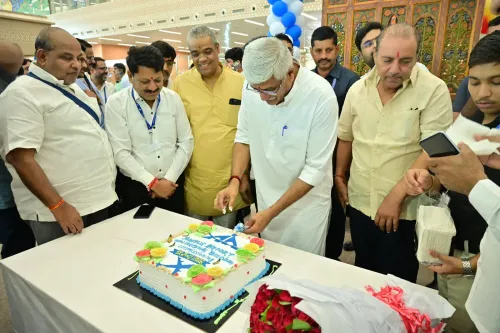
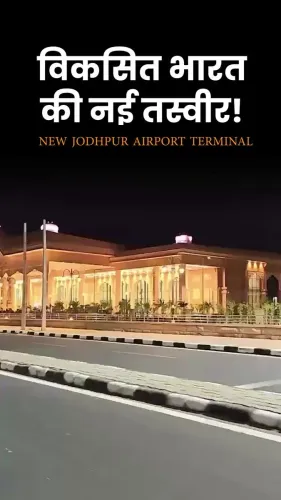
Union Culture and Tourism Minister Gajendra Singh Shekhawat on Saturday, 4 July 2026, celebrated the inauguration of Jodhpur Airport's new terminal building, calling it a symbol of heritage, culture, and modern progress opening India to the world.
Context
Shekhawat, who is also the Lok Sabha MP from Jodhpur, shared a video of the new terminal on X, writing: 'विरासत की गरिमा, संस्कृति की सुगंध और आधुनिकता की उड़ान!' — 'The dignity of heritage, the fragrance of culture, and the flight of modernity!' He added that Jodhpur's new terminal is 'welcoming the world through the gateway of Viksit Bharat' — the government's vision of a developed India.
The post underscores the minister's dual interest in the project: as a national culture and tourism chief and as the elected representative of Jodhpur, a historic city in Rajasthan renowned for Mehrangarh Fort and as a premier heritage tourism destination.
Policy Backdrop
The new terminal aligns with two major central policy frameworks. The UDAN (Ude Desh ka Aam Naagrik) regional connectivity scheme, launched in 2016, identified underserved airports including those in Rajasthan for phased modernisation and enhanced air connectivity. Jodhpur Airport has been part of that phased upgrade programme.
Airport expansion across heritage cities also forms part of the National Infrastructure Pipeline, announced in 2019, which earmarks capital investment to build connectivity infrastructure that supports tourism and economic activity. The Jodhpur terminal project fits squarely within the broader Viksit Bharat infrastructure push that successive budgets have accelerated.
The government has consistently framed airport modernisation in heritage cities not merely as logistics upgrades but as enablers of cultural tourism — a narrative Shekhawat's post reinforces by explicitly linking the terminal's design language to 'heritage' and 'culture'.
Stakeholders and Impact
The primary beneficiaries of an upgraded terminal at Jodhpur are leisure and heritage tourists — both domestic and international — who use the city as a base for exploring Rajasthan's fort circuit. Local hospitality businesses, tour operators, and artisan clusters that depend on visitor footfall stand to gain from improved airport capacity and passenger experience.
Aviation passengers currently transiting through Jodhpur for onward journeys to smaller Rajasthan destinations will also benefit from better facilities. The terminal's framing around cultural identity — heritage motifs, local aesthetics — reflects a design approach seen at several other recently upgraded Indian airports, positioning the gateway itself as part of the tourism experience.
For Shekhawat personally, the terminal is a visible infrastructure win in his own constituency, combining his portfolio responsibilities with local development credentials ahead of future electoral cycles.
What's Next
Attention will now shift to passenger traffic trends at Jodhpur Airport once the new terminal is fully operational, with industry watchers tracking whether enhanced capacity translates into new route announcements by domestic carriers. The Ministry of Culture and Tourism is expected to leverage the upgraded airport in its broader marketing of Rajasthan's heritage circuit to international tourists. Follow-up state and central tourism schemes targeting Jodhpur and the wider Thar Desert corridor are also likely to be announced in the coming months as the government seeks to maximise returns on the infrastructure investment.
Point of View
He is uniquely positioned to claim credit for an infrastructure upgrade that doubles as a cultural statement. The deliberate invocation of 'Viksit Bharat' signals that the terminal is being consciously slotted into the BJP's overarching 2047 development narrative, giving a local project national ideological weight. The emphasis on heritage aesthetics in airport design reflects a wider government strategy of turning connectivity infrastructure into soft-power assets for international tourism. Rajasthan, with its dense fort-and-palace circuit, is a test case for whether upgraded aviation gateways can meaningfully shift India's share of global heritage tourism receipts.
NationPress
2 Oct 2026
Frequently Asked Questions
What is the new Jodhpur Airport terminal about?
The new terminal at Jodhpur Airport is a modernised facility designed to blend Rajasthan's heritage aesthetics with contemporary aviation infrastructure, aimed at boosting tourism and passenger capacity in the city.
What did Gajendra Singh Shekhawat say about the Jodhpur Airport terminal?
Shekhawat described the terminal as representing 'the dignity of heritage, the fragrance of culture, and the flight of modernity,' and said it is welcoming the world through the gateway of Viksit Bharat.
How does the UDAN scheme relate to Jodhpur Airport?
The UDAN regional connectivity scheme, launched in 2016, identified underserved airports including those in Rajasthan for phased modernisation, and Jodhpur Airport has been part of that upgrade programme.
Who benefits from the new Jodhpur Airport terminal?
Heritage tourists, domestic and international travellers, local hospitality businesses, tour operators, and artisan communities in Jodhpur are the primary beneficiaries of the upgraded terminal.
What is Viksit Bharat and how does it connect to the Jodhpur terminal?
Viksit Bharat is the Indian government's vision for a fully developed India, and the Jodhpur terminal is being positioned as part of that broader infrastructure and tourism push linking connectivity upgrades to cultural and economic growth.