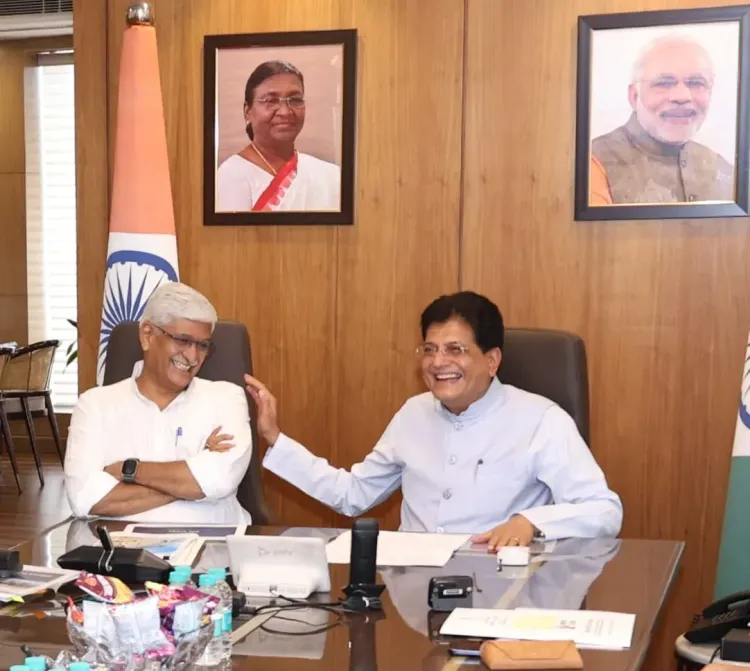
Shekhawat meets Commerce Minister Goyal in New Delhi
Synopsis
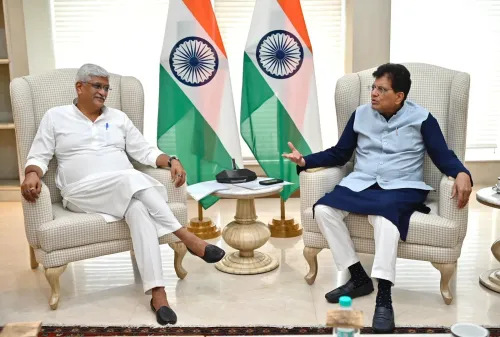
Union Culture and Tourism Minister Gajendra Singh Shekhawat met Commerce and Industry Minister Piyush Goyal in New Delhi on 10 July 2026 for substantive inter-ministerial talks. Senior Ministry of Culture officials were present, signalling a structured engagement aimed at aligning heritage, tourism, and trade policy.
Key Takeaways
Gajendra Singh Shekhawat , Union Minister of Culture and Tourism, met Piyush Goyal , Union Minister of Commerce and Industry, at Goyal's office in New Delhi on 10 July 2026 .
Senior officials of the Ministry of Culture accompanied Shekhawat, indicating a formal, departmentally prepared engagement.
Shekhawat described the meeting as a warm and 'meaningful deliberation on various subjects,' without specifying outcomes.
The post tagged @PMOIndia and @MinOfCultureGoI , suggesting the discussions carry broader institutional significance.
The two ministries have a history of coordination on cultural tourism, handicraft exports, and heritage circuits dating to at least the 2023 G20 Presidency .
No joint statement or specific policy announcement has been made public following the meeting.
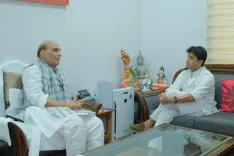
Union Culture and Tourism Minister Gajendra Singh Shekhawat called on Union Commerce and Industry Minister Piyush Goyal at his office in New Delhi on Friday, 10 July 2026, for a wide-ranging inter-ministerial discussion. Senior officials of the Ministry of Culture accompanied Shekhawat during the meeting.
Shekhawat described the engagement as a warm and meaningful exchange, posting on X: 'आत्मीय भेंट हुई... विभिन्न विषयों पर अर्थपूर्ण विचार-विमर्श हुआ' ('a warm meeting took place... meaningful deliberations were held on various subjects'). The post tagged the Prime Minister's Office and the Ministry of Culture, signalling that the discussions carry institutional weight.
Context
The meeting between the two senior Cabinet ministers reflects the current administration's emphasis on inter-ministerial coordination. The Culture and Commerce ministries share overlapping mandates wherever heritage, handicrafts, and tourism intersect with trade and export promotion.
Senior officials of the Ministry of Culture being present alongside the minister underscores that the engagement was substantive and departmentally prepared, rather than a routine courtesy call.
Policy Backdrop
The two ministries have a history of coordinated action. During India's G20 Presidency in 2023, culture and tourism were woven into economic diplomacy to project India's soft power and promote heritage-linked exports. Schemes such as the National Handicrafts Development Programme have long served as a bridge between cultural assets and commercial outcomes.
Heritage circuits, craft clusters, and cultural tourism corridors all require alignment between commerce policy — which governs export incentives and trade facilitation — and culture policy, which steers preservation and promotion of intangible assets. Inter-ministerial dialogue is the standard mechanism for advancing such convergence.
Stakeholders and Impact
The tourism industry and cultural exporters — ranging from weavers and artisans to heritage hospitality operators — stand to benefit most directly from any policy convergence that emerges from these discussions. India's handicraft and handloom sector, which employs millions across states like Rajasthan, Uttar Pradesh, and Gujarat, is particularly sensitive to changes in export facilitation and cultural branding.
International cultural agreements and bilateral tourism partnerships, if on the agenda, could also affect inbound tourism numbers and foreign exchange earnings from the sector.
What's Next
No specific outcomes, decisions, or joint statements have been announced following the meeting. Observers will watch for follow-up policy moves — such as new export incentives for cultural products, announcements on heritage tourism infrastructure, or international cultural cooperation agreements — that may trace their origins to this inter-ministerial exchange.
The tagging of @PMOIndia in Shekhawat's post suggests the discussions may feed into broader government priorities, potentially including items on the Cabinet or inter-ministerial committee agenda in the weeks ahead.
Point of View
Attended by departmental officials, is more than a courtesy call — it fits a pattern of the current government using inter-ministerial dialogue to operationalise the culture-commerce nexus. With India's handicraft and heritage tourism sectors increasingly framed as economic assets, coordination between Culture and Commerce has strategic value beyond ceremonial optics. The tagging of the PMO signals an intent to keep the political leadership in the loop, possibly ahead of a policy announcement or international engagement. How quickly concrete outputs follow will determine whether this exchange translates into tangible gains for artisans, tourism operators, and cultural exporters.
NationPress
10 Jul 2026
Frequently Asked Questions
Why did Culture Minister Shekhawat meet Commerce Minister Piyush Goyal?
Shekhawat met Goyal on 10 July 2026 in New Delhi for inter-ministerial discussions on various subjects, accompanied by senior Ministry of Culture officials. No specific agenda or outcomes have been officially disclosed.
What is the connection between the Culture Ministry and the Commerce Ministry in India?
The two ministries share overlapping mandates in areas such as handicraft exports, heritage tourism, and cultural branding. Schemes like the National Handicrafts Development Programme and heritage circuit development require coordination between both departments.
What did Gajendra Singh Shekhawat say about the meeting with Piyush Goyal?
Shekhawat described it as a warm meeting with 'meaningful deliberations on various subjects,' posting in Hindi on X and tagging the PMO and the Ministry of Culture.
Will there be a joint policy announcement after the Shekhawat-Goyal meeting?
No joint statement has been issued yet. Observers are watching for potential announcements on cultural exports, heritage tourism infrastructure, or international cultural agreements that may follow from the discussions.
What role does inter-ministerial coordination play in India's cultural tourism policy?
Inter-ministerial coordination is central to aligning heritage preservation with trade promotion. During India's G20 Presidency in 2023, culture and tourism were integrated into economic diplomacy, and such coordination continues to shape policy on handicraft exports and heritage circuits.