Shekhawat shares Modi's 'Seva Parmo Dharma' call to BJP workers
Synopsis
Union Minister Gajendra Singh Shekhawat shared PM Modi's 'Seva Parmo Dharma' exhortation on 24 September 2026, urging BJP workers to demonstrate service through conduct rather than words under the Seva Sankalp Abhiyan and Seva Yatra campaigns.
Key Takeaways
Union Minister Gajendra Singh Shekhawat shared the post on 24 September 2026 under hashtags #SevaSankalpAbhiyan and #SevaYatra .
PM Modi is quoted urging that the message of service must be conveyed through action, not preaching or words.
The Sanskrit phrase 'Seva Parmo Dharma' — 'Service is the supreme duty' — anchors the message, a refrain Modi has used since 2014 .
The Seva Sankalp Abhiyan is a BJP-linked campaign to reinforce service-oriented conduct among party workers at the grassroots.
The post explicitly warns that political power, however large, must never displace the party's foundational commitment to service.
The messaging aligns with long-standing RSS-BJP ideological emphasis on karma yog and the volunteer-as-servant ethos.
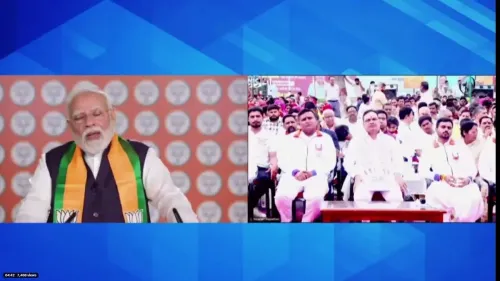
Power, no matter how towering, must never displace service — that is the message Union Culture and Tourism Minister Gajendra Singh Shekhawat amplified on Thursday, 24 September 2026, sharing a sharp exhortation attributed to Prime Minister Narendra Modi as part of the BJP's ongoing #SevaSankalpAbhiyan and #SevaYatra campaigns.
The message: service by conduct, not sermon
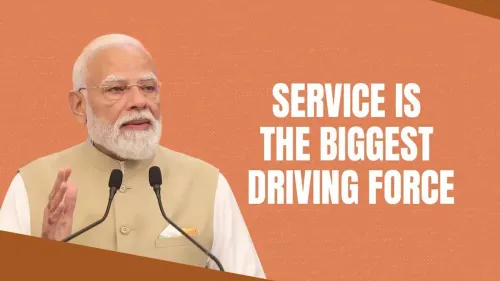
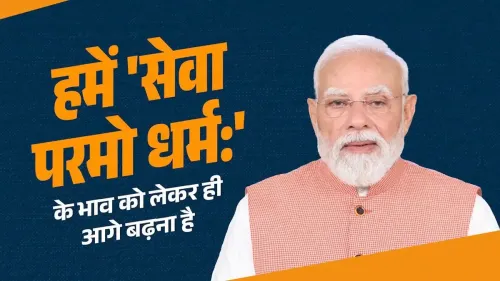
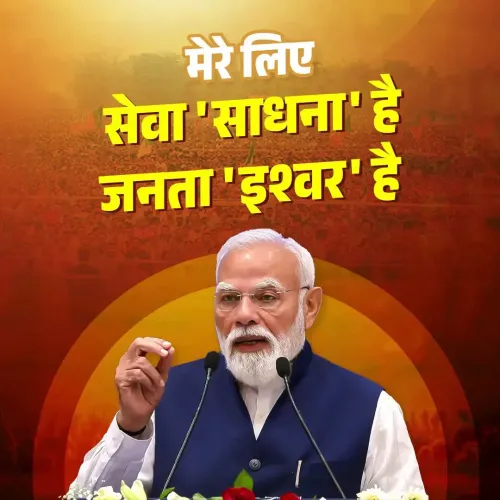
The quoted words — delivered in Hindi — strip the idea of service down to its most demanding form: 'सेवा ही हमारा मुख्य कार्य होना चाहिए' ('Service alone must be our primary work'). The passage explicitly rejects preaching: 'We will deliver the message of service through service itself — not through words. Our conduct alone should tell people that, however high power may rise in politics, our path will remain one of service.'
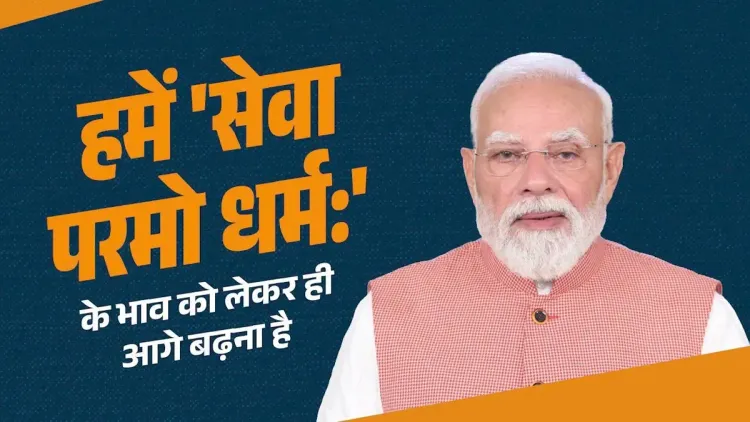
The closing invocation — 'सेवा परमो धर्म:', or 'Service is the supreme duty' — is not new political vocabulary for Modi. He has woven the Sanskrit phrase into party addresses and national platforms repeatedly since 2014, rooting it in the RSS-BJP tradition of karma yog: righteous action as its own reward, with political office recast as an obligation rather than a privilege.
Seva Sankalp Abhiyan and the organisational purpose behind the push
The dual hashtags signal a structured internal campaign, not a one-off social media moment. The Seva Sankalp Abhiyan and Seva Yatra are BJP-linked drives aimed at reinforcing service-oriented conduct among party workers — a periodic tool the organisation deploys to sharpen grassroots discipline and reset the rank-and-file's relationship with power after electoral cycles.
The timing and cadence of such messaging are deliberate. By circulating the Prime Minister's words, a senior minister like Shekhawat — himself a two-term Lok Sabha MP from Jodhpur, Rajasthan — signals organisational alignment from the top down: that the ethical compact between leadership and worker remains non-negotiable, regardless of the scale of power held.
A long-running ideological thread
The BJP's emphasis on seva as political virtue traces directly to RSS foundational thought, which positions the volunteer-worker (swayamsevak) as a servant of society first and a political actor second. For a party that has held national power since 2014 and governs a majority of Indian states, the challenge of keeping that ethos alive inside a vast, winning machinery is real — and the recurring nature of seva-themed campaigns reflects that institutional awareness.
The warning embedded in Modi's words — 'however high a peak we reach' — reads as an internal check: a reminder that electoral dominance is not an exemption from the founding discipline.
If the Seva Yatra rallies in the coming weeks match the ambition of the slogan, the test will be in the conduct of the millions of booth-level workers it is meant to reach — not in the words shared from a ministerial handle.
Point of View
Power-holding organisation that risks complacency. By framing political power as a potential threat to the seva ethos rather than its reward, Modi (and by amplification, Shekhawat) pre-empts the corruption-of-success narrative that opposition parties regularly target. The Seva Sankalp Abhiyan, running through hashtags rather than press releases, signals that the real audience is the party machinery, not the general public. Whether such periodic moral resets translate into measurable behavioural change at the booth level remains the enduring question for a party this size.
NationPress
24 Sept 2026
Frequently Asked Questions
What is the Seva Sankalp Abhiyan?
The Seva Sankalp Abhiyan is a BJP-linked campaign promoting service-oriented conduct among party workers, designed to reinforce the principle that political office is a duty of service rather than a privilege of power.
What does 'Seva Parmo Dharma' mean?
'Seva Parmo Dharma' is a Sanskrit phrase meaning 'Service is the supreme duty.' PM Modi has used it repeatedly since 2014 to anchor the BJP's self-image in selfless public service.
Why did Gajendra Singh Shekhawat share this post?
As a senior Union Minister and BJP MP from Jodhpur, Shekhawat shared PM Modi's words as part of the ongoing Seva Sankalp Abhiyan and Seva Yatra, signalling top-down organisational alignment with the service-first ethos.
What is the Seva Yatra?
The Seva Yatra is an internal BJP outreach drive run alongside the Seva Sankalp Abhiyan, aimed at taking the message of service-oriented politics to party workers and citizens at the grassroots level.
What is the RSS-BJP concept of karma yog in politics?
Karma yog, rooted in RSS-BJP ideology, positions the party worker as a servant of society first — action performed as duty, without attachment to reward or power — a principle the BJP invokes to differentiate itself from what it describes as power-centric rivals.