Shimla's ceremonial police keep Mall Road crowds moving in style
Synopsis
Shimla's ceremonial police are crowd managers, cultural ambassadors, and selfie partners all at once. Stationed at Scandal Point on the auto-free Mall Road, these turbaned officers enforce a pedestrian-first vision that dates to British India — and that the Himachal Pradesh High Court has repeatedly backed with legal force.
Key Takeaways
Shimla's ceremonial Himachal Pradesh Police manage pedestrian flow at Scandal Point , where the Ridge meets the Mall Road.
The Mall Road is an auto-free zone; officers direct walkers to keep left and manage tourist congestion during peak season.
Shimla served as the summer capital of British India from 1864 to 1939 ; its strolling culture dates to that era.
The Himachal Pradesh High Court has repeatedly invoked the Shimla Roads Users and Pedestrians Act, 2007 to enforce pedestrian rights.
In January 2012 , a High Court bench summoned top officials after vehicles were found parked in restricted zones on New Year's Eve .
Former Chief Justice Kurian Joseph advocated expanding auto-free zones to reduce congestion and pollution.
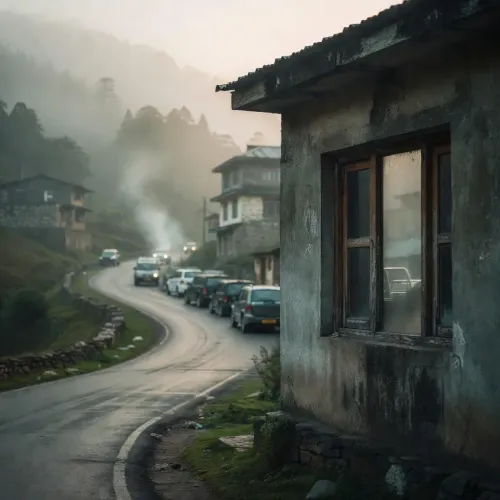
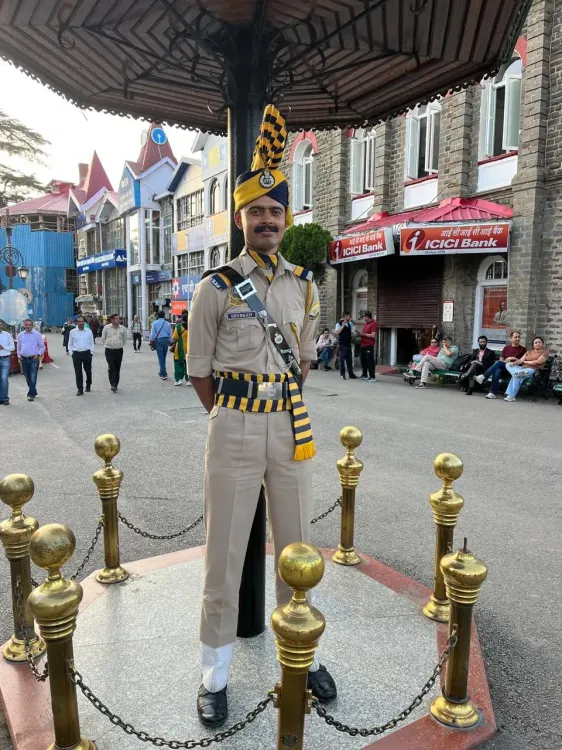
Shimla's ceremonial police personnel have become as much a part of the hill city's identity as its colonial architecture and pine-lined promenades. Stationed at Scandal Point — where the Ridge meets the Mall Road — these tall, immaculately turbaned officers of the Himachal Pradesh Police manage one of India's most unusual traffic challenges: a slow-moving river of tourists who walk, pause, photograph, and occasionally forget to move.
A Force Unlike Any Other
Unlike conventional traffic police, Shimla's ceremonial detail operates in an entirely auto-free zone. Their primary mandate is pedestrian flow management — directing walkers to keep left, untangling selfie-induced bottlenecks, and maintaining order during peak tourist season when the Mall swells with visitors from across the country and abroad.
The Himachal Pradesh Police described their role in a Facebook post: 'Clad in their formal uniform, their discipline, courtesy, and vigilance instill a sense of confidence in the minds of every tourist and citizen. With every patrol, they not only ensure safety but also set a benchmark for professional and friendly policing.'
Tourists and the Selfie Phenomenon
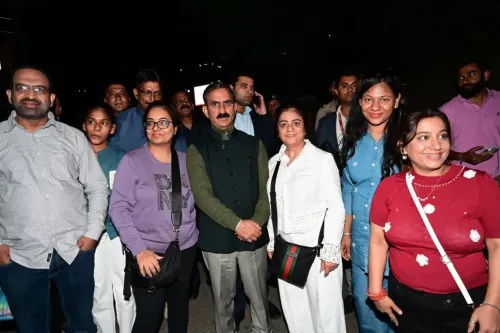
For many visitors, posing with these officers has become an unofficial Shimla ritual. Ankita Chatterjee, a tourist from Kolkata, said: 'We really feel elated with the warmth of two strolling police women who accepted our request to have a selfie with us. Their cheerful faces have won our hearts, and we are taking these memories of Shimla to our hometown.'
Another visitor, Yoshita Gupta, noted the dual nature of the force's presence: 'The intimidating mustaches sported by a policeman are an iconic element of creating a sense of fear among the mischievous elements.' The officers, in other words, project both approachability and authority — a balance rarely achieved in crowd policing.
Shimla's Pedestrian Legacy
The strolling culture of Shimla — which served as the summer capital of British India from 1864 to 1939 — dates to the colonial era. The Mall and the Ridge were once exclusive 'British only' promenades. More than 75 years after Independence, these same streets now welcome thousands of domestic and international tourists, including, notably, descendants of British families who once lived here.
The Himachal Pradesh High Court has repeatedly affirmed Shimla's pedestrian character, invoking the Shimla Roads Users and Pedestrians (Public Safety and Convenience) Act, 2007. The court has on several occasions asked the state government whether the Act's provisions are being enforced. In January 2012, a division bench of Justice Deepak Gupta and Justice Sanjay Karol summoned senior administrative and police officials after vehicles were found illegally parked in restricted zones on New Year's Eve. The bench observed: 'We were shocked to find that vehicles were parked in the sealed and restricted areas. Not only this, but vehicles were also parked in the core area of Shimla town.'
The Court's Stance on Auto-Free Zones
The High Court's push for pedestrian rights has extended even to institutional actors. An earlier order on the same petition flagged Indian Army vehicles using restricted routes without valid permits, with the bench noting that army officials, like all citizens, must obtain vehicle permits under the Act if they choose not to walk. Former Chief Justice Kurian Joseph was himself a strong advocate of expanding auto-free zones, arguing that walking in Shimla benefits both individual health and the city's air quality.
What This Means for Shimla's Future
As domestic tourism continues to grow and Shimla's footfall rises each season, the ceremonial police force represents a model of crowd management that blends civic function with cultural identity. Their presence reinforces the city's pedestrian-first framework — one backed by law, endorsed by the courts, and increasingly celebrated by the visitors they serve.
Point of View
Including against the Indian Army. That a court must summon officials over New Year's Eve parking violations in a 'sealed' zone suggests the pedestrian-first framework is aspirational as much as operational. The ceremonial force is the visible, photogenic face of a policy whose enforcement remains inconsistent.
NationPress
7 Oct 2026
Frequently Asked Questions
What does Shimla's ceremonial police force do?
Shimla's ceremonial Himachal Pradesh Police personnel manage pedestrian traffic on the auto-free Mall Road, particularly at Scandal Point where the Ridge and Mall converge. They direct walkers, manage tourist crowds during peak season, and serve as a visible symbol of orderly, friendly policing.
Why is the Mall Road in Shimla auto-free?
The Mall Road is designated an auto-free zone to ensure unrestricted pedestrian movement in a city the Himachal Pradesh High Court has described as fundamentally a 'pedestrian city.' The legal basis is the Shimla Roads Users and Pedestrians (Public Safety and Convenience) Act, 2007.
What legal action has the Himachal Pradesh High Court taken on Shimla's pedestrian zones?
The High Court has on multiple occasions asked the state government whether the 2007 pedestrian safety Act is being enforced. In January 2012, a division bench summoned senior officials after vehicles were found illegally parked in restricted zones on New Year's Eve, and separately flagged Indian Army vehicles using restricted routes without permits.
What is the historical significance of the Mall Road and Ridge in Shimla?
The Mall Road and Ridge were originally 'British only' promenades during Shimla's time as the summer capital of British India, a status it held from 1864 to 1939. The strolling culture established by colonial rulers persists today, drawing both domestic tourists and, reportedly, descendants of British families who once lived there.
Why do tourists want selfies with Shimla's police officers?
The ceremonial officers' distinctive appearance — immaculate turbans, polished uniforms, and, for some, iconic mustaches — has made them a cultural landmark in their own right. Tourists from across India and abroad regularly request photographs with them, and the officers' reputation for warmth and courtesy has amplified their appeal on social media.