DK Shivakumar visits Osaka waste-to-energy plant in Japan

Synopsis
DK Shivakumar visited an Osaka plant capable of processing up to 900 tonnes of municipal waste a day as Karnataka studies waste-to-energy options. He also met Kannadigas and their families during a Shinkansen journey from Nagoya.
Key Takeaways
DK Shivakumar visited the Maishima Incineration Plant in Osaka with a Karnataka delegation.
The plant can process up to 900 tonnes of municipal solid waste daily using two incinerators.
The facility has an installed power-generation capacity of 32 MW and supplies surplus electricity to the grid.
Shivakumar met Kannadigas and their families on a Shinkansen journey from Nagoya to Osaka .
The plant, operational since 2001 , was designed by Austrian artist Friedensreich Hundertwasser .
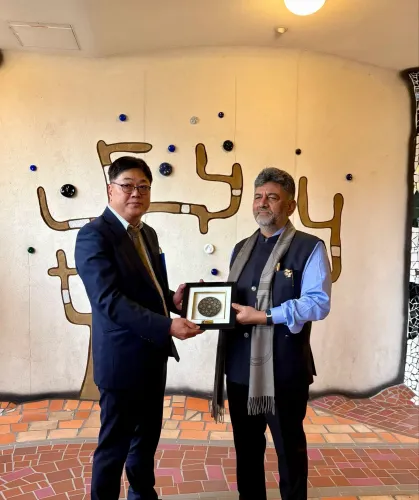
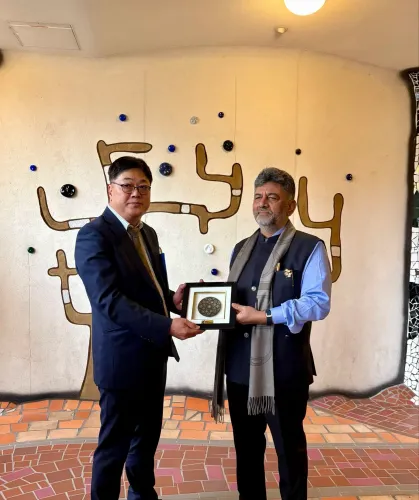
DK Shivakumar visited the Maishima Incineration Plant in Osaka, Japan, on Tuesday to study its waste-to-energy technology after meeting Kannadigas and their families aboard a Shinkansen train, officials from the Karnataka Chief Minister’s Office said. The plant can process up to 900 tonnes of municipal solid waste a day, according to the account of the visit.
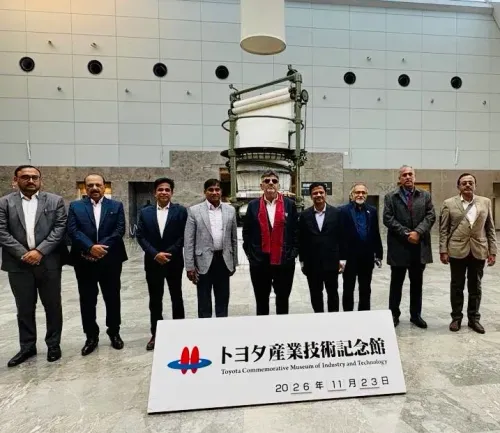
Shivakumar travelled from Nagoya to Osaka with a state delegation. The visit forms part of Karnataka’s stated effort to study urban infrastructure and waste-management practices that could inform its approach to city services.
Kannadiga community interaction on Shinkansen
During the bullet train journey, Shivakumar exchanged greetings with members of the Kannada community and asked about their experiences of living in Japan. Their families also took part in the interaction, officials said.
The journey gave the delegation an opportunity to observe Japan’s high-speed rail network and transport connectivity. Karnataka is exploring ways to strengthen urban mobility and public transport, although the account of the visit did not announce a specific transport project or implementation timetable.
How the Maishima plant handles waste
The facility on Maishima Island has operated since 2001 and uses two incinerators to process municipal solid waste. Its stated capacity of up to 900 tonnes a day describes how much waste it can handle, rather than a commitment for a proposed plant in Karnataka.
The plant has an installed power-generation capacity of 32 MW. It converts waste into electricity, using power for its own requirements and supplying the surplus to the grid.
According to the description provided during the visit, the facility uses combustion controls, continuous emissions monitoring and pollution-control systems. Those systems are intended to support efficient waste processing while limiting environmental impact.
Architecture and environmental management
The plant is also known for a design by Austrian artist Friedensreich Hundertwasser. Its colourful exterior, unconventional forms and greenery distinguish the industrial facility from a conventional incineration plant.
The combination of an operating waste facility with a distinctive public-facing design was another feature of the delegation’s visit. The Karnataka government’s stated interest extends beyond power generation to urban planning and environmental management.
Implications for Karnataka’s cities
The visit allows the delegation to examine a model that links municipal waste disposal with electricity generation. For Karnataka’s cities, any potential application would involve assessing both waste handling and the environmental controls associated with such a facility.
The account of the visit did not identify a Karnataka city for a comparable plant, set out a proposed cost or announce a construction schedule. The government has said it wants to draw lessons from established international models as it considers scientific waste disposal and waste-to-energy solutions.
Further details would be needed to establish whether the Osaka visit leads to a specific proposal for Karnataka.
Point of View
Locally appropriate proposals. Karnataka should make public any assessment of costs, emissions safeguards and waste requirements before pursuing a comparable facility. A plant’s generation capacity alone cannot establish whether it is the right choice for a particular city.
NationPress
24 Nov 2026
Frequently Asked Questions
Why did DK Shivakumar visit the Maishima plant in Osaka?
Shivakumar visited the plant to study its waste-to-energy technology as Karnataka explores waste-management options for its cities. He was accompanied by a state delegation.
How much waste can the Maishima Incineration Plant process?
The Osaka plant can process up to 900 tonnes of municipal solid waste a day. It uses two incinerators and has an installed power-generation capacity of 32 MW.
Who did Shivakumar meet during his Japan train journey?
Shivakumar interacted with Kannadigas and their families while travelling from Nagoya to Osaka on a Shinkansen train. He asked community members about their experiences of living in Japan.
Has Karnataka announced a similar waste-to-energy plant?
The account of the visit did not announce a specific comparable plant in Karnataka. It also did not provide a proposed location, cost or construction schedule.
Who designed the Maishima Incineration Plant?
Austrian artist Friedensreich Hundertwasser designed the Osaka facility. The plant, operational since 2001, is known for its colourful exterior, unconventional forms and greenery.