Shivraj flags PM Modi's Mann Ki Baat push on malnutrition
Synopsis
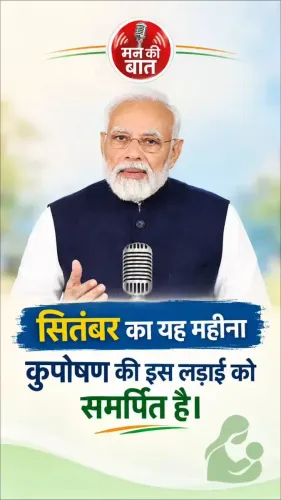
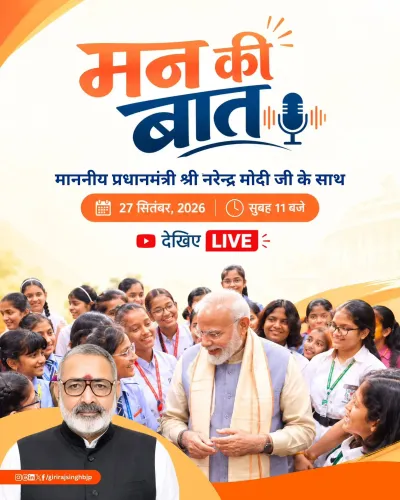
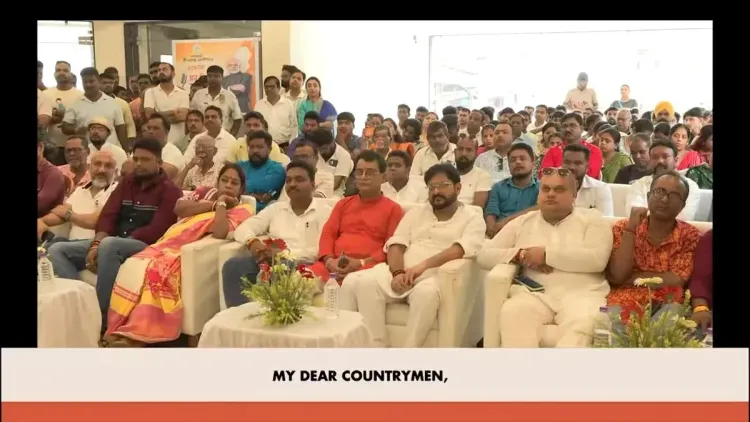
Union Agriculture Minister Shivraj Singh Chouhan amplified PM Modi's Mann Ki Baat address on 27 September 2026, praising the government's initiatives this year to combat malnutrition — keeping India's nutrition mission in the political spotlight.
Key Takeaways
Shivraj Singh Chouhan shared PM Narendra Modi 's Mann Ki Baat message on malnutrition on 27 September 2026 .
The Prime Minister described 'several commendable initiatives' taken 'this year' to fight malnutrition.
Mann Ki Baat , running since 2014 , is a monthly radio address used to promote flagship welfare schemes directly to citizens.
The POSHAN Abhiyaan , launched in 2018 , is India's National Nutrition Mission targeting stunting, undernutrition and anaemia in children and women.
The National Food Security Act (2013) remains the legislative backbone guaranteeing subsidised foodgrains to priority households.
The Agriculture Ministry's role in crop diversification and grain fortification ties it directly to the national nutrition agenda.
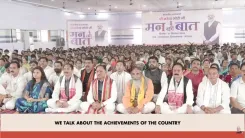
India's battle against malnutrition got a fresh spotlight on Sunday, 27 September 2026, as Union Agriculture Minister Shivraj Singh Chouhan amplified Prime Minister Narendra Modi's latest Mann Ki Baat address, highlighting what the government describes as 'several commendable initiatives this year' to combat undernutrition across the country.
Chouhan's post — brief but pointed — quotes the Prime Minister directly, sharing the message: 'कुपोषण से मुकाबला करने के लिए इस साल कई सराहनीय पहल की गई हैं' ('Several commendable initiatives have been taken this year to combat malnutrition'). By amplifying the Mann Ki Baat segment, the senior BJP leader and former four-term Chief Minister of Madhya Pradesh extends the broadcast's reach into his own political and social network.
Mann Ki Baat as a nutrition megaphone
Mann Ki Baat, the Prime Minister's monthly radio address running since 2014, has repeatedly served as a platform to spotlight flagship welfare schemes — bypassing traditional media to speak directly to citizens in their own languages. Nutrition has been a recurring theme. The format's strength lies in its reach: the programme is broadcast across All India Radio's vast network, making it one of the widest-reaching direct communication tools in Indian public life.
The malnutrition front matters enormously in India. The government's POSHAN Abhiyaan — the National Nutrition Mission launched in 2018 — was designed precisely to drive down stunting, undernutrition, and anaemia among children under six, pregnant women, and lactating mothers. The mission integrates nutrition, health, and agriculture interventions at the grassroots, aiming to shift outcomes that have stubbornly lagged development benchmarks.
Agriculture ministry's stake in the nutrition fight
Chouhan's amplification is not incidental. The Ministry of Agriculture and Farmers Welfare sits at the upstream end of the nutrition chain — crop diversification, pulses production, and fortified grain distribution all fall within its policy orbit. A minister of his seniority echoing a nutrition message signals that the government is framing food security and nutrition as a unified agenda, not siloed departmental work.
The National Food Security Act of 2013 underpins the supply side, guaranteeing subsidised foodgrains to priority households. What Mann Ki Baat moments typically add is the demand side — awareness, community participation, and behavioural change that no scheme alone can mandate.
The question heading into the coming months is whether parliamentary scrutiny of the POSHAN Abhiyaan budget will match the rhetorical momentum — because in nutrition policy, allocations are the real headline.
Point of View
Not merely a health department, priority. It also reflects the BJP's continued use of direct-to-citizen communication tools to build public ownership of flagship schemes ahead of potential parliamentary budget scrutiny. The POSHAN Abhiyaan has been the centrepiece of India's nutrition architecture since 2018, but outcomes data has historically trailed political ambition — making these Mann Ki Baat moments as much about sustaining public momentum as about celebrating results. Chouhan's stature as a former four-term Chief Minister gives the amplification added political weight in Hindi-belt states where malnutrition indicators remain a concern.
NationPress
27 Sept 2026
Frequently Asked Questions
What did PM Modi say about malnutrition on Mann Ki Baat?
PM Modi highlighted that 'several commendable initiatives' have been taken this year to combat malnutrition, as referenced by Union Agriculture Minister Shivraj Singh Chouhan in his post on 27 September 2026.
What is POSHAN Abhiyaan?
POSHAN Abhiyaan, or the National Nutrition Mission, was launched in 2018 to reduce stunting, undernutrition, and anaemia among children under six, pregnant women, and lactating mothers across India.
What is Mann Ki Baat?
Mann Ki Baat is a monthly radio address by Prime Minister Narendra Modi, broadcast since 2014, where he discusses government schemes, public issues, and welfare initiatives directly with citizens.
Why is the Agriculture Ministry involved in nutrition policy?
The Agriculture Ministry influences nutrition outcomes through crop diversification, pulses production, and support for fortified grain distribution — making it a key upstream partner in India's anti-malnutrition strategy.
What is the National Food Security Act?
The National Food Security Act, enacted in 2013, provides subsidised foodgrains to priority households and remains the legislative foundation for India's food security and nutrition supply chain.