Shivraj Singh Chouhan Visits Assam Flood-Hit Areas on PM Modi's Directions
Synopsis
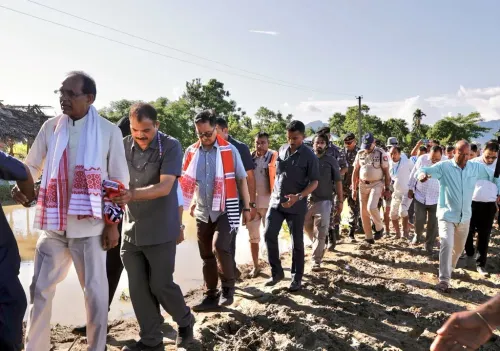
Union Agriculture Minister Shivraj Singh Chouhan and Union Minister Kiren Rijiju visited flood-affected areas of Assam on 1 July 2026, acting on PM Modi's directions. They met rural residents, listened to their distress, and pledged that the Centre and Assam state government would leave no stone unturned in providing relief.
Key Takeaways
Shivraj Singh Chouhan and Kiren Rijiju conducted a joint visit to flood-affected areas of Assam on 1 July 2026 .
The visit was undertaken on the explicit directions of Prime Minister Narendra Modi .
Both ministers met rural residents in affected areas to hear their grievances directly.
Chouhan pledged that the central and state governments would leave no stone unturned in relief efforts.
The Agriculture Minister's involvement signals focus on crop damage and rural livelihood losses caused by the floods.
Relief disbursement under NDRF and SDRF norms and long-term flood mitigation for the Brahmaputra basin are the key issues to watch.
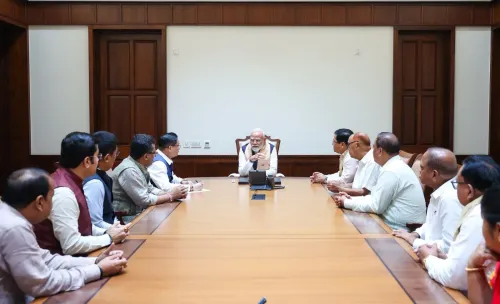
Union Agriculture Minister Shivraj Singh Chouhan visited flood-affected areas of Assam on Wednesday, 1 July 2026, alongside Union Minister Kiren Rijiju, acting on directions from Prime Minister Narendra Modi to assess the situation on the ground and reassure affected communities.
Context
Chouhan posted on X that the visit was undertaken on the instructions of Prime Minister Modi — 'आदरणीय प्रधानमंत्री श्री नरेंद्र मोदी जी के निर्देश पर' ('on the directions of the respected Prime Minister') — and that both ministers met rural residents to listen to their distress firsthand. 'We assured them that in this difficult time, they are not alone,' he wrote, adding that 'no matter how large the crisis, together we will overcome it.'
The two ministers interacted with rural men and women in affected villages, signalling that the Centre is treating the disaster as a priority requiring direct ministerial attention rather than remote coordination alone.
Policy Backdrop
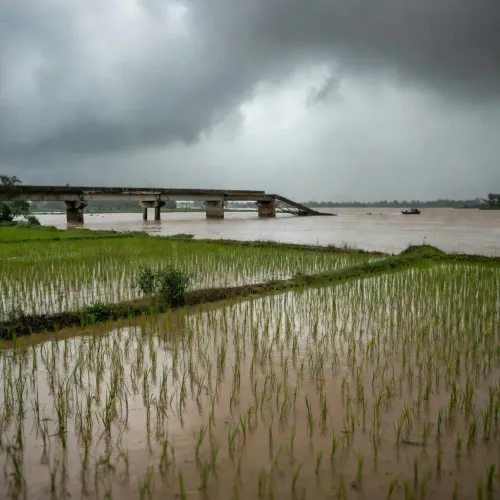
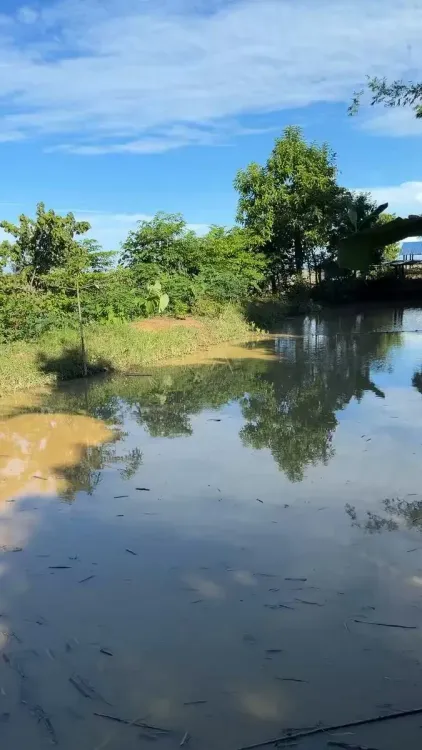
Assam faces recurrent annual flooding driven by the Brahmaputra river and its tributaries, which regularly inundate agricultural land and rural infrastructure across the state during the monsoon season. The scale of damage routinely demands joint action between the central government and the state administration.
India's Disaster Management Act, 2005 provides the legal framework for such coordinated central-state responses, including the deployment of funds under the National Disaster Response Fund (NDRF) and the State Disaster Response Fund (SDRF). Central ministers conducting on-site visits is a well-established feature of this framework, intended to accelerate relief and signal political commitment. Chouhan's presence as Agriculture Minister is particularly relevant given that flooding devastates standing crops and disrupts the rural economy that his ministry oversees.
Stakeholders and Impact
The communities most directly affected are Assam's rural farming households, whose crops, livestock, and homes face damage every monsoon season. For these communities, a direct visit by two senior Union ministers carries both practical and symbolic weight — it signals that central funds and administrative attention will follow.
The Agriculture Ministry's involvement points to a likely assessment of crop damage, which feeds into compensation claims under disaster relief norms. Kiren Rijiju's participation broadens the central government's visible engagement beyond any single ministry, suggesting a whole-of-government posture for the relief effort.
Chouhan's post explicitly promised that 'the central and state governments will leave no stone unturned' — 'केंद्र और राज्य सरकार कोई कसर नहीं छोड़ेगी' — a commitment that will be watched closely by affected residents and by the Assam state administration as it coordinates relief operations.
What's Next
Attention will now turn to the disbursement of central assistance under NDRF and SDRF norms, and to whether the ground-level assessment by the two ministers translates into accelerated fund releases or additional central teams being deployed to the state.
Longer term, parliamentary discussions on structural flood mitigation measures for the Brahmaputra basin remain a recurring demand from Assam's political representatives. The ministerial visit may also feed into a formal damage report that guides agricultural relief packages for affected farmers ahead of the kharif harvest season.
Point of View
Particularly in politically significant northeastern states. Chouhan's personal visit, framed explicitly as PM Modi's directive, is designed to project federal solidarity at a moment when state-level distress is acute. The Agriculture Ministry's direct involvement is notable: crop damage assessments from such visits typically feed into formal relief packages under disaster norms, making this more than a symbolic gesture. Whether the visit translates into faster NDRF disbursements or structural flood-mitigation commitments will determine its lasting policy significance.
NationPress
1 Oct 2026
Frequently Asked Questions
Why did Shivraj Singh Chouhan visit Assam in July 2026?
Chouhan visited flood-affected areas of Assam on 1 July 2026 on the directions of Prime Minister Narendra Modi, to assess damage and reassure rural communities that the central government would support them.
Who accompanied Shivraj Singh Chouhan on the Assam flood visit?
Union Minister Kiren Rijiju accompanied Chouhan during the visit to flood-hit areas of Assam.
What did Shivraj Singh Chouhan promise flood victims in Assam?
Chouhan assured affected residents that they are not alone in this difficult time and that the central and state governments will leave no stone unturned in providing relief.
What funds are available for Assam flood relief from the central government?
Under the Disaster Management Act, 2005, the central government can disburse assistance through the National Disaster Response Fund (NDRF) and the State Disaster Response Fund (SDRF) to states affected by natural calamities such as floods.
Why does Assam flood every year?
Assam experiences recurrent annual flooding primarily because of the Brahmaputra river and its tributaries, which overflow during the monsoon season and inundate vast stretches of agricultural land and rural settlements.