Shivraj briefs Amit Shah on Arunachal, Assam flood damage
Synopsis
Agriculture Minister Shivraj Singh Chouhan submitted a field report to Home Minister Amit Shah on flood and landslide damage in Arunachal Pradesh and Assam after a ground visit with Kiren Rijiju on 30 June and 1 July. Shah directed the swift deployment of an Inter-Ministerial Central Team for a scientific damage assessment.
Key Takeaways
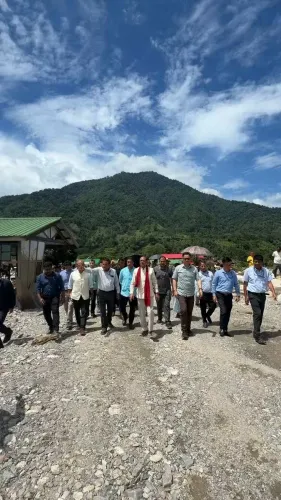
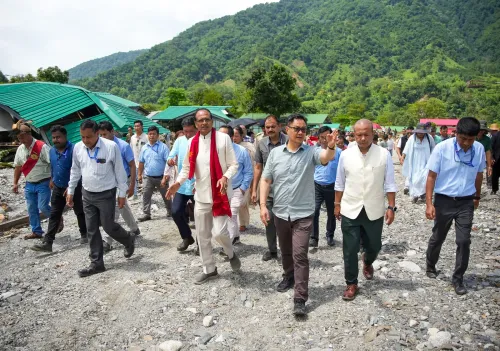
Shivraj Singh Chouhan and Kiren Rijiju visited flood and landslide-hit areas of Arunachal Pradesh and Assam on 30 June and 1 July 2026 on PM Modi's directions.
Chouhan submitted a detailed field report to Home Minister Amit Shah on 3 July 2026 covering damage to agriculture, horticulture, livestock, housing, roads, bridges, communications, electricity, and drinking water infrastructure.
Shah directed the prompt dispatch of an Inter-Ministerial Central Team (IMCT) for a detailed, scientific assessment of losses in both states.
The IMCT report will determine the release of central funds under the National Disaster Response Fund (NDRF) for relief, rehabilitation, and reconstruction.
The central government has pledged full commitment to the people of both states, with relief and reconstruction efforts to be accelerated.
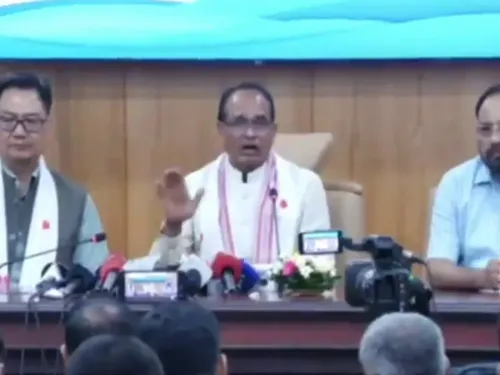
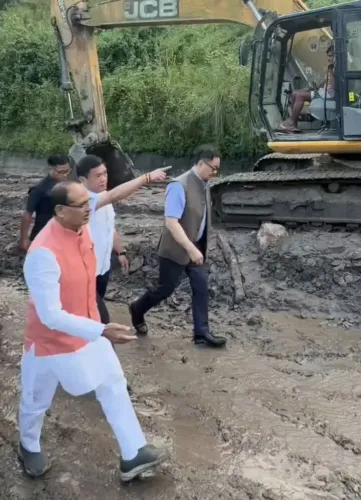
Union Agriculture Minister Shivraj Singh Chouhan on Friday, 3 July 2026 met Union Home Minister Amit Shah in New Delhi to submit a detailed field report on the flood and landslide devastation in Arunachal Pradesh and Assam, following a ground assessment he conducted on 30 June and 1 July alongside Union Minister Kiren Rijiju.
Posting in Hindi on X, Chouhan said the natural disaster had deeply disrupted the lives, livelihoods and basic amenities of many families across both states. 'वहाँ निकट से देखा कि किस प्रकार इस आपदा ने अनेक परिवारों के जीवन, आजीविका और बुनियादी सुविधाओं को गहराई से प्रभावित किया है' ('I saw at close quarters how this disaster has deeply affected the lives, livelihoods and basic facilities of many families'), he wrote.
Context
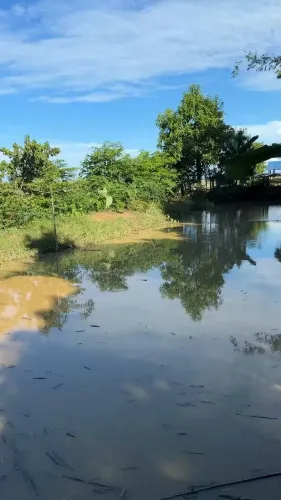
The northeast monsoon season has once again brought severe flooding and landslides to the region. Assam faces recurring annual inundation from the Brahmaputra river system, while Arunachal Pradesh is highly susceptible to monsoon-triggered landslides due to its mountainous terrain. Both states have historically required central intervention for relief and reconstruction during such events.
Chouhan and Rijiju undertook the joint field visit on the directions of Prime Minister Narendra Modi, conducting a first-hand assessment of conditions on the ground before reporting back to the central government.
Policy Backdrop
India's disaster response architecture is anchored in the National Disaster Management Act, 2005, which established the National Disaster Management Authority (NDMA) and defined the legal framework for central-state coordination. The National Disaster Response Fund (NDRF) — revised in 2015 and again in 2022 — governs the deployment of an Inter-Ministerial Central Team (IMCT) to conduct scientific damage assessments before central funds are released to affected states.
Both Arunachal Pradesh and Assam have previously received NDRF assistance for monsoon disasters in 2017, 2020, and 2022. The Agriculture Ministry's direct involvement underscores the intersection of disaster relief with rural livelihood recovery, particularly given the damage to agriculture, horticulture, and livestock that accompanies such floods.
Stakeholders and Impact
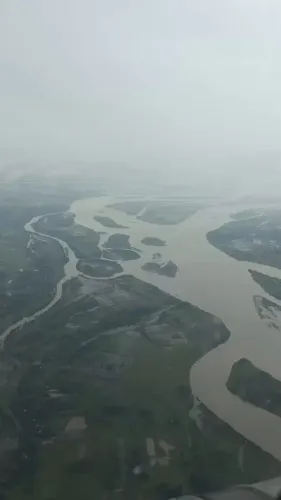
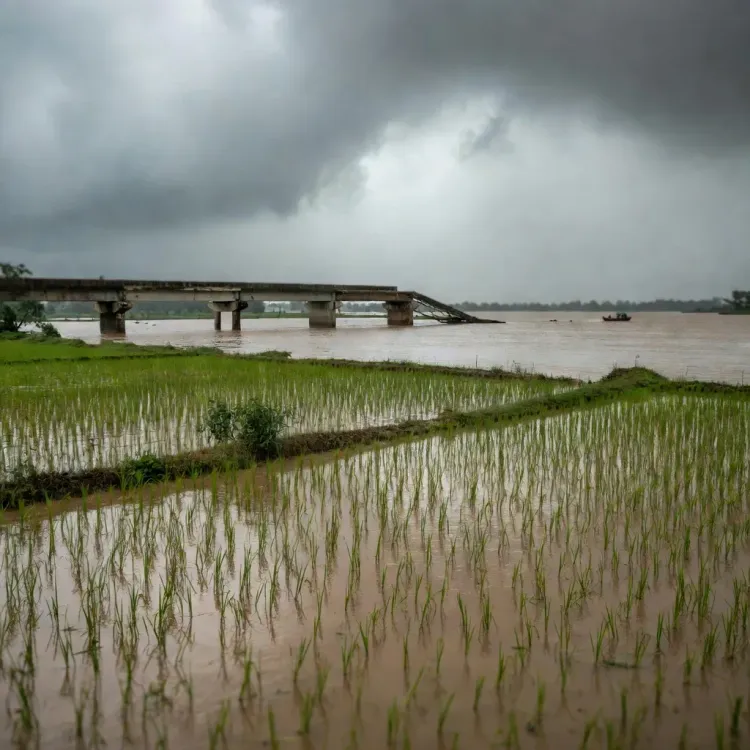
Chouhan's report to Shah covered losses across multiple sectors: agriculture, horticulture, livestock, housing, roads, bridges, communications, electricity, drinking water, and other public infrastructure. The breadth of the damage assessment reflects the scale of disruption experienced by farming communities and rural households in both states.
Shah reviewed the situation and directed that an IMCT be dispatched promptly to conduct a detailed, scientific assessment of all losses. He also directed that necessary assistance be made available to the affected states without delay. Chouhan stated that the central government stands 'with full commitment' alongside the people of Arunachal Pradesh and Assam in this hour of crisis.
What's Next
The immediate priority is the rapid deployment of the Inter-Ministerial Central Team, whose damage report will determine the quantum of central funds to be released under the NDRF. The IMCT's findings are expected to feed directly into decisions on relief, rehabilitation, and reconstruction packages for both states.
Chouhan pledged that every necessary effort for relief, rehabilitation, and reconstruction would be advanced at full speed. The pace of the IMCT's assessment and the subsequent release of central funds will be closely watched by state governments and affected communities alike.
Point of View
Not merely a routine state-level affair. By looping in Kiren Rijiju — who carries both ministerial weight and regional credibility as an Arunachal Pradesh representative — the government is projecting a coordinated, multi-ministry response. The swift ordering of an IMCT follows established NDRF protocol, but the speed and visibility of the political engagement suggests the Centre is keen to be seen as proactive ahead of any opposition criticism over delayed relief. The key test will be the pace of the IMCT's actual deployment and the subsequent release of funds, which have historically been points of friction between New Delhi and Northeast state governments.
NationPress
2 Oct 2026
Frequently Asked Questions
What did Shivraj Singh Chouhan report to Amit Shah about Assam and Arunachal Pradesh floods?
Chouhan submitted a detailed field report covering damage to agriculture, horticulture, livestock, housing, roads, bridges, communications, electricity, drinking water, and other public infrastructure in both states after personally visiting the affected areas on 30 June and 1 July 2026.
What is an Inter-Ministerial Central Team (IMCT) and why is it being sent to Northeast India?
An IMCT is a central government team constituted under NDRF rules to conduct a scientific, on-the-ground assessment of disaster damage in affected states, whose findings determine the quantum of central relief funds released to state governments.
Why did Shivraj Singh Chouhan visit Arunachal Pradesh and Assam?
Chouhan visited the flood and landslide-affected areas on the directions of Prime Minister Narendra Modi, accompanied by Union Minister Kiren Rijiju, to conduct a first-hand assessment of conditions before briefing the central government.
What central assistance has been promised to Assam and Arunachal Pradesh after the 2026 floods?
Home Minister Amit Shah has directed that necessary assistance be made available to the affected states and that an IMCT be dispatched promptly for a detailed damage assessment, which will form the basis for NDRF fund releases.
Which sectors were damaged by the floods and landslides in Arunachal Pradesh and Assam?
The damage spans agriculture, horticulture, livestock, housing, roads, bridges, communications, electricity supply, drinking water systems, and other public infrastructure across both states.