Arunachal flood crisis: Shivraj Singh Chouhan leads aerial survey, pledges Centre's full support
Synopsis
Union Minister Shivraj Singh Chouhan's two-day Arunachal Pradesh visit was more than a symbolic show of support — it combined an aerial damage survey, village-level meetings with flood victims, and a wide-ranging discussion with the Governor on turning crisis into a catalyst for agricultural reform. With homes destroyed and crops lost, the Centre's next move on relief disbursement will be closely watched.
Key Takeaways
Union Minister Shivraj Singh Chouhan conducted a two-day flood assessment visit to Arunachal Pradesh on 30 June–1 July .
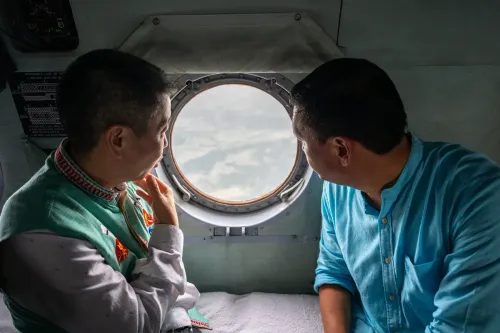
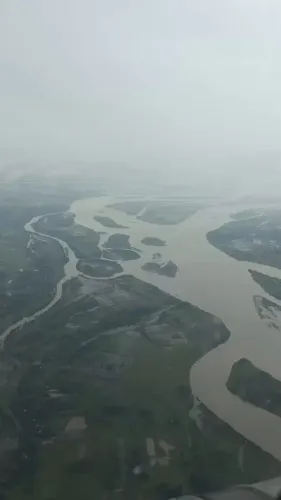
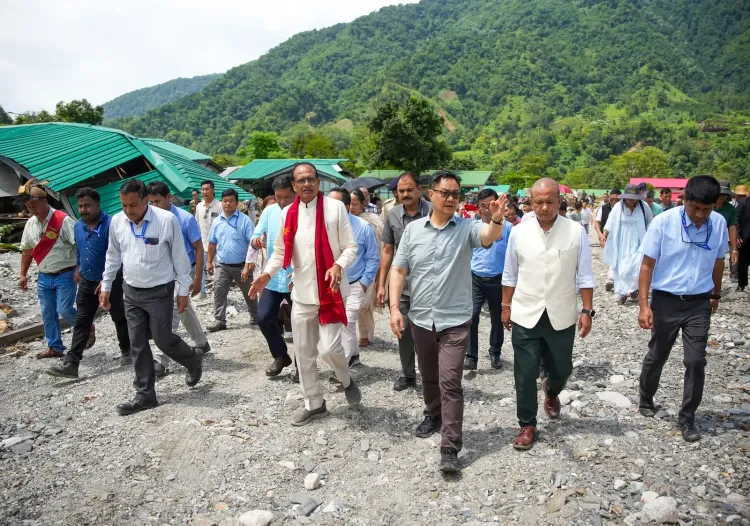
An aerial survey of Kayi Panyor district and other flood-hit areas was carried out alongside Kiren Rijiju and Chief Minister Pema Khandu .
A detailed relief review was held in Pasighat ; Chouhan also met Governor Lt Gen K.T.
Parnaik (Retd.) at Lok Bhavan, Itanagar .
Residents of Boing village collectively built a flood protection wall — cited by Chouhan as an example of community resilience.
Discussions with the Governor covered flood relief as well as long-term agricultural priorities including organic farming, ICAR and NABARD support, and branding of 'Organic Arunachal' products.
Chouhan assured the Governor of the Centre's full support for relief, rehabilitation and Arunachal Pradesh's agricultural development.
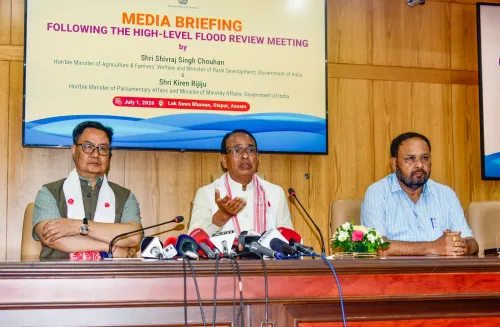
Union Minister for Agriculture and Farmers' Welfare Shivraj Singh Chouhan on Wednesday, 1 July affirmed that the Centre and the Arunachal Pradesh government are working in close coordination to address the state's severe flood crisis, following a two-day ground and aerial assessment of the damage.
Aerial Survey and Field Review
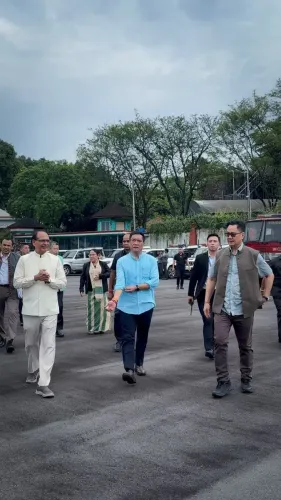
Chouhan, accompanied by Union Parliamentary and Minority Affairs Minister Kiren Rijiju and Arunachal Pradesh Chief Minister Pema Khandu, conducted an aerial survey of flood-ravaged areas in Kayi Panyor district and other parts of the state. A detailed review of relief operations was subsequently held in Pasighat, attended by state Bharatiya Janata Party (BJP) President Kaling Moyong and senior officials.
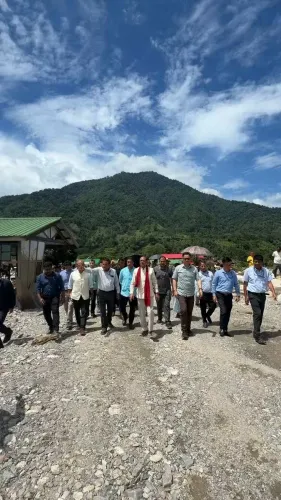
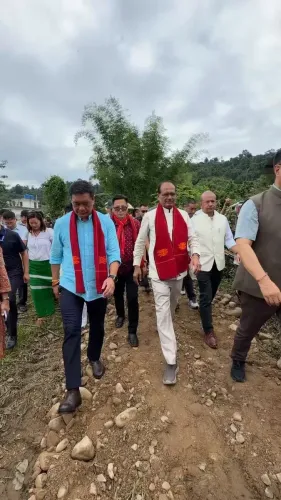
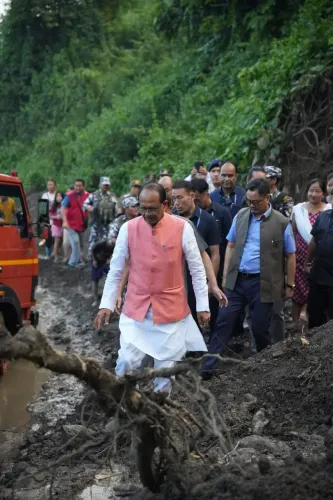
On Tuesday evening, the three leaders also visited flood-affected villages by road and met directly with displaced and affected residents. 'In this hour of crisis, the Central and state governments stand firmly committed alongside the people,' Chouhan stated.
What the Centre Has Said
In a series of posts on social media platform X, Chouhan said that for the past two days, they had been continuously among flood-affected communities. He added that under the leadership of Prime Minister Narendra Modi, the Centre stood 'shoulder to shoulder with every affected family.'
He expressed confidence that the difficult period would pass, and pledged that every possible effort for relief, rehabilitation and reconstruction would be undertaken with complete sensitivity and commitment. He highlighted a notable instance of community resilience in Boing village, where children, youth and residents collectively built a protection wall to prevent future inundation. 'We too contributed our labour alongside them. The government is carrying out relief and rehabilitation efforts with full commitment, but this societal participation is our greatest strength,' Chouhan said.
Meeting with the Governor
Chouhan, who also holds the Rural Development portfolio, called on Arunachal Pradesh Governor Lt Gen K.T. Parnaik (Retd.) at Lok Bhavan, Itanagar. Their discussions covered recent flood damage, as well as longer-term priorities including strengthening irrigation, connectivity and rural infrastructure, promotion of organic farming and high-value crops, skill development, agri-technology and market linkages.
Governor Parnaik apprised the Union Minister of the extensive damage caused by floods across several districts and sought continued Central support for relief, rehabilitation and restoration of essential infrastructure and livelihoods. He underscored Arunachal Pradesh's potential as a hub for sustainable, high-value agriculture and called for support for certified organic clusters, subsidies for natural farming, branding of 'Organic Arunachal' products at national and global levels, and assistance through institutions such as ICAR and NABARD. Chouhan assured the Governor of the Centre's full support for the state's development and agricultural growth.
On the Ground: Damage and Community Response
Homes have been destroyed and crops washed away across multiple districts, according to official accounts. Yet, as Chouhan noted, community resolve has remained intact — with residents in at least one village taking collective action to protect against further flood damage. The Union Minister also planted a sapling of the Bokul tree — a species valued for its fragrant flowers, evergreen nature and ecological significance — as part of a practice observed by visiting dignitaries to the state.
What Happens Next
With the Centre's assessment visit concluded, attention now shifts to the pace and scale of disbursement for relief and reconstruction. The discussions in Itanagar signal that agricultural rehabilitation — not just infrastructure — will be a priority in the recovery plan. The road ahead for Arunachal Pradesh involves not only rebuilding homes and restoring connectivity, but also leveraging the crisis as a catalyst for climate-resilient farming and rural economic diversification.
Point of View
Adequate funds for Arunachal Pradesh, a state that is chronically vulnerable to monsoon flooding yet chronically under-resourced in flood-resilient infrastructure. The Governor's pivot to agricultural reform during a flood crisis is noteworthy: it signals that Itanagar sees this moment as leverage for longer-term Central investment, not just emergency relief. The community-built protection wall in Boing village, while heartening, also quietly exposes the gap in state infrastructure that left villagers with no alternative. The real test of this visit will come when the relief and reconstruction allocations are made public.
NationPress
30 Sept 2026
Frequently Asked Questions
Why did Shivraj Singh Chouhan visit Arunachal Pradesh on 1 July?
Chouhan visited Arunachal Pradesh on a two-day trip to assess the ongoing flood crisis, conduct an aerial survey of affected areas, and coordinate relief efforts between the Centre and the state government. He was accompanied by Union Minister Kiren Rijiju and Chief Minister Pema Khandu.
Which areas were surveyed during the flood assessment visit?
The aerial survey covered Kayi Panyor district and other flood-affected parts of Arunachal Pradesh. A detailed review of relief operations was also held in Pasighat, attended by state BJP President Kaling Moyong and senior officials.
What did the Centre promise for flood-hit Arunachal Pradesh?
Chouhan assured that the Centre, under Prime Minister Narendra Modi's leadership, would stand with every affected family and carry out relief, rehabilitation and reconstruction with full commitment. He also pledged the Centre's support for the state's agricultural development during his meeting with Governor Lt Gen K.T. Parnaik (Retd.).
What is the significance of the Boing village flood protection wall?
Residents of Boing village — including children, youth and elders — collectively built a protection wall to prevent floodwaters from entering the village in the future. Chouhan highlighted this as an example of community resilience and said government teams contributed labour alongside villagers.
What long-term agricultural plans were discussed with the Arunachal Pradesh Governor?
Governor Lt Gen K.T. Parnaik (Retd.) sought Central support for certified organic clusters, subsidies for natural farming, promotion of high-value horticulture, branding of 'Organic Arunachal' products, and research and training through ICAR and NABARD. Chouhan assured full support for these initiatives alongside immediate flood relief.