Shivraj Singh Chouhan joins flood-hit villagers in Arunachal for shramdaan
Synopsis
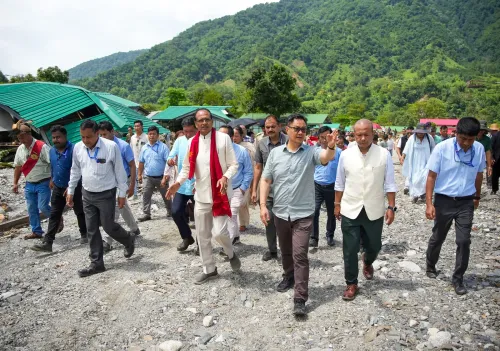
Union Agriculture Minister Shivraj Singh Chouhan spent two days touring flood-hit Arunachal Pradesh and participated in shramdaan at Boing village on 1 July 2026, helping residents build a community protection wall while calling for collective resilience amid widespread crop and property losses.
Key Takeaways
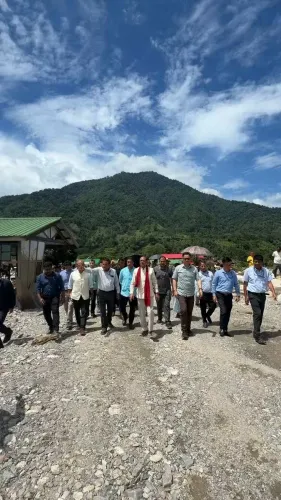
Shivraj Singh Chouhan visited flood-affected areas of Arunachal Pradesh for two consecutive days, culminating in a visit on 1 July 2026 .
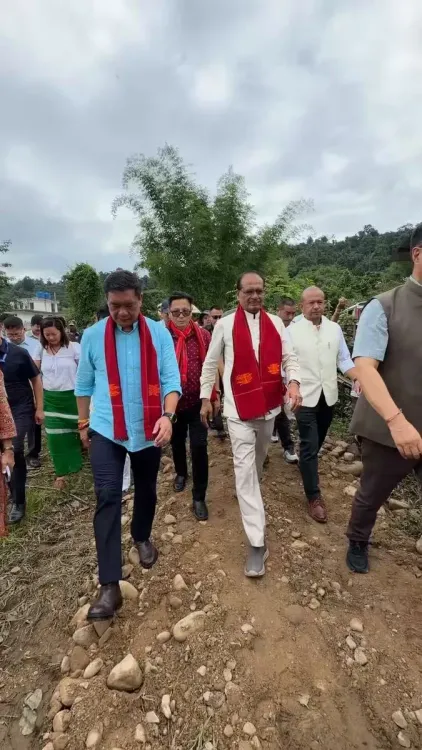
The minister participated in shramdaan (voluntary community labour) at Boing village , joining children, youth, and residents in building a flood protection wall .
Villagers reported losses of homes and crops, but the community initiative to build protective infrastructure continued independently.
Chouhan described community participation as the government's 'greatest strength,' alongside ongoing official relief and rehabilitation efforts.
The visit is expected to inform decisions on central disaster relief fund releases and permanent flood-protection proposals for the state.
The action falls within Chouhan's portfolio as Union Minister of Agriculture and Farmers Welfare and Rural Development , given the scale of agricultural damage.
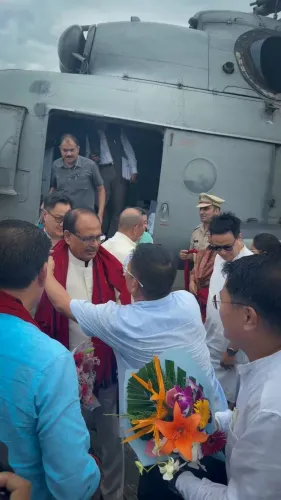
Union Agriculture Minister Shivraj Singh Chouhan visited flood-affected areas of Arunachal Pradesh on Wednesday, 1 July 2026, joining local residents in manual community labour to construct a protection wall aimed at preventing future flood inundation of their village. The minister, who has been touring the affected regions for the past two days, shared his experience on X, invoking the spirit of collective effort with the line 'Saathi haath badhana' — a call for companions to extend a helping hand.
Context
Chouhan posted that he participated in shramdaan — voluntary community labour — alongside children, youth, and villagers at Boing village, where residents were collectively building a protection wall to guard their settlement against future floods. Translating his post, he wrote: 'Homes have been destroyed, crops have been washed away, but the will to live has not broken.' He described the community's self-help effort as the government's 'greatest strength' even as official relief and rehabilitation work continues.
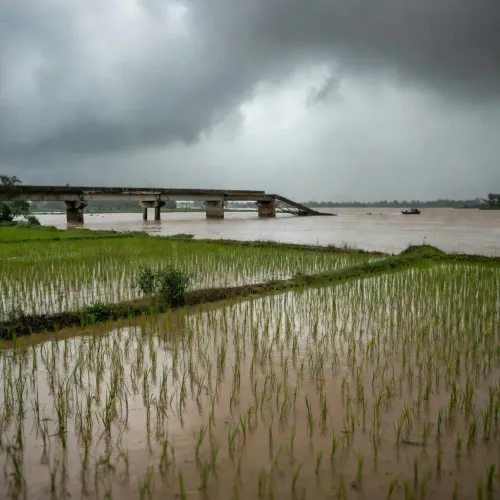
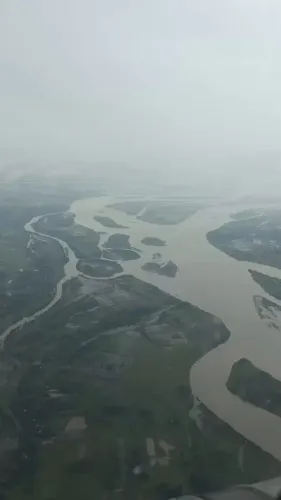
The minister's visit comes during the peak of the 2026 monsoon season, a period when Arunachal Pradesh — a northeastern state bordering China — faces recurring and severe flood damage to agricultural land and rural settlements. The state's terrain and river systems make it one of India's most flood-vulnerable regions every year.
Policy Backdrop
Disaster response in India is governed by the Disaster Management Act, 2005, which established the National Disaster Management Authority (NDMA) to coordinate relief, rehabilitation, and community participation across states. Central ministers conducting on-ground visits to Northeast flood zones during the monsoon has become an established pattern across successive governments, combining the formal machinery of disaster relief with appeals for participatory community action.
Participatory flood-protection works — such as community embankments and protection walls — have long been promoted alongside formal government schemes in Arunachal Pradesh and neighbouring Assam. Chouhan's shramdaan at Boing village aligns with this tradition of mobilising local labour for resilience infrastructure that supplements state-funded projects.
Stakeholders and Impact
The most immediate stakeholders are the flood-affected farmers and villagers of Arunachal Pradesh whose homes and standing crops have been damaged. For farming communities, flood losses compound into long-term livelihood setbacks — lost crops translate directly into reduced incomes and food insecurity, concerns that fall squarely within Chouhan's portfolio as Union Minister of Agriculture and Farmers Welfare.
Chouhan's dual role — overseeing both agriculture and rural development — positions him as a central figure in both immediate relief coordination and longer-term rural rehabilitation. His presence on the ground signals that the Union government is treating the Arunachal floods as a priority requiring ministerial-level attention, beyond routine administrative response.
What's Next
Attention will now turn to the release of central disaster relief funds for Arunachal Pradesh and any formal proposals for permanent flood-protection infrastructure that may be tabled in the current legislative session. The minister's visit is likely to accelerate assessments of crop damage that could feed into compensation disbursements under existing agricultural welfare schemes.
Chouhan closed his post with a forward-looking appeal: 'Kyunki jab saathi haath badhate hain, tab umeed bhi lautti hai aur jeevan bhi phir se muskurane lagta hai' — 'Because when companions extend their hand, hope returns and life begins to smile again.' Whether that sentiment translates into a sustained infrastructure push for Arunachal's flood-prone villages will be the measure of this visit's lasting impact.
Point of View
' he is subtly building a narrative that positions citizen participation alongside, rather than as a substitute for, formal disaster relief. For a minister whose portfolio spans both agriculture and rural development, the visit serves a dual purpose: it signals urgency on crop-loss compensation while laying groundwork for longer-term rural infrastructure investment in a strategically sensitive border state. The political calculus is clear — visible ministerial presence in a crisis zone reinforces the BJP's Northeast outreach strategy ahead of any future electoral cycle in the region.
NationPress
30 Sept 2026
Frequently Asked Questions
Why did Shivraj Singh Chouhan visit Arunachal Pradesh in July 2026?
Chouhan visited Arunachal Pradesh to tour flood-affected areas and assess damage over two days, culminating in participating in community shramdaan at Boing village on 1 July 2026 to help build a flood protection wall.
What is shramdaan and what did Chouhan do at Boing village?
Shramdaan is voluntary community labour. At Boing village, Chouhan joined local children, youth, and residents in manually constructing a protection wall designed to prevent floodwater from entering the village in future monsoon seasons.
How does Arunachal Pradesh get affected by floods every year?
Arunachal Pradesh's mountainous terrain and river systems make it highly vulnerable to monsoon flooding each year, causing damage to homes, standing crops, and rural infrastructure across the state.
What relief measures is the government providing to flood victims in Arunachal Pradesh?
Chouhan stated that the government is conducting relief and rehabilitation work with full commitment. Formal central disaster relief funds and crop-damage compensation under agricultural welfare schemes are expected to follow assessments from the minister's visit.
What is the Disaster Management Act 2005 and how does it apply here?
The Disaster Management Act, 2005 established the National Disaster Management Authority to coordinate relief, rehabilitation, and community participation in flood-prone states like Arunachal Pradesh, providing the legal framework under which central and state agencies respond to such disasters.