Shivraj, Rijiju conduct aerial survey of flood-hit Arunachal
Synopsis
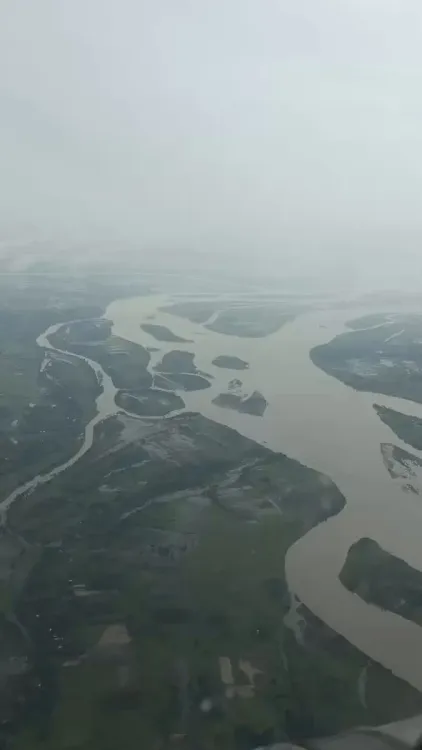
Union Agriculture Minister Shivraj Singh Chouhan joined Kiren Rijiju and Arunachal CM Pema Khandu for an aerial survey of flood-affected Keyi Panyor district on 1 July 2026, a day after a road-level tour of impacted villages, reaffirming central-state commitment to disaster relief.
Key Takeaways
Union Agriculture Minister Shivraj Singh Chouhan conducted an aerial survey of flood-hit areas in Keyi Panyor district, Arunachal Pradesh on 1 July 2026 .
Union Minister Kiren Rijiju and Chief Minister Pema Khandu accompanied Chouhan during the survey.
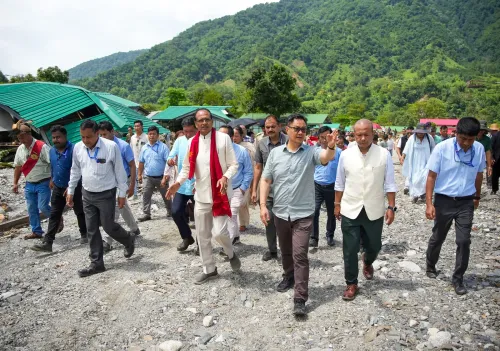
The previous evening, the delegation toured flood-affected villages by road and met displaced and affected residents.
Chouhan affirmed that both the central and state governments stand with the people 'with full commitment' during the crisis.
Joint surveys of this nature follow NDMA protocols under the Disaster Management Act, 2005 and precede formal damage assessments for NDRF relief allocation.
An announcement of central financial assistance or additional NDRF deployment for Arunachal districts is anticipated.
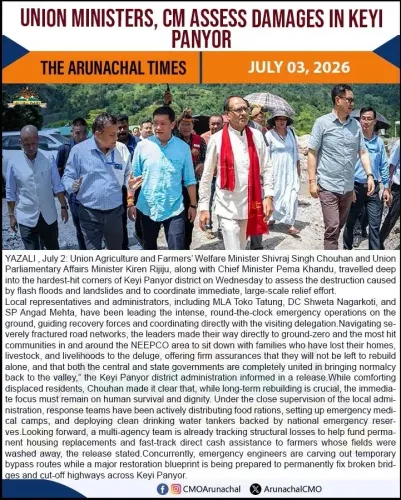
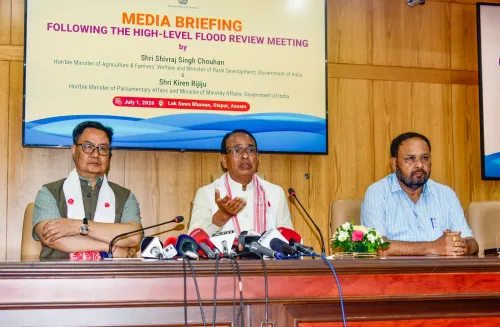
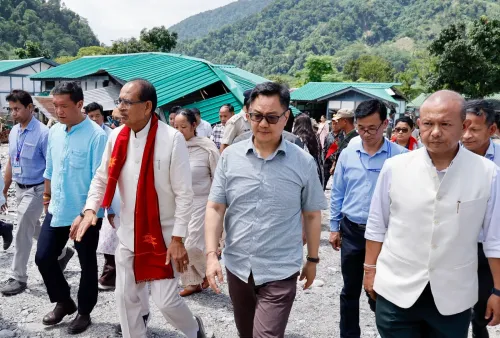
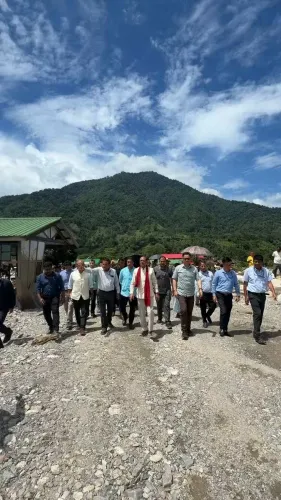
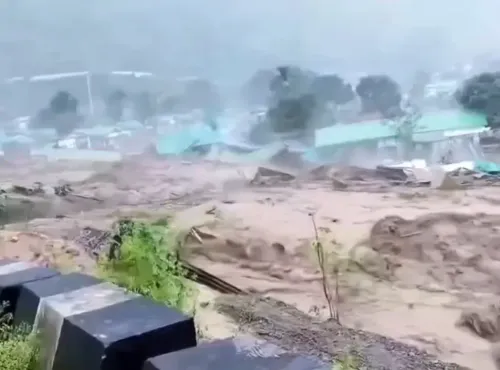
Union Agriculture Minister Shivraj Singh Chouhan conducted an aerial survey of flood-affected areas in Keyi Panyor district, Arunachal Pradesh, on Wednesday, 1 July 2026, alongside Union Minister Kiren Rijiju and Chief Minister Pema Khandu. The visit followed a ground-level tour of flood-hit villages the previous evening, during which the ministers met residents affected by the disaster.
Context
Chouhan posted on X, stating: 'Aaj Kendreey Mantri Shri Kiren Rijiju ji evam Mukhyamantri Shri Pema Khandu BJP ji ke saath Arunachal Pradesh ke Keyi Panyor jile mein baadh se prabhavit kshetron ka havaee sarvekshan kiya.' ['Today, along with Union Minister Kiren Rijiju and Chief Minister Pema Khandu, conducted an aerial survey of flood-affected areas in Keyi Panyor district of Arunachal Pradesh.'] He added that the delegation had also toured flood-hit villages by road the previous evening and met the 'affected brothers and sisters.' He affirmed that both the central and state governments 'stand with the people with full commitment in this hour of crisis.'
Keyi Panyor is among the districts in Arunachal Pradesh most exposed to monsoon flooding, owing to the state's mountainous terrain and its network of Brahmaputra tributaries that swell rapidly during heavy rainfall. The state borders China and Myanmar and has historically required central assistance during annual flood cycles.
Policy Backdrop
Joint aerial and ground surveys by central and state officials are a standard response mechanism under the National Disaster Management Authority (NDMA) framework, established through the Disaster Management Act, 2005. These surveys form the basis for formal damage assessments submitted to the Centre, which in turn determines the quantum of relief from the National Disaster Response Fund (NDRF).
The central government has a consistent pattern of deploying senior Union ministers alongside state leadership for immediate on-ground assessment in the Northeast, reinforcing federal coordination on disaster relief. Kiren Rijiju, himself from Arunachal Pradesh, brings both political and regional familiarity to such coordination exercises. Pema Khandu, who has led the BJP government in the state since 2016, has regularly interfaced with central teams during monsoon emergencies.
Stakeholders and Impact
The most immediate stakeholders are the flood-affected residents of Keyi Panyor district, whose villages were visited by the ministerial delegation both by air and by road. Ground-level engagement — including direct meetings with affected families — signals an intent to document localised damage beyond what aerial surveys can capture.
State disaster management authorities, the NDRF, and local administration in Arunachal Pradesh are all engaged in the relief and assessment chain. The presence of three senior political figures — a Union Cabinet minister, a ministry colleague, and the Chief Minister — underscores the political weight being assigned to the crisis response.
What's Next
Following such joint surveys, the standard protocol involves the state government submitting a formal memorandum of damage to the Centre, after which central teams may conduct independent assessments before releasing funds. An announcement on central financial assistance or additional NDRF deployment for affected districts in Arunachal Pradesh could follow in the coming days. The broader monsoon season across the Northeast means that relief coordination between New Delhi and Itanagar is likely to remain active through the coming weeks.
Point of View
Rijiju, and Khandu — for a combined aerial and ground survey in Keyi Panyor is a calibrated show of federal solidarity, particularly significant given Arunachal Pradesh's strategic border location. Rijiju's presence adds a regional-representative dimension that goes beyond routine disaster protocol, signalling that the Centre is treating this as a politically sensitive as well as humanitarian matter. The back-to-back road and aerial visits in under 24 hours suggest urgency in building a damage dossier, likely ahead of a formal central assistance announcement. This pattern of high-visibility ministerial visits to flood-hit Northeast states has become a recurring feature of BJP's governance optics during monsoon season.
NationPress
30 Sept 2026
Frequently Asked Questions
Why did Shivraj Singh Chouhan visit Arunachal Pradesh?
Shivraj Singh Chouhan visited Arunachal Pradesh to conduct an aerial survey of flood-affected areas in Keyi Panyor district on 1 July 2026, as part of a central-state disaster assessment exercise alongside Union Minister Kiren Rijiju and Chief Minister Pema Khandu.
Which district in Arunachal Pradesh was affected by floods in July 2026?
Keyi Panyor district in Arunachal Pradesh was among the areas surveyed for flood damage, with ministers visiting affected villages both by road and by air.
What is the role of the NDRF in Arunachal Pradesh flood relief?
The National Disaster Response Force (NDRF) operates under the NDMA framework established by the Disaster Management Act, 2005. Joint surveys by central and state officials feed into formal damage assessments that determine NDRF fund allocation for states like Arunachal Pradesh.
What happens after a ministerial aerial survey of flood-hit areas in India?
After such surveys, the state government typically submits a formal memorandum of damage to the Centre. Central teams may then conduct independent assessments before releasing funds from the National Disaster Response Fund for relief and rehabilitation.