Siddaramaiah Hails Pradhan Resignation as Student Victory
Synopsis
Karnataka CM Siddaramaiah has welcomed the resignation of Union Education Minister Dharmendra Pradhan, calling it a triumph for India's protesting students, democracy, and the Constitution, and crediting Rahul Gandhi with decisive opposition leadership during the crisis.
Key Takeaways
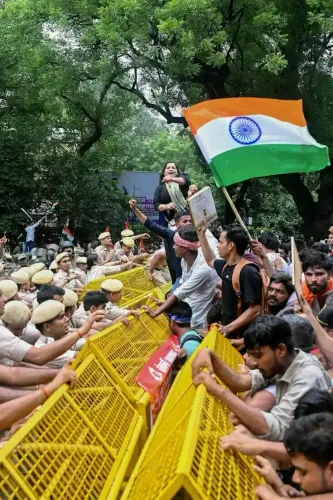
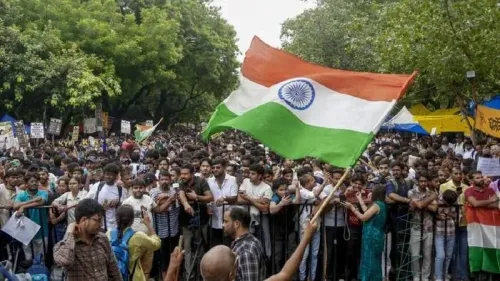
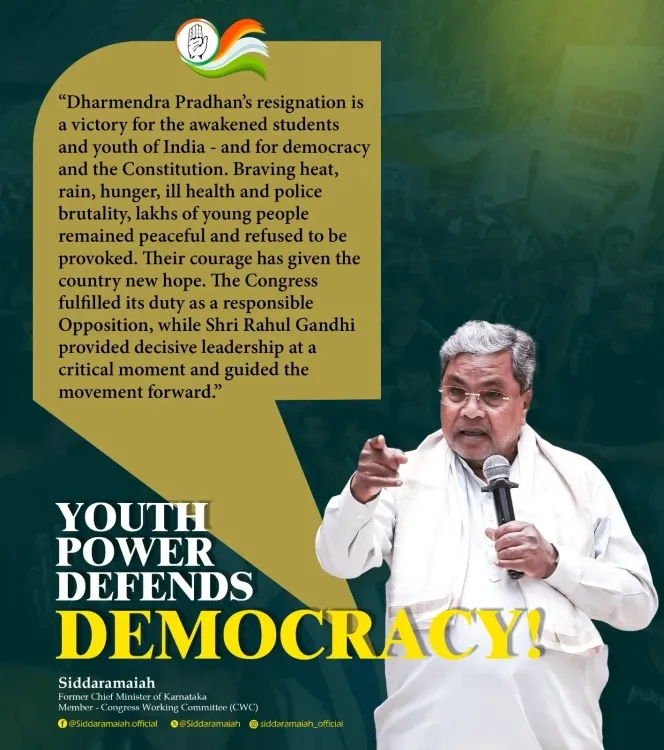
Karnataka CM Siddaramaiah described Dharmendra Pradhan's resignation as 'a victory for the awakened students and youth of India.' He praised student protesters who endured 'heat, rain, hunger, ill health and police brutality' while remaining peaceful.
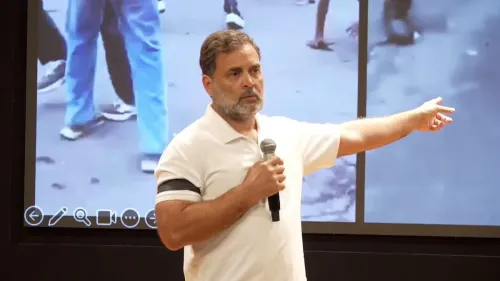
Rahul Gandhi was credited with providing 'decisive leadership at a critical moment' that guided the movement forward.
Congress is framing its role in the episode as that of a 'responsible Opposition' fulfilling its constitutional duty.
The statement signals that Congress-ruled states will continue to scrutinise central education policy and ministry appointments.
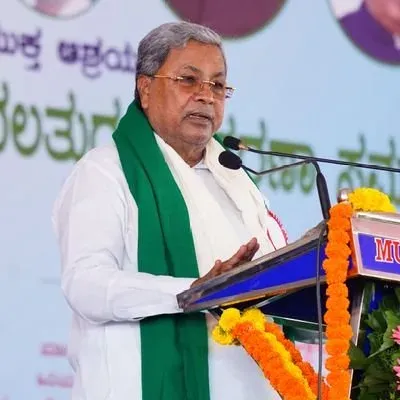
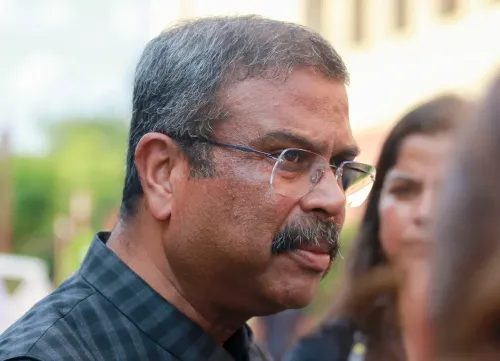
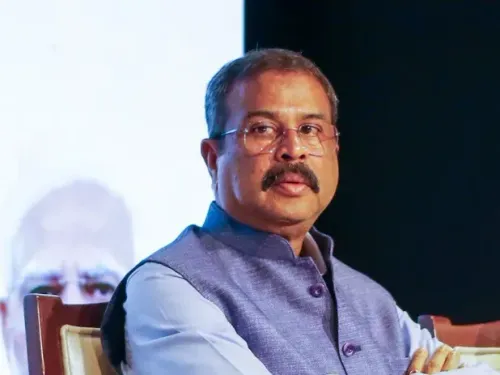
Karnataka Chief Minister Siddaramaiah on Saturday, 25 July 2026 declared the resignation of Union Education Minister Dharmendra Pradhan a 'victory for the awakened students and youth of India,' crediting sustained peaceful protests and the leadership of Congress leader Rahul Gandhi for the outcome.
Context
In his post, CM Siddaramaiah said the development was also a victory 'for democracy and the Constitution,' framing it as the culmination of a mass student movement. He noted that young protesters had braved 'heat, rain, hunger, ill health and police brutality' while remaining peaceful and refusing to be provoked. 'Their courage has given the country new hope,' he wrote.
The Chief Minister added that the Indian National Congress had 'fulfilled its duty as a responsible Opposition,' and singled out Rahul Gandhi for providing 'decisive leadership at a critical moment' that 'guided the movement forward.'
Policy Backdrop
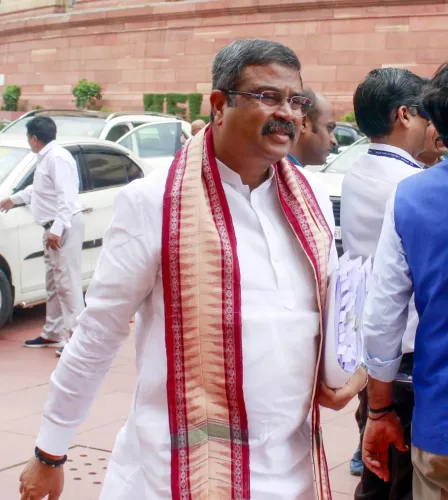
Student unrest over central education policy and examination administration has been a recurring flashpoint in Indian politics. The Congress party had previously positioned itself as the primary opposition voice on education-related controversies, including scrutiny of national entrance examinations. Dharmendra Pradhan, a senior Bharatiya Janata Party leader, held the Education portfolio at the Union level and had been at the centre of debates over examination reform and administration.
State-level Congress leaders commenting on central government personnel changes is a well-established pattern, particularly when those changes follow visible public mobilisation. Siddaramaiah's statement situates the resignation within a broader narrative of constitutional accountability and the power of democratic protest.
Stakeholders and Impact
The student community — described in the post as 'lakhs of young people' — is the central stakeholder celebrated in Siddaramaiah's message. By emphasising their peaceful conduct under duress, the statement seeks to legitimise the protest movement and distance it from any characterisation of disorder. The framing also elevates Rahul Gandhi's role as a national opposition figure capable of channelling street-level energy into political outcomes.
For the Congress party, the episode is presented as evidence of effective opposition functioning — a narrative that carries significance ahead of any future electoral contests. Youth and student groups across the country who participated in or supported the protests are likely to be energised by the acknowledgement from a sitting Chief Minister.
What's Next
Attention will now shift to who the central government appoints to lead the Education Ministry, and whether the policy concerns that animated the protests are addressed substantively. Parliamentary debates on the ministry's direction and any state-level responses to central examination reforms are expected to follow. CM Siddaramaiah's statement signals that Congress-ruled states will continue to hold the centre accountable on education governance — and that the party intends to keep student welfare at the forefront of its opposition identity.
Point of View
A policy space the party has been contesting with the BJP for several years. By invoking 'lakhs' of peaceful youth, the statement also pre-empts any government counter-narrative about law-and-order disruptions. Whether the resignation translates into substantive policy change on examinations and education administration will determine how durable this political dividend proves to be.
NationPress
24 Oct 2026
Frequently Asked Questions
Why did Dharmendra Pradhan resign as Education Minister?
The specific reasons behind Dharmendra Pradhan's resignation have not been officially detailed in this statement. Karnataka CM Siddaramaiah linked it to sustained student protests against the Education Ministry, calling it a victory for the youth movement.
What did Siddaramaiah say about Rahul Gandhi's role in the student protests?
Siddaramaiah credited Rahul Gandhi with providing 'decisive leadership at a critical moment' and said Gandhi 'guided the movement forward,' positioning him as the key national Congress figure behind the outcome.
What were students protesting about in India in 2026?
While Siddaramaiah's post does not specify the exact demands, the Congress party has historically opposed central government policies on national entrance examinations and education administration, issues that have fuelled recurring student mobilisation.
Who is Dharmendra Pradhan?
Dharmendra Pradhan is a senior Bharatiya Janata Party leader who served as Union Minister of Education in the central government, overseeing national education policy and examination bodies.
What is Congress's position on the Education Ministry controversy?
Congress has positioned itself as the primary opposition voice on education policy, and Siddaramaiah's statement frames the party's role as that of a 'responsible Opposition' that fulfilled its constitutional duty during the student movement.