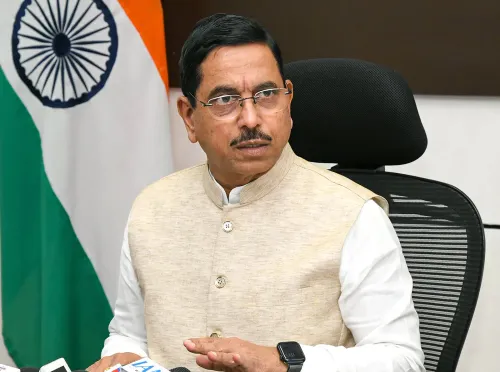
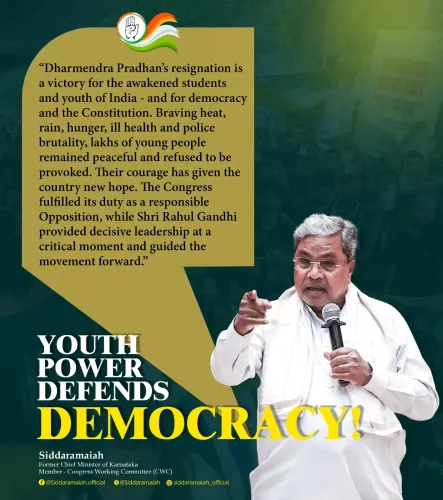
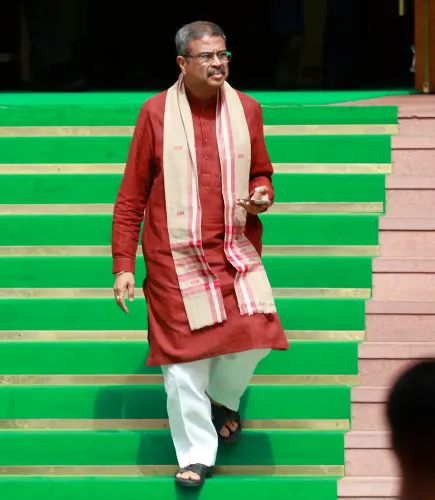
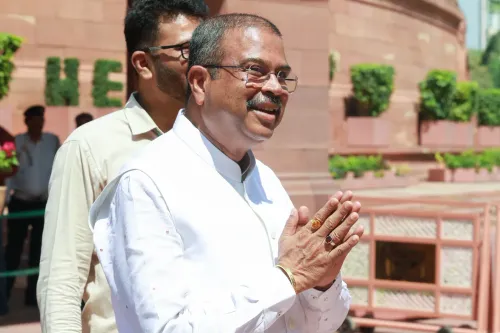
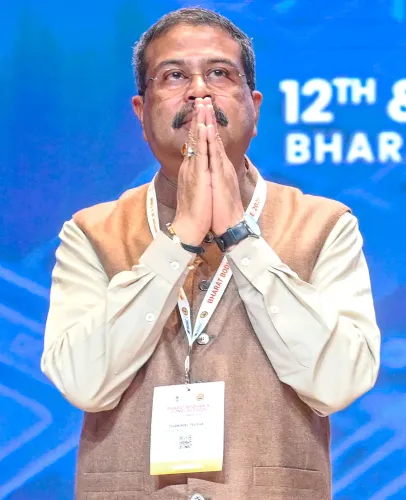
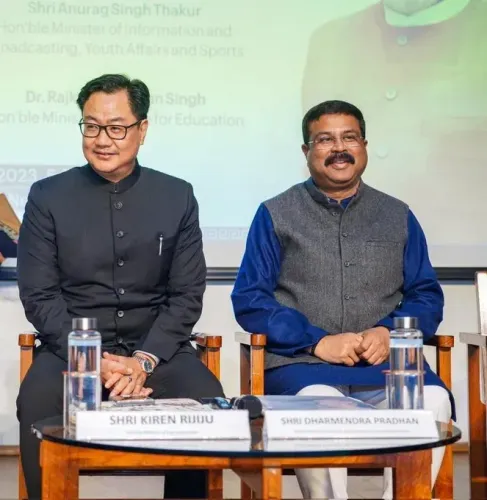
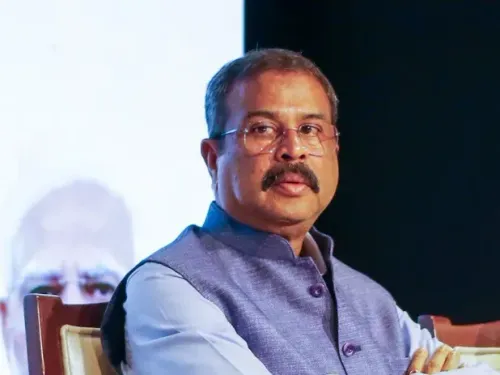
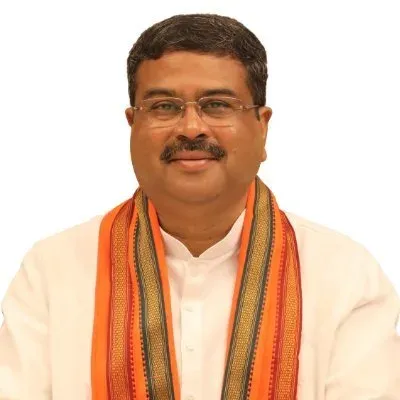
Dharmendra Pradhan resigns as Education Minister, calls it a conscious choice
Synopsis
Dharmendra Pradhan's resignation as Union Education Minister wasn't framed as a defeat — his own social media post cast it as a deliberate act to prevent 'anti-national forces' from exploiting student unrest over exam irregularities. Whether the exit resolves the underlying crisis in India's examination system, or simply changes the face at the top, remains the central unanswered question.
Key Takeaways
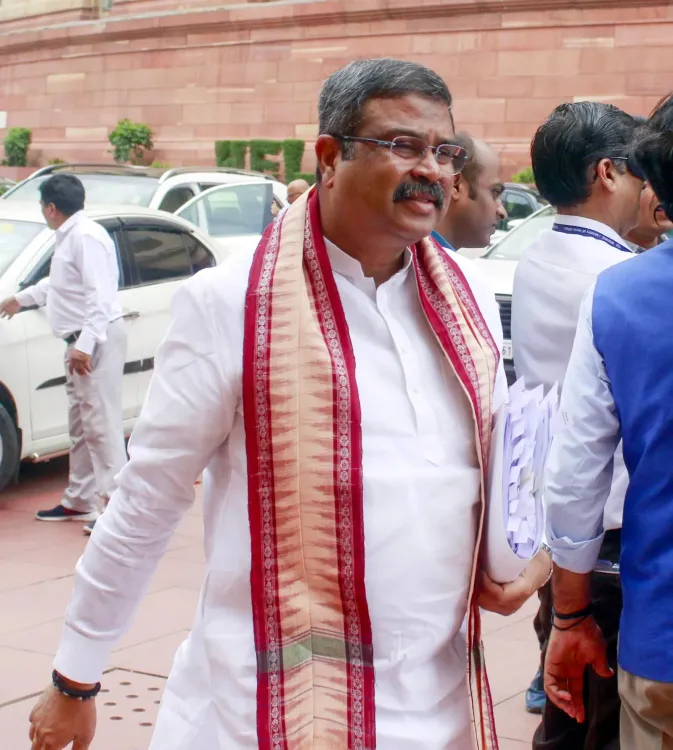
Dharmendra Pradhan resigned as Union Education Minister on Saturday , submitting his resignation to Prime Minister Narendra Modi .
Protests over alleged examination irregularities preceded the resignation, with demonstrators demanding ministerial accountability.
Pradhan's social media post stated the decision was a conscious choice — not made under compulsion or political pressure.
He cited the need to prevent 'anti-national elements' from exploiting the situation and urged students to focus on studies and career-building.
Security agencies had reportedly flagged concerns about criminal elements infiltrating the protests and possible external involvement.
Whether the resignation will address structural issues in India's examination system remains an open question.
Dharmendra Pradhan stepped down as Union Education Minister on Saturday, submitting his resignation to Prime Minister Narendra Modi amid widespread protests over alleged examination irregularities. In a social media post that followed, Pradhan was emphatic that the decision was driven by personal conviction — not political pressure or coercion.
What Pradhan Said
In his post, Pradhan outlined the reasoning behind his resignation in direct terms. 'Considering the situation at Jantar Mantar and across the country, I decided that anti-national forces should not exploit this situation, the unity of the nation must remain intact, not a single student's future should get entangled in legal complications, and our children should devote their time to studies and career-building. With this in mind, I have submitted my resignation to the Prime Minister,' he wrote.
The statement, notably, does not read as a concession to protest demands. Instead, Pradhan framed his exit as a pre-emptive move to deny political adversaries — and, as he put it, 'anti-national elements' — the opportunity to deepen divisions at a sensitive moment.
The Backdrop: Exam Irregularities and Agitation
The protests that preceded Pradhan's resignation centred on alleged irregularities in national-level examinations, with demonstrators demanding accountability and ministerial responsibility. The Centre had, at the time, been in the process of implementing a set of reforms in the education sector, making the timing of the resignation a subject of debate among policy observers.
Security agencies had separately flagged concerns about criminal elements reportedly infiltrating the student protests, with officials also pointing to possible external involvement — though no formal charges have been made public as of this report.
A Rare Act of Political Restraint
Pradhan's resignation has drawn attention less for the fact of his departure and more for the manner in which he chose to communicate it. At a time when political discourse frequently devolves into personal attacks, his post was measured and forward-looking. He urged students to stay focused on their studies and careers, and cautioned against being drawn into legal disputes that, in his view, would serve others' agendas more than their own futures.
This comes amid a broader pattern of campuses increasingly becoming flashpoints for political confrontation — a trend that has, in several recent instances, spilled over into legal proceedings involving students.
Questions That Remain
Pradhan's exit raises a question that his post does not directly answer: whether his resignation will, by itself, address the structural issues in India's examination system that triggered the agitation in the first place. Critics argue that removing a minister without a clear remedial roadmap risks reducing accountability to a symbolic gesture. Supporters, however, contend that the move reflects a leader prioritising national stability over personal office.
What happens next — both in terms of who succeeds Pradhan at the Education Ministry and whether the promised reforms continue — will determine whether this resignation marks a turning point or a pause in an unresolved crisis.
Point of View
He shifted the narrative — but also sidestepped the harder question. The examination irregularities that sparked the protests remain unresolved, and a change of minister does not automatically mean a change of system. If the Centre continues the reforms Pradhan was overseeing without a credible independent review of what went wrong, the resignation risks becoming a pressure-release valve rather than a genuine course correction. The mention of 'anti-national forces' and foreign hands, while echoing security agency warnings, also deserves scrutiny: attributing student unrest primarily to external actors can obscure legitimate domestic grievances that deserve a direct policy response.
NationPress
24 Oct 2026
Frequently Asked Questions
Why did Dharmendra Pradhan resign as Education Minister?
Pradhan resigned on Saturday amid widespread protests over alleged examination irregularities. In his social media post, he stated the decision was a conscious personal choice to prevent 'anti-national forces' from exploiting the situation — not a response to political pressure or coercion.
What did Pradhan say in his social media post about the resignation?
Pradhan wrote that he decided to step down so that anti-national forces could not exploit the unrest, national unity could be preserved, students would not get entangled in legal complications, and young people could focus on their studies and careers. He addressed the post directly to Prime Minister Narendra Modi.
What were the protests at Jantar Mantar about?
Protesters gathered at Jantar Mantar and at locations across the country demanding accountability over alleged irregularities in national-level examinations. Demonstrators called for the Education Minister's removal, citing the Centre's handling of the exam process.
Will Pradhan's resignation fix India's examination system?
That remains an open question. Critics argue that removing a minister without a clear remedial framework reduces accountability to a symbolic act. The Centre had been implementing education reforms, and whether those continue — and under whose leadership — will be closely watched.
What have security agencies said about the student protests?
Security agencies reportedly warned that criminal elements had infiltrated the student protests, and officials pointed to the possible involvement of one or more foreign actors. No formal charges have been made public as of this report.