CM Siddaramaiah meets Rahul Gandhi ahead of Delhi SIR protest
Synopsis
Karnataka Chief Minister Siddaramaiah met Lok Sabha Leader of the Opposition Rahul Gandhi in Delhi on 1 November 2026, ahead of a large opposition rally condemning what Congress calls the Election Commission of India's rule-violating Special Intensive Revision of electoral rolls.
Key Takeaways
Karnataka CM Siddaramaiah travelled to New Delhi and held pre-protest consultations with Rahul Gandhi on 1 November 2026 .
The opposition is condemning the Election Commission of India's Special Intensive Revision (SIR) as 'rule-violating'.
A large Congress-led protest was held in Delhi against the SIR on the same day.
The meeting reflects coordinated strategy between Congress's state governments and its central parliamentary leadership.
Rahul Gandhi has served as Leader of the Opposition in the Lok Sabha since the 2024 general elections .
The Election Commission's formal response to the opposition's allegations was not publicly available at time of protest.
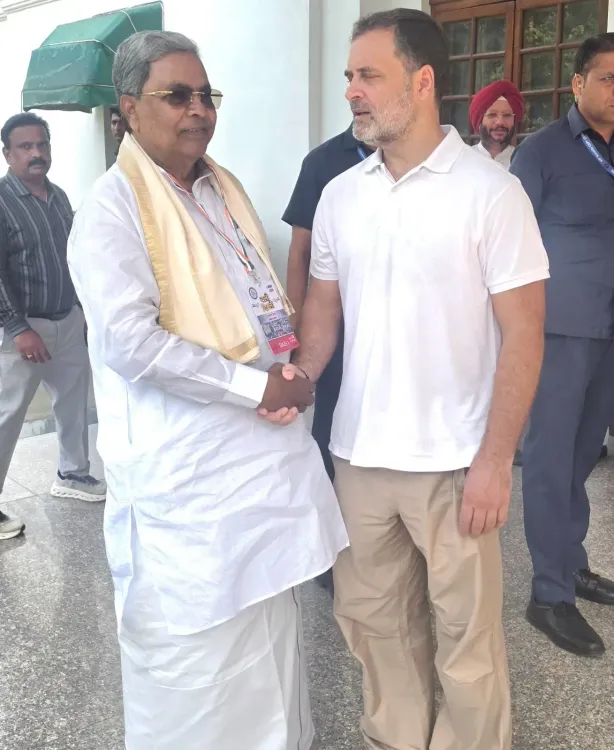
Before a large opposition rally shook the streets of New Delhi on Sunday, 1 November 2026, Karnataka Chief Minister Siddaramaiah sat down with Rahul Gandhi — Leader of the Opposition in the Lok Sabha — for a pre-protest strategy session, signalling that Congress's fight against the Election Commission of India's Special Intensive Revision (SIR) process is being coordinated at the very top.
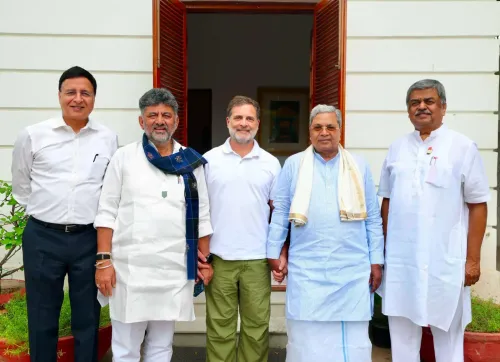
In his post on X, Siddaramaiah wrote: 'ಕೇಂದ್ರ ಚುನಾವಣಾ ಆಯೋಗದ ನಿಯಮ ಬಾಹಿರ ಎಸ್.ಐ.ಆರ್ ಅನ್ನು ಖಂಡಿಸಿ' — 'To condemn the Election Commission's rule-violating SIR, and ahead of the massive protest being held in Delhi, I met and held consultations with Lok Sabha Leader of the Opposition Rahul Gandhi.' The post was accompanied by an image of the two leaders together, a visual confirmation of what the Congress framing as a united front.
What the SIR row is about
The Special Intensive Revision of electoral rolls — the SIR — sits at the heart of this mobilisation. The opposition has characterised the exercise as 'rule-violating', alleging that the Election Commission of India has conducted or ordered the revision in a manner that departs from established procedural norms, raising fears among opposition parties that voter rolls could be manipulated ahead of upcoming elections. The ECI has not publicly responded to the specific charges at the time of the protest.
Electoral roll revisions are a routine constitutional function of the Election Commission, but the process becomes politically charged whenever large-scale deletions or additions are alleged to follow a pattern. The opposition's decision to take the fight to the streets of Delhi — rather than limit it to parliamentary corridors — is a deliberate escalation in visibility and pressure.
Why Siddaramaiah's presence in Delhi matters
A sitting Chief Minister flying to the national capital to consult the parliamentary party's floor leader before a street protest is not routine optics — it is a statement of institutional weight. Siddaramaiah leads Karnataka, one of Congress's most important governing states, and his physical participation signals that the party's state governments are being brought into alignment with the central opposition strategy on electoral integrity.
Since Rahul Gandhi was formally recognised as Leader of the Opposition following the 2024 Lok Sabha elections — the first time the post was filled in a decade — coordination between Congress's state chief ministers and the parliamentary leadership has become a visible feature of the party's political playbook. Sunday's meeting is the latest chapter in that pattern.
The protest and what follows
The rally in Delhi is described in Siddaramaiah's post as a 'ಬೃಹತ್ ಪ್ರತಿಭಟನೆ' — a 'massive protest' — suggesting a significant mobilisation of Congress workers and allied opposition forces in the capital. Whether the protest produces formal demands, a memorandum to the Election Commission, or a parliamentary adjournment motion in the coming sessions will determine how much traction the SIR controversy gains in the national conversation.
The Election Commission's response — or silence — will be watched just as closely. Constitutional bodies rarely engage with street protests directly, but sustained opposition pressure backed by sitting chief ministers has, historically, occasionally prompted procedural clarifications.
For now, Siddaramaiah and Rahul Gandhi have made one thing unmistakable: the Congress party intends to contest this SIR not just in press briefings, but in the open air of India's political capital.
Point of View
And is deliberately widening the theatre of pressure. How the Election Commission and the ruling dispensation respond will test whether this coordinated opposition model gains further momentum ahead of future state elections.
NationPress
1 Nov 2026
Frequently Asked Questions
Why is the Congress party protesting against the Election Commission's SIR?
The Congress party and opposition allies allege that the Election Commission of India conducted its Special Intensive Revision (SIR) of electoral rolls in violation of established procedural rules, raising concerns about potential irregularities in voter lists ahead of upcoming elections.
Why did Karnataka CM Siddaramaiah go to Delhi on 1 November 2026?
Siddaramaiah travelled to Delhi to meet Rahul Gandhi and coordinate strategy before a large opposition protest against the Election Commission's SIR process held in the capital on the same day.
Who is Rahul Gandhi and what is his current role?
Rahul Gandhi is a senior Indian National Congress leader who has served as the Leader of the Opposition in the Lok Sabha since the 2024 general elections — the first time the post was occupied in a decade.
What is a Special Intensive Revision (SIR) of electoral rolls?
A Special Intensive Revision is an exercise conducted by the Election Commission of India to update, verify, and correct the electoral roll in a constituency or state, including additions, deletions, and corrections of voter entries.
What could happen next after the Delhi protest against the SIR?
Observers will watch for a formal response from the Election Commission, possible parliamentary motions in the next session, and any judicial challenge to the SIR that the opposition may file following the protest.