CM Siddaramaiah Condemns Lathi-Charge on NEET Protest March
Synopsis
Karnataka CM Siddaramaiah condemned the lathi-charge and tear gas used against over 20,000 protesters marching to Parliament over the NEET question paper leak, accusing the Modi Government of protecting the guilty while silencing student voices.
Key Takeaways
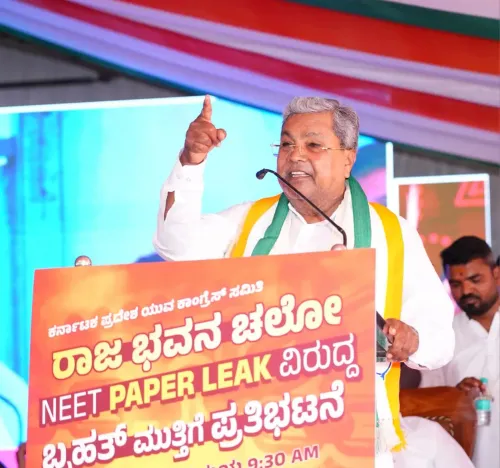
Karnataka Chief Minister Siddaramaiah condemned the use of lathis and tear gas against protesters on 21 July 2026 .
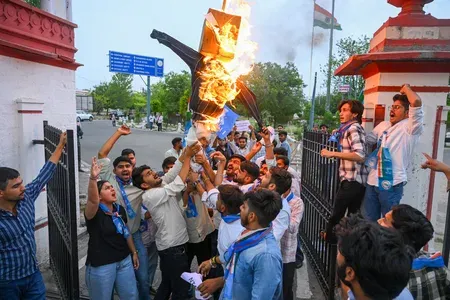
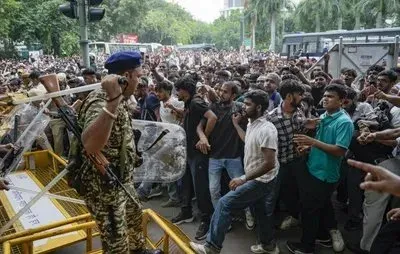
He claimed over 20,000 peaceful protestors were marching toward Parliament seeking justice for NEET scandal victims.
Siddaramaiah accused the Modi Government of protecting those responsible for the question paper leak while suppressing student dissent.
The NEET question paper leak controversy has been a major political flashpoint since allegations emerged in 2024 , prompting Supreme Court petitions and demands for a CBI probe.
The National Testing Agency (NTA) , established in 2017 , conducts NEET and has faced sustained scrutiny over examination integrity.
Opposition parties are expected to press the issue during the ongoing monsoon session of Parliament .
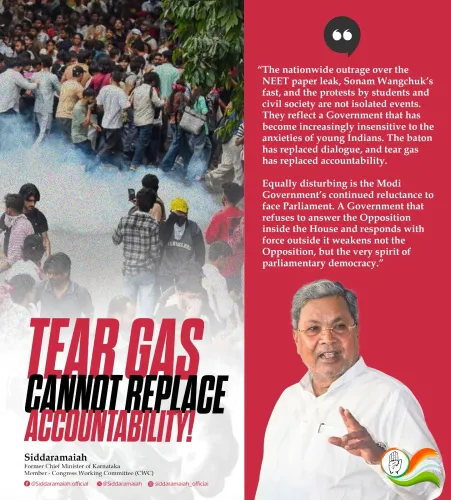
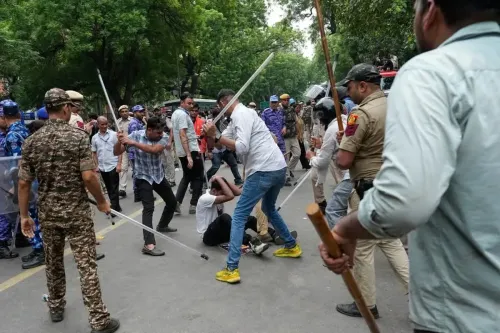
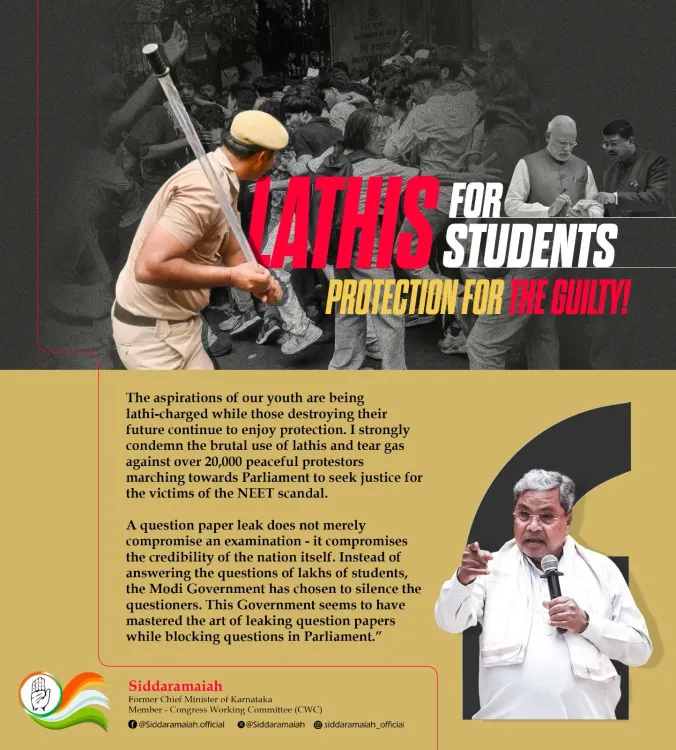
Karnataka Chief Minister Siddaramaiah on Tuesday, 21 July 2026, sharply condemned the use of lathis and tear gas against protesters who marched toward Parliament demanding justice over the NEET question paper leak scandal, calling the police action 'brutal' and accusing the Modi Government of shielding those responsible for compromising the examination.
Context
Siddaramaiah stated that 'over 20,000 peaceful protestors' were marching toward Parliament to seek justice for victims of the NEET scandal when they were met with lathi-charges and tear gas. He framed the crackdown as an act of silencing dissent, writing: 'Instead of answering the questions of lakhs of students, the Modi Government has chosen to silence the questioners.'
The Chief Minister also drew a pointed political contrast, alleging that 'those destroying their future continue to enjoy protection' while the aspirations of youth are 'lathi-charged.' He added that the government 'seems to have mastered the art of leaking question papers while blocking questions in Parliament.'
Policy Backdrop
The National Eligibility cum Entrance Test (NEET) is the sole undergraduate medical entrance examination in India, conducted by the National Testing Agency (NTA), an autonomous body under the Ministry of Education established in 2017. The NTA was created to centralise and standardise national entrance examinations.
Allegations of question paper leaks and irregularities in NEET-UG first surfaced prominently in 2024, triggering petitions in the Supreme Court of India, student protests across multiple states, and demands for a CBI probe into the NTA's conduct. The controversy has since become a sustained flashpoint between opposition-ruled states and the BJP-led central government over institutional accountability in education.
Stakeholders and Impact
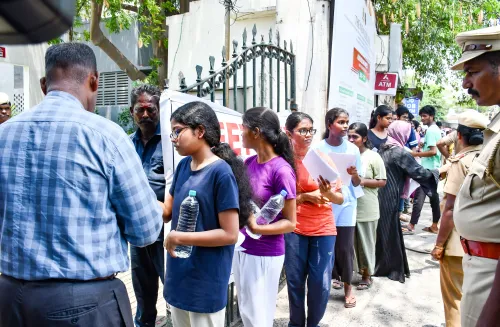
Lakhs of medical aspirants across India are directly affected, as NEET determines admission to undergraduate medical and dental programmes at government and private institutions. Any credibility crisis in the examination system has cascading effects on career timelines, coaching investments, and public trust in merit-based selection.
Opposition parties, particularly the Indian National Congress, have consistently raised the NEET irregularities issue in Parliament and in state assemblies. Congress-ruled state governments, including Karnataka, have used the controversy to press for greater state autonomy over medical admissions — a demand that predates the current scandal.
The protest march and its reported dispersal also raises questions about the right to peaceful assembly near legislative premises, a recurring point of friction between security agencies and civil society groups in New Delhi.
What's Next
With Parliament in session during the monsoon session of 2026, opposition parties are expected to press for debate and a statement from the government on the NEET controversy. Siddaramaiah's statement signals that Congress-ruled states intend to keep the issue politically live both inside and outside the legislature.
Any parliamentary committee inquiry or judicial development related to the NTA and NEET investigations in the coming weeks will be closely watched by student groups and state governments alike. The scale of the reported protest and the manner of its dispersal may also prompt questions in Parliament about the handling of youth demonstrations near the legislative complex.
Point of View
Deploying the NEET controversy as a wedge between the BJP-led centre and youth voters ahead of what remains a high-stakes electoral cycle. By linking the lathi-charge to the broader pattern of alleged institutional failure — the question paper leak — he frames the Modi Government's law-and-order response as compounding its original policy failure. The protest-at-Parliament imagery also allows Congress to claim the moral high ground on federal accountability and examination reform simultaneously. If the monsoon session produces no satisfactory government response on NEET, this moment could anchor a longer opposition campaign on education credibility.
NationPress
20 Oct 2026
Frequently Asked Questions
What is the NEET question paper leak controversy?
The NEET question paper leak refers to allegations that the question paper for the National Eligibility cum Entrance Test (NEET-UG), conducted by the National Testing Agency, was leaked before the examination, compromising results for lakhs of medical aspirants. The controversy surfaced prominently in 2024 and has since triggered Supreme Court petitions and student protests.
Why did Siddaramaiah condemn the NEET protest lathi-charge?
Karnataka Chief Minister Siddaramaiah condemned the use of lathis and tear gas against protesters marching toward Parliament on 21 July 2026, calling it a 'brutal' crackdown on over 20,000 peaceful demonstrators seeking justice for NEET scandal victims. He accused the Modi Government of silencing students rather than addressing the examination irregularities.
Who conducts NEET in India?
NEET is conducted by the National Testing Agency (NTA), an autonomous body under India's Ministry of Education, established in 2017 to centralise national entrance examinations including NEET-UG for undergraduate medical and dental admissions.
What action is being demanded over the NEET paper leak?
Opposition parties and student groups have demanded a CBI probe into the National Testing Agency, accountability for those responsible for the question paper leak, and in some cases re-examination or greater state autonomy over medical admissions. Parliamentary debates on the issue are expected during the monsoon session.
What is the significance of the protest march to Parliament?
The march toward Parliament symbolises students and opposition groups escalating their demand for central government accountability on the NEET scandal to the seat of national legislation. Siddaramaiah stated that over 20,000 protesters participated, and their dispersal with lathi-charges has drawn condemnation from Congress leaders.