CM Siddaramaiah Condemns Detention of Rahul Gandhi, Opposition Leaders
Synopsis
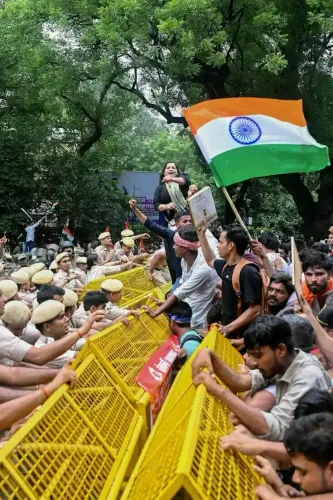
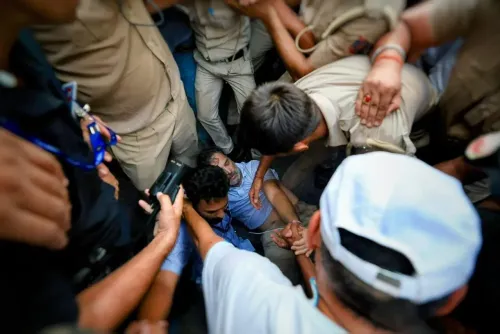
Karnataka Chief Minister Siddaramaiah condemned the reported detention and manhandling of Rahul Gandhi, Priyanka Gandhi, Akhilesh Yadav and other opposition leaders protesting near the Prime Minister's residence in Delhi over the treatment of students, calling it the 'reaction of a government afraid of peaceful democratic protest.'
Key Takeaways
Karnataka CM Siddaramaiah strongly condemned the detention of opposition leaders near the Prime Minister's residence in New Delhi on 21 July 2026 .
Rahul Gandhi (Leader of the Opposition), Priyanka Gandhi , and Akhilesh Yadav were among those reportedly detained during a peaceful protest over the treatment of students in Delhi.
Siddaramaiah accused the Modi government of first using 'lathis and tear gas' against students and then deploying police against elected representatives.
The incident follows a pattern of opposition demonstrations on student issues, including protests over NEET examination irregularities in 2024.
Siddaramaiah pledged that Congress and its allies would 'stand firmly with the students and every democratic voice demanding justice.' The episode is expected to be raised in the next session of Parliament , with opposition members likely to press for exam reform and accountability.
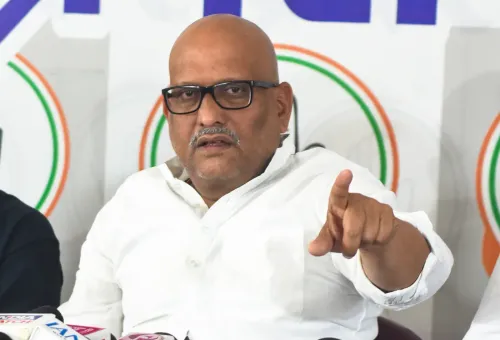
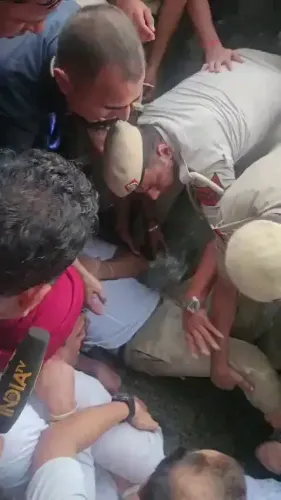
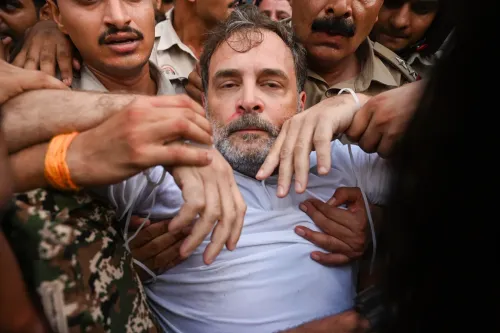
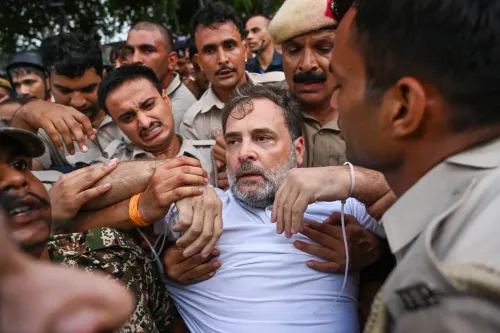
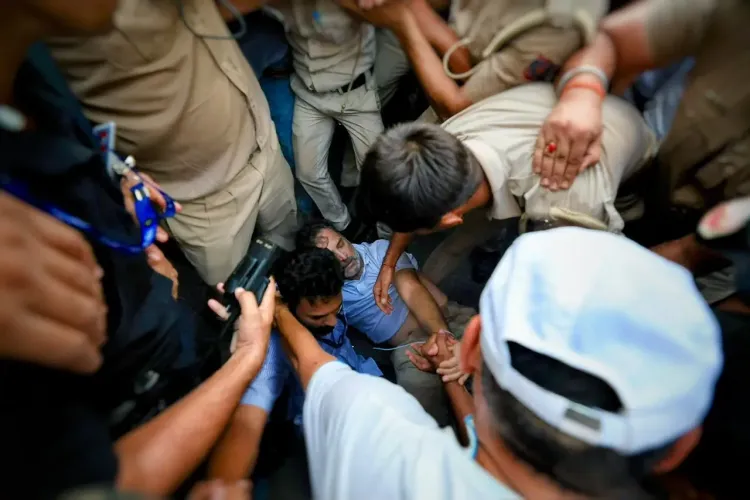
Karnataka Chief Minister Siddaramaiah on Tuesday, 21 July 2026, strongly condemned the detention of Leader of the Opposition Rahul Gandhi, Congress General Secretary Priyanka Gandhi, Samajwadi Party president Akhilesh Yadav, and other opposition leaders who were reportedly detained while staging a peaceful protest near the Prime Minister's residence in New Delhi against what he described as the 'brutal treatment of students in Delhi.'
Context
Siddaramaiah posted his condemnation on X (formerly Twitter), writing that 'reports and visuals of Rahul Gandhi and other protestors being pushed and manhandled are deeply disturbing.' He directly accused the Narendra Modi-led central government of first responding to young Indians with 'lathis and tear gas' and then deploying police against elected representatives demanding accountability.
The protest, according to the post, was organised against the treatment of students in Delhi — a reference consistent with a broader opposition campaign around examination irregularities, student grievances, and youth unemployment that has animated Indian politics in recent years.
Policy Backdrop
Opposition protests near the Prime Minister's residence in Delhi have a documented history, particularly around issues of education and employment. In 2024, opposition parties including the Indian National Congress staged demonstrations against reported NEET examination irregularities and paper leaks, during which police action was also reported. Similar scenes unfolded during the 2019–2020 Citizenship Amendment Act protests, when opposition leaders faced preventive detentions near Parliament and government buildings.
The INDIA alliance, of which Congress is a leading member, has repeatedly used street protests as a pressure tactic against the Bharatiya Janata Party-led central government, framing them as democratic exercises in accountability. Central governments have periodically responded with police measures, drawing criticism from civil society and opposition parties alike.
Stakeholders and Impact
Rahul Gandhi, as Leader of the Opposition in the Lok Sabha, has a constitutional standing that makes his detention a politically significant event, raising questions about the limits of executive power over elected representatives. Akhilesh Yadav's presence signals cross-party solidarity within the opposition bloc, extending the protest's political weight beyond Congress alone.
For students and youth — the stated beneficiaries of the protest — the incident sharpens the debate over whether the government is responsive to their concerns on examinations, unemployment, and institutional accountability. Siddaramaiah's statement, issued from Karnataka, also underscores the role of Congress-governed states in amplifying national opposition messaging.
Siddaramaiah closed his post with a pointed warning: 'You may detain the Opposition, but you cannot detain the truth or the anger of India's youth,' signalling that the Congress and its allies intend to sustain pressure rather than step back.
What's Next
The incident is likely to reverberate in the next session of Parliament, where opposition members are expected to raise the detentions as a matter of privilege and press for answers on exam reform legislation. Fresh student-led agitations in Delhi and state capitals remain a possibility if the government does not address the underlying grievances. Siddaramaiah's explicit declaration — 'We will stand firmly with the students and every democratic voice demanding justice' — signals that Karnataka and the broader Congress machinery will continue to mobilise on this issue.
Point of View
Sharply-worded condemnation is as much a piece of national opposition strategy as it is a statement of principle — positioning Congress-governed Karnataka as a megaphone for the INDIA alliance's central narrative that the Modi government suppresses dissent rather than engaging it. The framing of student grievances alongside the detention of elected representatives is deliberate: it ties a constitutional concern (the rights of the Leader of the Opposition) to a mass-appeal issue (youth unemployment and exam integrity), making the story harder for the government to dismiss. Historically, such detentions have tended to energise opposition base voters more than they deter protest, suggesting the ruling establishment may be trading short-term crowd control for longer-term political cost. The episode fits a recurring arc in Indian democratic politics where the boundaries of permissible protest near executive residences remain a live and contested question.
NationPress
20 Oct 2026
Frequently Asked Questions
Why was Rahul Gandhi detained on 21 July 2026?
According to Karnataka CM Siddaramaiah's post, Rahul Gandhi was detained while peacefully protesting near the Prime Minister's residence in Delhi against the alleged brutal treatment of students by the central government. The exact circumstances of the detention have not been independently verified.
What was the opposition protest near PM's residence about?
The protest was directed against what opposition leaders described as the brutal treatment of students in Delhi, a campaign linked to broader concerns over examination irregularities, paper leaks, and youth unemployment in India.
Who else was detained along with Rahul Gandhi?
Siddaramaiah's post names Congress General Secretary Priyanka Gandhi and Samajwadi Party president Akhilesh Yadav, along with other unspecified opposition leaders, as having been detained during the protest.
What did CM Siddaramaiah say about the Modi government's response to protests?
Siddaramaiah accused the Modi government of first using 'lathis and tear gas' against students and then deploying police against elected representatives demanding accountability, calling it 'the reaction of a government increasingly afraid of students, questions and peaceful democratic protest.'
Has the Indian government detained opposition leaders during protests before?
Yes. During the 2019–2020 Citizenship Amendment Act protests and the 2024 agitations over NEET examination irregularities, opposition leaders faced preventive detentions near Parliament and government buildings in Delhi — a recurring pattern in centre-opposition confrontations.