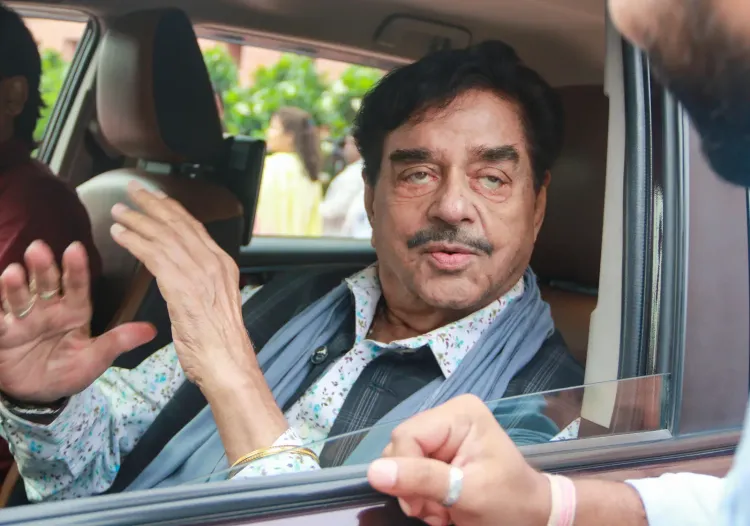
Shatrughan Sinha backs Rahul Gandhi on Amit Shah row, cites Newton's law
Synopsis
TMC MP Shatrughan Sinha has broken ranks to back Rahul Gandhi's Lok Sabha attack on Home Minister Amit Shah over the July 20 Parliament march crackdown — invoking Newton's third law to warn that suppressing student grievances will only make them rebound harder. The cross-party backing raises the political stakes on police accountability well beyond the Opposition's usual chorus.
Key Takeaways
TMC MP Shatrughan Sinha on 30 July backed Rahul Gandhi's parliamentary attack on Home Minister Amit Shah over alleged police excesses during the July 20 Parliament march .
Sinha said Gandhi 'should have been allowed' to complete his Lok Sabha speech, which was reportedly disrupted by NDA members.
Gandhi had raised the alleged use of pellet guns in Delhi and an AK-47 in Bihar during the student protests.
Sinha named agitators Abhijeet Dipke and Saurav Das , whose cases reportedly drew international media attention.
Invoking Newton's third law , Sinha warned that forcibly suppressing the issue will intensify the backlash.
The row erupted during a debate on the Public Examinations (Prevention of Unfair Means) Amendment Bill, 2026 .
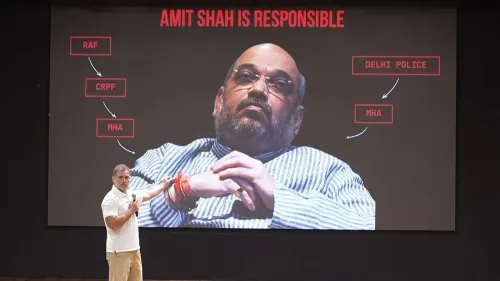
All India Trinamool Congress (TMC) MP Shatrughan Sinha on Thursday, 30 July backed Leader of Opposition in the Lok Sabha Rahul Gandhi's parliamentary attack on Union Home Minister Amit Shah over alleged police excesses against agitators during the July 20 Parliament march, asserting that Gandhi 'should have been allowed' to complete his speech on the floor of the House.
Sinha also invoked Isaac Newton's third law of motion to warn that forcibly suppressing an issue only amplifies the backlash — a pointed metaphor for the government's handling of the student agitation.
What Sinha Said About the Alleged Police Action
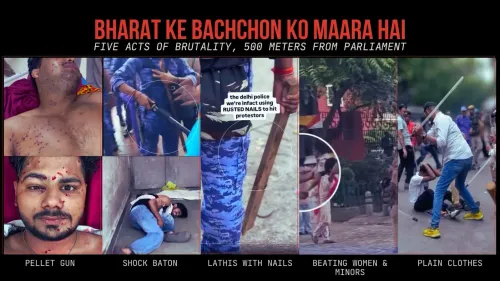
Sinha argued that the facts presented by Gandhi were well-founded. 'According to me, the facts were with Rahul Gandhi; he had prepared about the atrocities committed against the students...Their clothes were torn, they were subjected to abusive language, and people in plain clothes were seen moving alongside the police. They were carrying nail-studded batons and beating people with extreme brutality and cruelty. It was highly condemnable and shameful. This is exactly what Rahul Gandhi was referring to in the Parliament,' Sinha said.
He further noted that Gandhi had also raised concerns about the reported use of pellet guns in Delhi and an AK-47 in Bihar during the protests. 'No policeman would have the courage to use pellet guns, that too near the Parliament in the national capital, under the watch of the Prime Minister and the Home Minister,' Sinha said, adding that such actions, in his view, could only occur with orders from above.
The Parliament Flashpoint
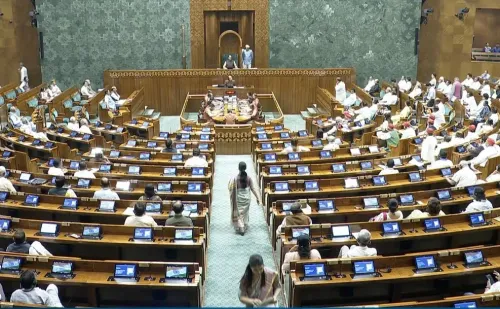
The controversy erupted a day earlier, on Wednesday, 29 July, when Gandhi raised the issue of alleged police brutality during a debate on the Public Examinations (Prevention of Unfair Means) Amendment Bill, 2026 in the Lok Sabha. His speech was reportedly disrupted by National Democratic Alliance (NDA) members, drawing sharp criticism from the Opposition.
Sinha referenced the Cockroach Janta Party (CJP), which reportedly led the July 20 agitation, and named individuals — including Abhijeet Dipke and Saurav Das — whose cases drew international media coverage. He questioned whether district-level police officers would have acted without higher-level authorisation, suggesting accountability must be traced up the chain of command.
On Accountability and the Government's Response
The ruling alliance's position, according to Sinha, has been that the District Magistrate or Sub-Divisional Magistrate bears responsibility for orders issued during large-scale demonstrations. Sinha rejected this framing, arguing that the government's refusal to let Gandhi speak sends a damaging signal. 'It now comes across as if the government is not ready to listen to the worries of the students and Gen Z. That they are not bothered,' he said.
He added that Gandhi should have been allowed to finish his remarks, after which Union Minister of State Jitendra Singh — who tabled the anti-paper leak bill — could have responded on the government's behalf.
Newton's Law as Political Warning
Closing his remarks, Sinha drew on physics to make a political point: 'The more you try to press an issue, it will respond more strongly.' The invocation of Newton's third law underscored his broader argument that suppressing legitimate student grievances risks intensifying public discontent rather than resolving it. The question of police accountability, he stressed, remains central and unresolved.
With Parliament still in session and the anti-paper leak bill under debate, the Opposition's pressure on the Home Ministry over the July 20 march is unlikely to ease in the days ahead.
Point of View
As Sinha implies, then the accountability debate must travel further up the chain than the government has so far acknowledged. The disruption of Gandhi's speech, meanwhile, hands the Opposition a procedural grievance on top of a substantive one — a gift the ruling alliance could have avoided simply by letting him finish.
NationPress
14 Sept 2026
Frequently Asked Questions
Why did Shatrughan Sinha back Rahul Gandhi in Parliament?
Sinha backed Gandhi because he believed the facts Gandhi presented about alleged police brutality during the July 20 Parliament march were well-founded. He argued that Gandhi should have been allowed to complete his Lok Sabha speech rather than being disrupted by NDA members.
What did Rahul Gandhi allege about the July 20 Parliament march?
Gandhi alleged police excesses against student agitators during the July 20 Parliament march, including the reported use of pellet guns in Delhi and an AK-47 in Bihar. He raised the issue during a debate on the Public Examinations (Prevention of Unfair Means) Amendment Bill, 2026 in the Lok Sabha on 29 July.
What is Newton's third law reference in this political context?
TMC MP Shatrughan Sinha quoted Newton's third law — every action has an equal and opposite reaction — to argue that forcibly suppressing student grievances will cause them to rebound with greater intensity. It was his warning to the government against stonewalling the accountability debate.
Who are Abhijeet Dipke and Saurav Das?
According to Sinha, Abhijeet Dipke and Saurav Das are individuals associated with the Cockroach Janta Party (CJP), which reportedly led the July 20 agitation. Sinha said newspapers around the world covered their cases, questioning whether local police officers would have acted against them without higher-level orders.
What is the Public Examinations (Prevention of Unfair Means) Amendment Bill, 2026?
It is an anti-paper leak bill tabled in the Lok Sabha by Union Minister of State Jitendra Singh. Gandhi's remarks on alleged police excesses were made during the debate on this bill on 29 July, triggering the parliamentary controversy.