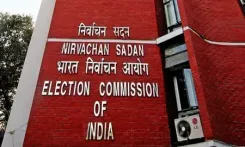
What Did the ECI Discover About Voter Exclusions in Bengal?
Click to start listening

Synopsis
The Election Commission of India has revealed that 58 lakh voters in West Bengal are listed as excludable after the enumeration phase of the Special Intensive Revision. This significant finding will play a crucial role in upcoming electoral processes. Stay tuned to learn more about the implications for the state's political landscape.
Key Takeaways
- 58 lakh voters identified as excludable.
- Significant numbers include 24,18,699 deceased voters.
- The process aims for transparency in electoral revisions.
- Final voters' list to be published on February 14.
- Next phases include claims and objections.
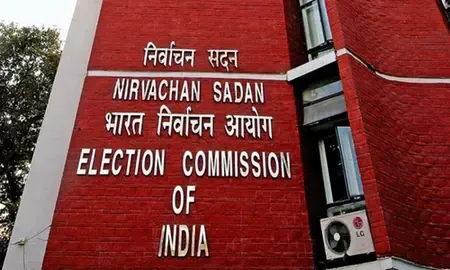
Kolkata, Dec 12 (NationPress) Following the conclusion of the enumeration phase in the three-part Special Intensive Revision (SIR) process in West Bengal, the Election Commission of India (ECI) has pinpointed 58 lakh excludable voters from the present voters’ roster.
The figures provided by the Chief Electoral Officer (CEO) reveal that based on the digitization trends of the completed enumeration forms collected by booth-level officers (BLOs) from voters up to Thursday night, a total of 58,08,232 voters have been categorized as excludable.
Among these, 24,18,699 are voters who have passed away. Furthermore, 19,93,087 voters have relocated, while the remaining numbers include duplicate voters—those registered in two locations—and others deemed suitable for exclusion for various reasons.
As of October 27, 2025, the total count of voters on the current list stands at 7,66,37,529. The SIR initiative commenced on November 4, with the draft voter list set to be released on December 16. The definitive voters’ list will follow on February 14, marking the conclusion of the first stage of this three-part SIR initiative.
Subsequently, the ECI will embark on the second phase of the revision, which will primarily focus on processing claims and objections. This stage will see the issuance, hearing, verification, and decision-making regarding enumeration forms, all handled concurrently by Electoral Registration Officers (EROs).
Once the second stage wraps up, the third and final phase—publication of the final electoral roll—will occur on February 14. Shortly after this publication, the ECI is anticipated to announce the dates for the vital Assembly elections in the state.
The ECI has opted to distribute distinct lists of excludable voters to the booth-level agents (BLAs) from all registered political parties in the state, a move aimed at enhancing transparency during the claims and objections hearing process in the SIR's second stage.
Point of View
It is vital to recognize the implications of the Election Commission's findings regarding excludable voters in West Bengal. This exercise not only aims to refine the electoral list but also enhances the integrity of the democratic process. Transparency in handling voter exclusions is essential for maintaining public trust and ensuring fair elections. The ECI's approach signals a commitment to uphold democratic principles.
NationPress
12/12/2025
Frequently Asked Questions
What is the Special Intensive Revision (SIR)?
The SIR is a process initiated by the Election Commission to update and maintain the accuracy of the electoral rolls through a systematic enumeration and revision approach.
Why have 58 lakh voters been identified as excludable?
These voters have been marked as excludable due to reasons such as death, relocation, duplication, or other criteria set by the Election Commission.
When will the final voters' list be published?
The final voters' list will be published on February 14, which will conclude the first phase of the SIR process.
How will the ECI ensure transparency in this process?
The ECI will provide separate lists of excludable voters to booth-level agents of registered political parties to facilitate transparency during the claims and objections phase.
What are the next steps after the enumeration phase?
The next steps include filing claims and objections and the publication of the final electoral roll, followed by the announcement of assembly election dates.