How Can Gender Equity and Community Participation Combat Diabetes and High BP in India?
Click to start listening
Synopsis
Explore how gender equity and community participation are crucial in combating diabetes and high blood pressure in India. Experts highlight the need for inclusive healthcare strategies that empower local leaders and provide universal access to effective treatment.
Key Takeaways
- Gender equity is essential for effective healthcare.
- Community participation leads to better health outcomes.
- Regular screening is crucial for early detection of diseases.
- Data-driven policies enhance healthcare accessibility.
- Empowering local leaders fosters sustainable change.
New Delhi, Dec 12 (NationPress) Experts emphasize that gender equity and community involvement are crucial in addressing the escalating cases of non-communicable diseases (NCDs) such as diabetes and hypertension in India.
These NCDs, which encompass conditions like cancer, cardiovascular issues, chronic respiratory ailments, and obesity, account for 65 percent of fatalities in the country.
Dr. Thomas Keppen, Deputy Director at the Department of Health and Family Welfare in Nagaland, stated, “Community participation has significantly enhanced infrastructure, service delivery, and health awareness, especially in remote areas where challenges abound. Empowering local leaders and women to engage in planning and monitoring fosters ownership and sustainable change.”
He advocated for the strengthening of community-centered strategies and the regular documentation of progress to enhance transparency and sustainability.
The annual Evidence2Policy dialogue, hosted by The George Institute for Global Health in India, ignited discussions on closing the “know-do gap” in the execution of public health policies.
Dr. Sumit Malhotra, a Professor at the Centre for Community Medicine at AIIMS in New Delhi, remarked, “Equity in NCD care transcends gender; it also involves reaching out to men and all community segments. When healthcare is accessible, women are more likely to seek care, but we also need to engage men effectively.”
He underscored the importance of fortifying community health workers with consistent medical supplies and enhancing connections across various care levels to create a more responsive and equitable healthcare system.
Health officials highlighted the necessity of data-driven decision-making, equity-focused health policies, and the strengthening of health systems to ensure universal access without financial burden.
In parallel, the National Programme for Prevention and Control of Non-Communicable Diseases (NP-NCD), a nationwide initiative aimed at the prevention, control, and screening of prevalent NCDs, has been launched under the National Health Mission (NHM) as part of CPHC.
Union Minister of State for Health and Family Welfare, Prataprao Jadhav, noted in Parliament that, “Population-based screening facilitates improved disease management through early detection, follow-ups, and adherence to treatment.”
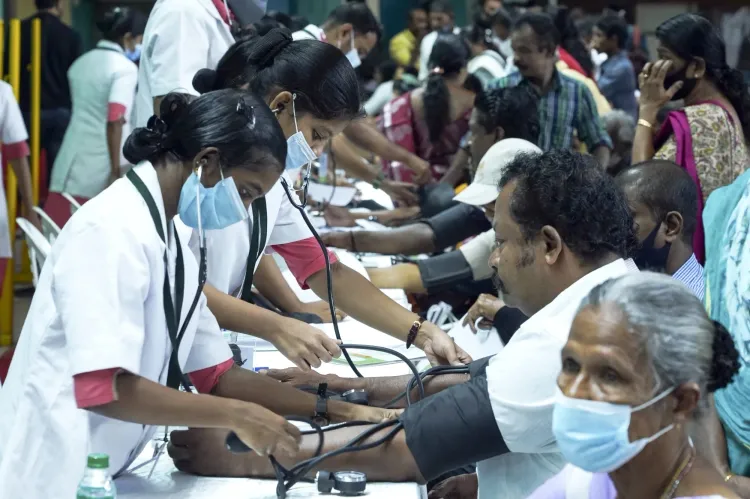
As of November 30, a total of 39.79 crore screenings for hypertension, 39.60 crore for diabetes, 33.57 crore for oral cancer, and 15.72 crore for breast cancer have been conducted across health facilities, according to data from the NP-NCD portal.
Point of View
I believe that addressing the rising cases of non-communicable diseases in India requires a comprehensive approach. The focus on gender equity and community participation not only fosters inclusivity but also empowers individuals to take charge of their health. It is imperative that we advocate for policies that ensure everyone, irrespective of gender, has access to quality healthcare services.
NationPress
13/12/2025
Frequently Asked Questions
What are non-communicable diseases?
Non-communicable diseases (NCDs) are chronic diseases that are not transmitted from person to person. They include conditions like diabetes, cardiovascular diseases, cancer, and chronic respiratory diseases.
Why is community participation important in healthcare?
Community participation is crucial as it enhances service delivery, improves health awareness, and fosters local ownership of health initiatives, leading to more sustainable health outcomes.
How can gender equity impact healthcare?
Gender equity in healthcare ensures that both men and women have equal access to health services, which is vital for addressing the unique health needs of different genders.