Haryana CMO: Sirsa Kinnow Gets GI Tag Recognition
Synopsis
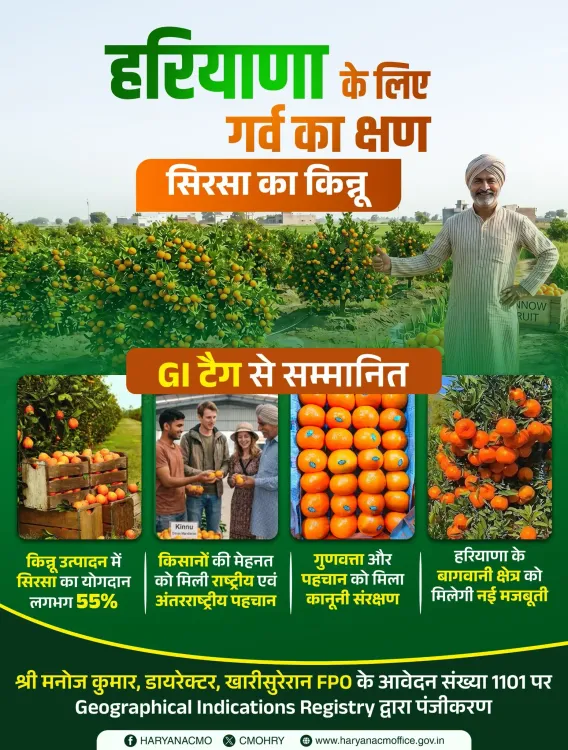
The Chief Minister's Office of Haryana announced on 2 July 2026 that Sirsa kinnow has received a Geographical Indication tag, recognising the district's citrus farmers on a national and global stage and positioning Haryana within India's expanding GI horticulture framework.
Key Takeaways
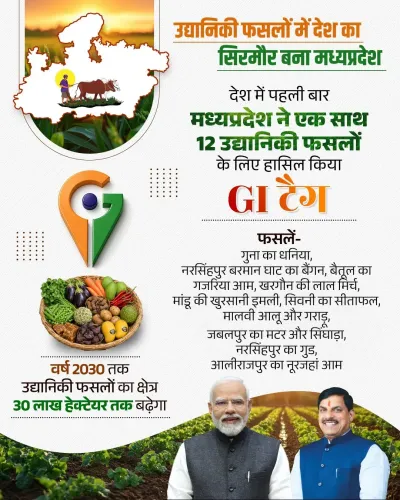
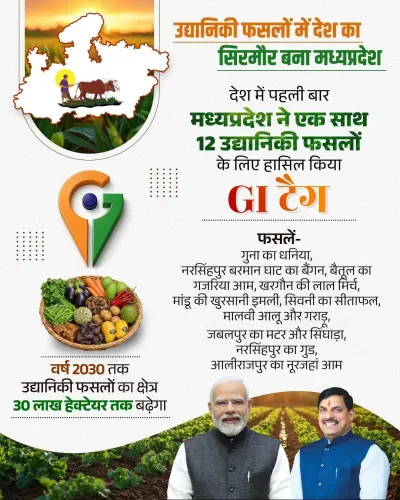
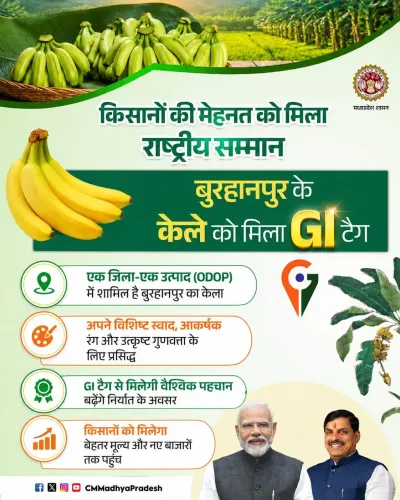
The Chief Minister's Office of Haryana confirmed that Sirsa kinnow has been granted a Geographical Indication (GI) tag .
Sirsa district in western Haryana is a long-established kinnow-growing belt with agro-climatic conditions suited to large-scale citrus cultivation.
GI tags are governed by the Geographical Indications of Goods (Registration and Protection) Act, 1999 , administered by the GI Registry in Chennai .
Neighbouring states Punjab and Himachal Pradesh had already secured GI tags for citrus and apple varieties, creating the competitive template Haryana has now followed.
The tag is expected to help Sirsa kinnow growers access premium domestic and export markets, particularly in West Asia and Southeast Asia .
Follow-up steps — including a producers' association, branding campaigns, and export-promotion schemes — will determine the tag's real economic impact.
The Chief Minister's Office of Haryana on Thursday, 2 July 2026 announced that Sirsa's renowned kinnow citrus fruit has received a Geographical Indication (GI) tag, marking a landmark moment for the state's horticulture sector and its farming community.
The official post declared: 'हरियाणा की बागवानी को मिली नई पहचान!' ('Haryana's horticulture has found a new identity!'), adding that the GI tag for Sirsa kinnow is 'a matter of pride for Haryana' and will give 'national and global recognition to the years of hard work, quality, and rich horticulture tradition of the state's farmers.'
Context
Sirsa district, located in western Haryana on the border with Punjab, has long been recognised for large-scale kinnow cultivation. The region's agro-climatic conditions — semi-arid winters and well-drained sandy loam soils — are considered ideal for producing the mandarin-king hybrid citrus fruit, which is prized for its high juice content and distinct flavour profile.
A GI tag is a legal certification under the Geographical Indications of Goods (Registration and Protection) Act, 1999, administered by the GI Registry in Chennai. It links a product's quality and reputation to its specific geographical origin, granting producers exclusive rights to the designation and protecting the product from imitation.
Policy Backdrop
India's GI Registry issued its first set of tags in 2003–04, anchored by Darjeeling tea, and has since steadily expanded the programme to cover horticultural produce across the country. The intent has been to differentiate regional varieties in both domestic and export markets, enabling farmers to capture a premium over generic alternatives.
Neighbouring states had already set a competitive template: Punjab secured a GI tag for its own kinnow variety, and Himachal Pradesh has protected several apple varieties under the same framework. The recognition for Sirsa kinnow positions Haryana within this wider national push to protect and monetise regional agricultural identities.
Stakeholders and Impact
The primary beneficiaries are kinnow growers and horticulture farmers in Sirsa district, who can now market their produce under a legally protected designation that signals authenticity and quality to buyers. GI certification typically opens doors to organised export channels and commands higher farmgate prices over time, though any immediate market-price impact remains to be seen.
The broader Haryana horticulture ecosystem — including packhouses, cold-chain operators, and agri-exporters — also stands to gain as the GI tag provides a credible quality signal that can be leveraged in domestic supermarket chains and international markets, particularly in West Asia and Southeast Asia, where Indian citrus exports have grown in recent years.
What's Next
The GI tag is a starting point, not an end in itself. Analysts and farmer groups will now watch for follow-up measures from the Haryana government — including the formation of a registered producers' association authorised to use the tag, state-backed branding campaigns, and integration of Sirsa kinnow into export-promotion schemes.
Quality-standard enforcement mechanisms will be critical to ensuring that the tag translates into sustained economic benefit for growers rather than remaining a ceremonial recognition. The coming months will reveal whether the government pairs the GI milestone with concrete institutional and financial support for the farming community it has celebrated.
Point of View
But its true value will be measured by the institutional scaffolding built around it. India's GI programme has historically been stronger on recognition than on enforcement and market-linkage, meaning that without a registered producers' association and active export promotion, the tag risks becoming symbolic. The announcement also reflects a broader inter-state competition in which agricultural states are racing to protect regional produce identities as a tool for rural income enhancement. For the ruling dispensation in Haryana, the timing signals a deliberate effort to project governance gains in the farm sector ahead of any future electoral cycle.
NationPress
1 Oct 2026
Frequently Asked Questions
What is the GI tag given to Sirsa kinnow?
A Geographical Indication (GI) tag is a legal certification under India's GI Act of 1999 that links a product's quality and reputation to its specific place of origin. Sirsa kinnow has received this tag, meaning only kinnow grown in Sirsa can be marketed under that protected designation.
What is kinnow and why is Sirsa famous for it?
Kinnow is a high-yield mandarin-king citrus hybrid known for its rich juice content and distinct flavour. Sirsa district in western Haryana has ideal semi-arid, well-drained agro-climatic conditions for large-scale kinnow cultivation, making it one of the recognised citrus belts in northern India.
How does a GI tag benefit farmers in Haryana?
A GI tag allows farmers to market their produce under a legally protected name that signals authenticity and quality, typically enabling them to command higher prices in domestic supermarkets and export markets. It also protects them from imitation products undercutting their brand.
Which other states have GI tags for citrus fruits?
Punjab has a GI tag for its kinnow variety, and Himachal Pradesh has secured GI protection for several apple varieties. Haryana's recognition for Sirsa kinnow follows this established pattern among northern agricultural states.
What happens after a GI tag is granted?
After the tag is granted, a producers' association is typically registered to authorise legitimate users of the GI label. The state government may also launch branding campaigns and integrate the product into export-promotion schemes to translate the recognition into actual economic gains for farmers.