Sitharaman joins global panel on middle-class growth at France forum
Synopsis
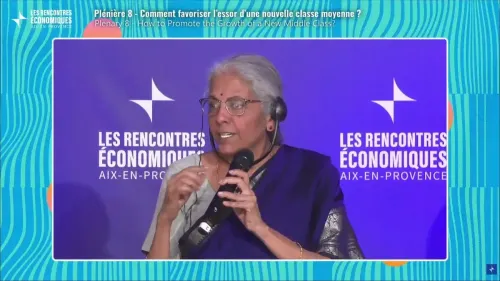
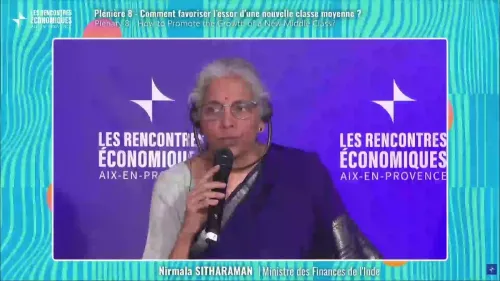
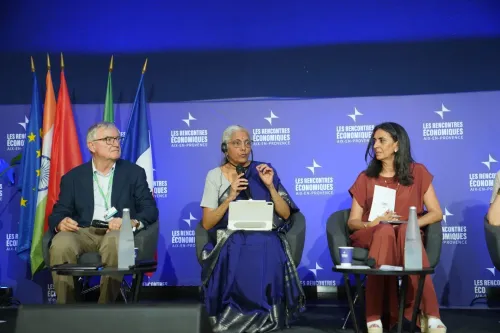
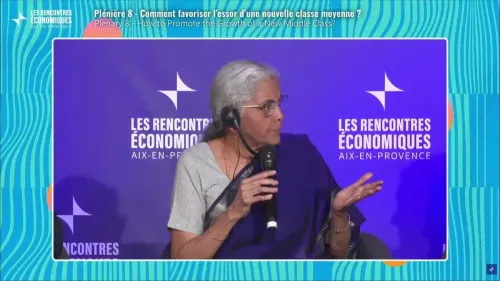
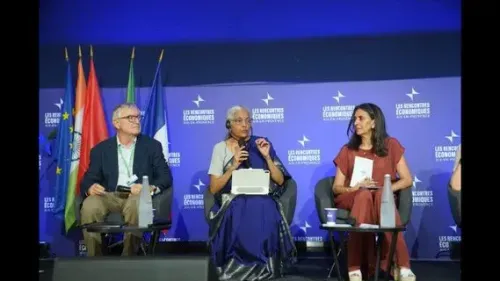
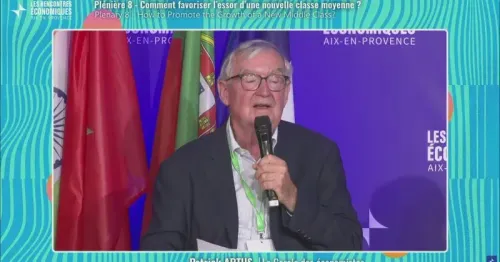
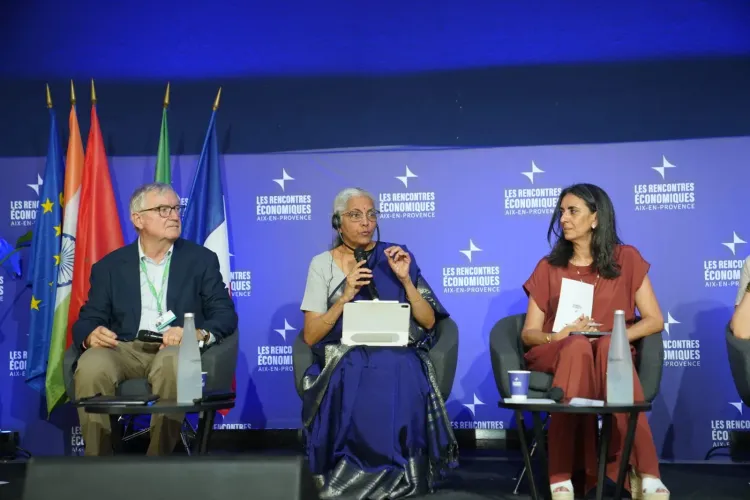
Union Finance Minister Nirmala Sitharaman joined ministers from Portugal and Morocco and a French corporate CEO on a panel titled 'How to Promote the Rise of a New Middle Class?' at the Rencontres Économiques d'Aix-en-Provence in France on 3 July 2026.
Key Takeaways
Nirmala Sitharaman participated in a panel on 'How to Promote the Rise of a New Middle Class?' at the Rencontres Économiques d'Aix-en-Provence on 3 July 2026 .
The forum is held annually at Aix-Marseille University in southern France and convenes global policymakers and business leaders.
Co-panellists included Dr Joaquim Miranda Sarmento (Portugal), Ms Nadia Fettah Alaoui (Morocco), and Ms Véronique Bédague , CEO of Nexity .
India's middle-class expansion, rooted in post- 1991 liberalisation, has been a recurring theme in Sitharaman 's Union Budget frameworks.
The participation reflects India's broader strategy of economic diplomacy through multilateral and European platforms.
Union Finance Minister Nirmala Sitharaman participated in a high-level panel discussion titled 'How to Promote the Rise of a New Middle Class?' at the Rencontres Économiques d'Aix-en-Provence, one of Europe's premier annual economic forums, held at Aix-Marseille University in southern France on 3 July 2026. The panel brought together finance ministers and a top corporate executive from three continents to examine policy approaches to expanding the middle class globally.
Context
The Rencontres Économiques d'Aix-en-Provence is an internationally recognised forum that convenes policymakers, academics, and business leaders each year to deliberate on pressing global economic questions. This year's panel on the middle class drew ministerial-level participation from India, Portugal, and Morocco, alongside a senior European private-sector voice, signalling the breadth of perspectives sought on inclusive growth. Sitharaman was joined by Dr Joaquim Miranda Sarmento, Minister of State and Finance of Portugal; Ms Nadia Fettah Alaoui, Minister of Economy and Finance of Morocco; and Ms Véronique Bédague, Chief Executive Officer of Nexity, a major French real estate and urban development company.
Policy Backdrop
India's engagement with the question of middle-class expansion has deep policy roots. The landmark economic liberalisation of 1991 opened markets, accelerated urbanisation, and began drawing tens of millions of Indians into the middle-income bracket through deregulation and foreign investment. Successive Union Budgets since 2014 have continued this trajectory, introducing direct tax reforms aimed at widening the tax base while providing targeted relief to middle-income households. Sitharaman, who has presented multiple Union Budgets, has consistently framed India's consumption-driven growth story around the aspirations of this expanding demographic. India's growing middle class is increasingly cited in global economic discourse as a key engine of demand for the coming decades.
Stakeholders and Impact
The panel's cross-continental composition — drawing from a South Asian emerging economy, a Southern European eurozone member, a North African developing economy, and a French real estate major — reflects an effort to compare diverse policy levers for inclusive growth, from fiscal policy and housing to social mobility and employment. For India, such multilateral platforms serve a dual purpose: they offer a space to benchmark domestic policy against global peers while projecting the country's economic rise and the purchasing power of its middle class to an international audience. Nexity CEO Bédague's presence underlines the private sector's role — particularly in housing and urban infrastructure — as a critical factor in sustaining middle-class growth.
What's Next
India's active participation in forums such as Aix-en-Provence forms part of a broader economic diplomacy strategy that pairs bilateral engagements with multilateral platforms. Observers will watch whether the conversations at this forum feed into the contours of the next Union Budget, particularly around middle-class tax relief, housing policy, or consumption incentives. Any follow-up bilateral economic dialogue between India and France or Portugal stemming from these interactions could also carry significance for trade and investment ties. As India positions itself as a major growth pole in the global economy, engagements like this reinforce its voice in shaping the international conversation on inclusive prosperity.
Point of View
Such forum appearances serve as soft-power complements to harder trade and investment negotiations. The cross-continental panel format also gives India a platform to contrast its growth model with those of emerging and developed economies, shaping the narrative ahead of future budget cycles.
NationPress
2 Oct 2026
Frequently Asked Questions
What is the Rencontres Économiques d'Aix-en-Provence?
It is an annual international economic forum held at Aix-Marseille University in southern France, bringing together policymakers, academics, and business leaders to discuss major global economic challenges.
Why did Nirmala Sitharaman attend the France forum in July 2026?
Sitharaman participated in a panel discussion on promoting the rise of a new middle class, representing India's perspective on inclusive economic growth alongside ministers from Portugal and Morocco.
Who else was on the panel with Nirmala Sitharaman at Aix-en-Provence?
The panel included Dr Joaquim Miranda Sarmento, Minister of State and Finance of Portugal; Ms Nadia Fettah Alaoui, Minister of Economy and Finance of Morocco; and Ms Véronique Bédague, CEO of Nexity, a French real estate company.
What is India's middle class policy approach?
India's middle-class expansion has been driven by the 1991 economic liberalisation and successive Union Budgets that have introduced direct tax reforms and consumption-support measures targeting middle-income households.
What is the significance of India attending European economic forums?
India's presence at forums like Aix-en-Provence is part of a broader economic diplomacy strategy to project its growth story, benchmark policy with global peers, and strengthen ties with European and other economies.